
Speculative Construction and the George Downing Lease (1682, 1732)
The physical seat of British power rests upon a foundation of treachery, speculation, and shoddy workmanship. Number 10 Downing Street, frequently mythologized as a bastion of stability, originated as a quick-profit real estate scheme orchestrated by one of the 17th century's most notorious turncoats. Sir George Downing, the street's namesake, was not a statesman building for posterity; he was a spy and a survivor who betrayed his former comrades to secure his own fortune. Samuel Pepys, the diarist and naval administrator, characterized Downing in 1662 as a "perfidious rogue," a label earned after Downing hunted down and arrested three regicides, men he had previously served alongside during the English Civil War, to curry favor with the restored King Charles II.
The land itself possesses a history of instability long predating the brick terraces. The site sits on the edge of Thorney Island, composed of the soft, boggy soil of the Tyburn delta. Before the 1680s, the area housed the "Knyvette House" and the "Hampden House," properties tied to the edges of the sprawling Palace of Whitehall. Downing, driven by avarice, identified the commercial chance of this plot due to its proximity to the royal court and Parliament. He acquired the lease in 1654 was forced to wait nearly thirty years for the existing rights held by the Knyvette and Hampden families to expire. When he took possession in 1682, his objective was immediate financial return, not architectural excellence.
Construction began in 1682 and concluded rapidly by 1684. While Sir Christopher Wren is frequently in association with the design, the execution was entirely Downing's operation, characterized by cost-cutting at every stage. The builder placed shallow foundations directly into the marshy subsoil, a decision that has plagued the structure for over three centuries. To simulate high-quality masonry, the bricklayers drew mortar lines across the facade, creating an illusion of even spacing that did not exist. Winston Churchill, writing centuries later, condemned the building as "shaky and lightly built by the profiteering contractor whose name they bear." The original terrace consisted of fifteen to twenty houses built in a cul-de-sac, designed to maximize rental income from "persons of good quality."
The structural integrity of the terrace was compromised from the start. The soft ground caused immediate settling, leading to the sloping floors and cracking walls that modern Prime Ministers still encounter. Yet, the location proved irresistible to the political elite. Early tenants included the Countess of Yarmouth, Elizabeth Paston, and Lord Lansdowne. These residents lived in a constant state of repair, patching up the defects of Downing's speculative construction. The turnover was high, and the street absence the grandeur of nearby St. James's Square, yet it offered unmatched access to the corridors of power.
Parallel to Downing's terrace stood a far more substantial structure known as the "House at the Back." Built around 1677, this mansion overlooked St. James's Park and was originally the home of the Countess of Lichfield, an illegitimate daughter of Charles II. Unlike the cramped townhouses on the street, the House at the Back was a true aristocratic residence, featuring high ceilings and grand reception rooms. The history of Number 10 is the history of the forced marriage between this royal mansion and Downing's cheap terrace. For decades, they existed back-to-back, separated by a wall and a small cottage occupied by a man named Mr. Chicken.
The unification of these structures occurred in 1732, following the death of the House at the Back's tenant, Count Bothmar. King George II, seeking to reward his Lord of the Treasury, Sir Robert Walpole, offered the property as a personal gift. Walpole, a man of immense political acumen, refused to accept it as a private asset. He instead proposed that the house be attached to the office of the Lord of the Treasury in perpetuity. This legal distinction transformed the building from a private residence into a state institution, shifting the load of its incessant repairs from the occupant to the Crown.
Walpole commissioned the architect William Kent to execute the merger of the properties between 1732 and 1735. Kent's task was monumental. He had to connect the front townhouse (one of Downing's original builds) with the House at the Back, while also incorporating the land from Mr. Chicken's cottage. To achieve this, Kent gutted the interiors of the Downing Street house, reinforcing the rotting timber frame and attempting to level the floors with the grander mansion behind. He created the long corridor that runs through the building, physically linking the domestic quarters of the terrace with the state rooms of the Lichfield house. The famous black door, originally a simple street entrance, became the portal to a complex labyrinth of rooms that logical architectural flow.
The renovation costs were borne by the Treasury, establishing a precedent of taxpayer-funded maintenance that continues to 2026. The initial estimate for Kent's work was modest, yet the final bill ballooned as the extent of Downing's original shoddy workmanship became apparent. Workers discovered that the foundations had sunk significantly in the fifty years since construction. Kent was forced to install new supports and rework the internal masonry, yet he could not alter the underlying geology. The building remained prone to subsidence, a fact that would necessitate a total structural gutting in the 1960s, where engineers found the walls standing on little more than dust and timber debris.
Walpole moved into the new official residence on September 22, 1735. He used the House at the Back for official business and entertaining, while the Downing Street front served as the entrance and secretariat. This dual nature, part office, part home, defined the building's function. The "Cabinet Room," located in the rear section, became the nerve center of the British Empire, yet the domestic quarters in the front remained drafty, damp, and noisy. Walpole's tenure established the physical layout that subsequent Prime Ministers would inherit, endure, and occasionally loathe.
The legacy of the George Downing lease is a building that is physically unfit for its purpose yet historically immovable. The "jerry-built" nature of the original terrace means that the Prime Minister's residence is, in engineering terms, a temporary structure that has been on life support for 340 years. The floors still slope, the walls still shift, and the maintenance costs remain exorbitant. Downing's desire for a quick return on investment created a national monument that is perpetually falling down, a fitting architectural metaphor for the crises that frequently engulf the inhabitants within.
| Name | Role | Impact on Number 10 |
|---|---|---|
| Sir George Downing | Speculator / Spy | Acquired lease (1682); built the original low-quality terrace on soft soil. |
| Countess of Lichfield | Aristocrat | resident of the "House at the Back" (c. 1677), the grander rear section. |
| Mr. Chicken | Tenant | Occupied the small cottage between the terrace and the mansion; displaced by Walpole. |
| King George II | Monarch | Gifted the property to the Office of the Lord of the Treasury in 1732. |
| Sir Robert Walpole | Lord (PM) | Refused personal ownership; established it as the official residence (1735). |
| William Kent | Architect | Merged the three structures (1732, 1735); created the internal corridor and layout. |
The Walpole Gift and Consolidation of the Three Houses (1732, 1735)

In 1732, the trajectory of 10 Downing Street shifted from a speculative real estate venture to the permanent, if physically compromised, seat of British executive power. Following the death of Count Johann Caspar von Bothmar, the Hanoverian envoy who had occupied the grand "House at the Back," King George II offered the property and the adjacent Downing Street townhouse to Sir Robert Walpole. Walpole, serving as the King's chief minister, made a decision that defined the building's legal status for the three centuries. He refused the property as a personal gift. Instead, he accepted it on the specific condition that it be attached to the office of the Lord of the Treasury. This legal maneuver ensured that the residence would not pass to his heirs would remain a state asset for his successors. The brass letterbox on the modern black door still bears the inscription " Lord of the Treasury," a direct physical testament to this 1732 agreement.
The "consolidation" that followed was less a renovation and more a forced unification of three structures that had no business being joined. The project required merging the "House at the Back," the speculative townhouse fronting Downing Street (then numbered 5), and a small cottage and stable situated between them. The "House at the Back" was the prize. Originally built around 1677 and known variously as Litchfield House or Overkirk House, it was a substantial mansion overlooking Horse Guards Parade. It had housed the Countess of Lichfield, an illegitimate daughter of Charles II, and later the Dutch Master of the Horse, Lord Overkirk. It possessed the and grandeur appropriate for a head of government. In sharp contrast, the townhouse on Downing Street was a relic of George Downing's profiteering, a cheaply built structure on unstable soil with a facade designed to mimic high-quality brickwork.
To the gap between a nobleman's mansion and a speculator's terrace, Walpole commissioned the architect William Kent. Kent faced a logistical nightmare. The floor levels of the two main buildings did not align. The structural integrity of the Downing Street house was suspect, and the space between them was occupied by a third structure: a small cottage and stable leased to a man named Mr. Chicken. To create a residence, Walpole had to persuade Mr. Chicken to vacate his premises, moving him to another property on the street. This acquisition allowed Kent to gut the cottage and use the space to construct a physical link between the front and back houses.
The architectural surgery performed between 1732 and 1735 created the labyrinthine layout that plagues the building to this day. Kent's solution to the misalignment of floors was the creation of the Great Staircase, a cantilevered stone structure that rises through the building's core. While aesthetically clear, the staircase was a necessary disguise for the structural incoherence of the merged properties. Kent turned the Downing Street townhouse into a mere entrance passage, shifting the center of to the "House at the Back," where the grander rooms were located. The room known as the Cabinet Room was originally Walpole's study, situated in the sturdier rear section of the complex.
The financial load of this consolidation fell not on Walpole, on the state. By designating the house as an official residence, Walpole ensured that the Treasury bore the cost of the renovations. Records indicate that the initial estimates for the work were vastly optimistic. While early figures suggested a cost of around £8, 000, the complexity of joining the structures and the discovery of poor foundations likely pushed the final expenditure significantly higher, with historical analyses suggesting the total exceeded £20, 000, a sum for the era. This established a precedent of public funding for the maintenance of the Prime Minister's residence, a matter that would generate controversy for generations.
Walpole moved into the newly consolidated residence on September 22, 1735. His family occupied the grander rooms facing St. James's Park, while the business of the Treasury was conducted in the offices carved out of the Downing Street side. Horace Walpole, Robert's son, described the result as a "palace in Downing-street," yet this description masked the reality of the building's condition. The unification had created a sprawling, disjointed complex with a "warren" of rooms, hidden corridors, and uneven floors. The facade on Downing Street, which became the public face of the government, concealed the fact that the true residence was the mansion behind it. The entrance was moved from the park side to the street side, permanently orienting the building toward the narrow cul-de-sac rather than the open parade ground.
The immediate legacy of the Walpole consolidation was, ironically, abandonment. While Walpole lived there until his fall from power in 1742, his successors frequently found the house too large, too expensive to heat, and too uncomfortable. For much of the 18th and 19th centuries, the " Lord of the Treasury" preferred to live in their own private London townhouses, using Number 10 only as an office or for ceremonial purposes. The forced marriage of the three houses resulted in a building that was structurally unsound from the moment of its completion, requiring constant, expensive interventions to prevent it from collapsing into the marshy soil of Thorney Island. The 1735 renovation did not solve the fundamental problems of the site; it enclosed them within a single, official designation.
| Structure Name | Origin/Date | Pre-1732 Status | Role in Consolidated Building |
|---|---|---|---|
| The House at the Back | c. 1677 (Litchfield House) | Grand mansion, home to Count Bothmar. | Became the rear section; houses the Cabinet Room and State Rooms. |
| No. 5 (later No. 10) Downing St | 1682, 1684 (George Downing) | Speculative townhouse, cheaply built. | Became the front entrance and secretariat offices. |
| The Cottage/Stable | Unknown (Pre-1732) | Leased to Mr. Chicken. | Demolished/Gutted to form the connecting corridor and staircase. |
The physical evidence of this 18th-century merger remains visible in the building's quirks. The famous black door (originally No. 5) leads into a hallway that is essentially a to the actual house. The differing ceiling heights and the erratic numbering of rooms are direct consequences of Kent's attempt to force three buildings into one. The "Treasury Passage," a corridor connecting the house to the Treasury building door, was another addition from this period, physically linking the residence to the of finance. This connection reinforced Walpole's original condition: that the house was for the Lord of the Treasury, a title that implied financial stewardship rather than mere political leadership.
By the time Walpole vacated the property in 1742, the template for 10 Downing Street was set. It was not a architectural masterpiece a political compromise made of brick and mortar. The consolidation saved the structures from likely demolition condemned the British premiership to a residence that was, and remains, a maintenance nightmare. The decision to link the prestigious House at the Back with the shoddy Downing Street terrace created a duality that defines the building: a modest, almost domestic public face hiding a sprawling, aristocratic interior, all resting on foundations that were never meant to support such weight.
Structural Decay and Near-Demolition Proposals (1780, 1900)
The physical reality of 10 Downing Street between 1780 and 1900 was defined by a single, relentless theme: the house was slowly sinking into the marshy soil of Thorney Island. While the British Empire expanded its reach across the globe, the headquarters of its government remained a structural liability, plagued by dry rot, subsidence, and the consequences of Sir George Downing's original cost-cutting measures. The residence was not a palace a money pit, frequently requiring sums of money that shocked the Treasury and the public alike.
William Pitt the Younger, who lived in the house for a total of twenty years, faced the brunt of this decay. Upon his arrival in 1783, the building was in such a perilous state that he was forced to authorize what became known as the "Great Repair." The cost was astronomical. Records show the final bill totaled £11, 000, a figure that far exceeded the original estimate and roughly equaled £2 million in 2026 currency. This expenditure covered the strengthening of the foundations and the expansion of the Cabinet Room, yet it failed to solve the underlying problem. The house sat on shallow foundations driven into soft ground, causing the walls to crack and the floors to slope. Pitt described the residence as "my vast, awkward house," a sentiment that reflected its confusing layout and constant maintenance needs.
The dawn of the 19th century brought little relief to the fabric of the building. In 1825, Chancellor Frederick Robinson commissioned the architect Sir John Soane to carry out further alterations. Soane, famous for his work on the Bank of England, designed the State Dining Room and the Small Dining Room, adding a veneer of neoclassical grandeur to the interior. These additions provided the house with its true entertaining spaces, yet they masked a rotting core. The structural integrity of the complex remained compromised. The facade required frequent repointing, and the internal timber continued to deteriorate due to the damp conditions rising from the high water table of the nearby River Thames.
By the mid-19th century, the very existence of 10 Downing Street was in question. The Victorian zeal for modernization and imperial grandeur led to the demolition of the chaotic medieval and Stuart streets of Whitehall. Between 1824 and 1861, the government razed the houses on the south side of Downing Street to make way for the new Foreign Office, a colossal Italianate structure designed by George Gilbert Scott. In the shadow of this new stone palace, Number 10 appeared small, dingy, and anachronistic. A Select Committee on Public Offices in 1857 explicitly recommended the demolition of the remaining houses on Downing Street. The plan envisioned a "Downing Square" or a continuation of the grand administrative blocks, wiping the original terrace off the map entirely. The proposal failed not because of sentimental attachment to the house, due to the high cost of new construction and bureaucratic inertia.
| Period | Key Figure | Intervention Details | Recorded Cost (Historic) |
|---|---|---|---|
| 1766, 1774 | Charles Townshend | Stabilization of the "House at the Back" and facade repairs. | Unknown (Incomplete for 8 years) |
| 1783 | William Pitt the Younger | The "Great Repair" including foundation work and Cabinet Room expansion. | £11, 000 |
| 1825, 1826 | Sir John Soane | Construction of State Dining Room and Small Dining Room. | £2, 000+ |
| 1874 | Benjamin Disraeli | Renovation of entrance hall, public rooms, and installation of bath. | £3, 200 (Estimate) |
The house survived its near-execution remained in a state of squalor. When Benjamin Disraeli became Prime Minister in 1868, he found the property uninhabitable and chose to live in his private residence. Upon his return to power in 1874, he refused to move into Downing Street until significant renovations were completed. He described the house as "dingy and decaying." The state paid for the renovation of the entrance hall and public rooms, Disraeli was forced to pay for the refurbishment of the private quarters himself. Notably, he installed the house's bath with hot and cold water for a cost of £150. Even with these improvements, the house remained uncomfortable compared to the private London mansions of the aristocracy.
The late Victorian era saw the house function more as an office than a home. The Marquess of Salisbury, who served as Prime Minister for over 13 years between 1885 and 1902, was the last premier who refused to live at Number 10. He preferred his spacious home at 20 Arlington Street and his estate at Hatfield House. During his tenure, the residential rooms gathered dust, and the building served strictly as the bureaucratic hub of the Lord of the Treasury. The absence of a resident family meant that minor repairs were frequently ignored, allowing the pattern of decay to accelerate again. By 1900, the house was an administrative relic, physically unstable and overshadowed by the imperial that surrounded it, waiting for a modernization that would not arrive for another sixty years.
The Great Reconstruction: Gutting the Interior (1960, 1963)
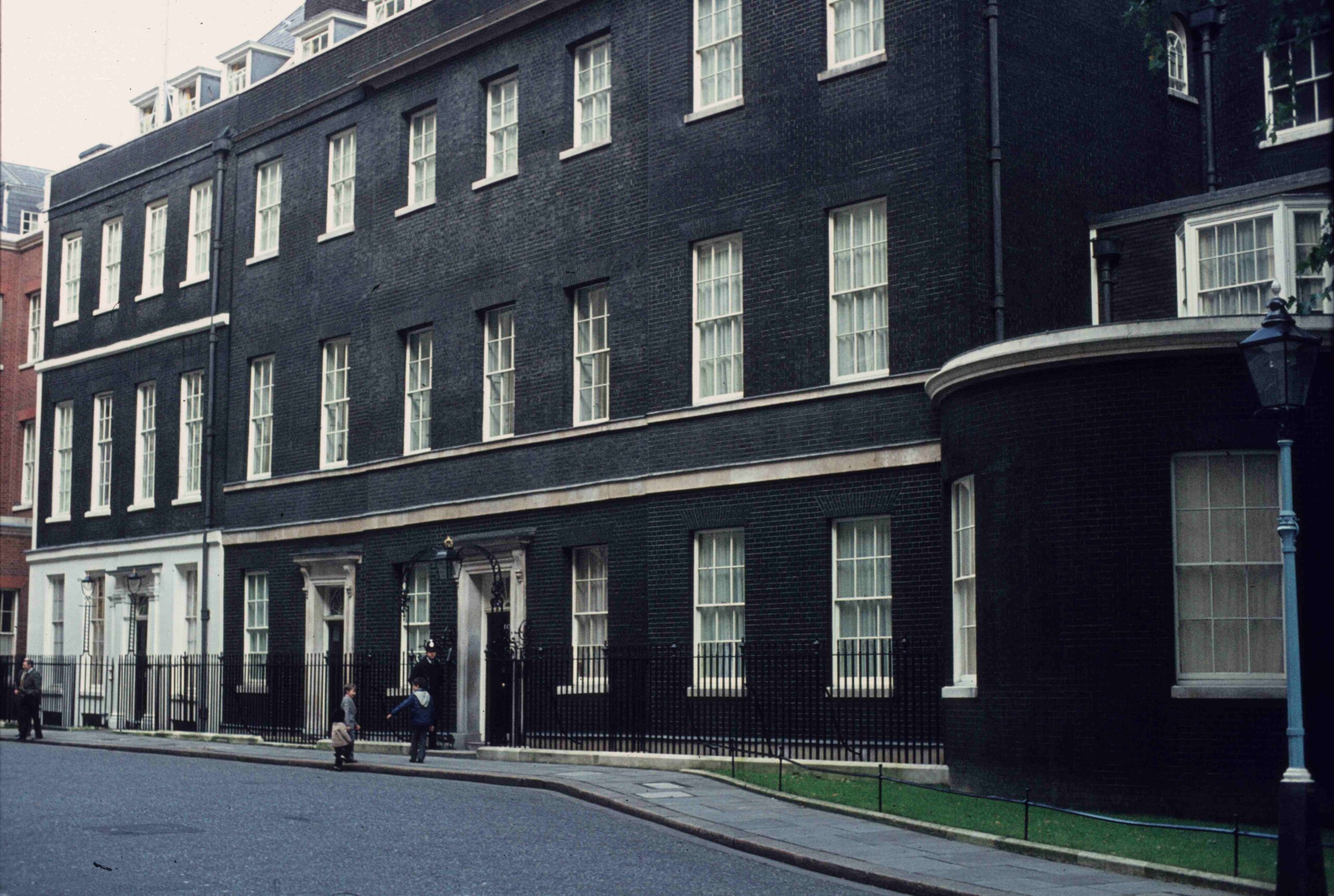
By 1958, the seat of the British government was a death trap. The structural integrity of Number 10 Downing Street had to a point where Prime Minister Harold Macmillan lived in constant danger of plunging through the floorboards into the basement. The "shoddy" speculative construction of the 1680s, combined with the vibrations from the Blitz and the slow, creeping necrosis of dry rot, had caught up with the building. A committee appointed by Macmillan and chaired by the Earl of Crawford delivered a clear verdict: the house was on the verge of collapse. The Crawford Committee faced a binary choice: demolish the entire complex and build a modern office capable of housing a nuclear-age executive, or preserve the crumbling façade for the sake of national sentiment. They chose the latter, initiating one of the most expensive and deceptive architectural projects in British history.
The renovation, termed the "Great Reconstruction," was not a restoration in the traditional sense; it was a total evisceration. The plan called for the exterior walls to remain standing while the entire interior, floors, staircases, rooms, and structural supports, was ripped out and replaced. Number 10 was to become a hollow shell, a movie set where the actors played at government while the stage behind them was rebuilt from scratch. In 1960, Macmillan and his staff decamped to Admiralty House, leaving the keys with the Ministry of Works and the architect Raymond Erith. Erith, a classical purist, envisioned a meticulous reconstruction that honored the Georgian aesthetic. The Ministry, driven by bureaucratic parsimony, wanted a functional office block. The resulting conflict would define the project.
Work began with the "gutting." Laborers stripped the building down to its bare bones, removing centuries of plaster, lath, and timber. The extent of the rot stunned the engineers. The dry rot fungus, Serpula lacrymans, had colonized the structural timbers, spreading its mycelium through the masonry and turning load-bearing beams into dust. The house was not settling; it was dissolving. As the workers peeled back the, they exposed the fundamental weakness of George Downing's original site selection. The building sat on the marshy soil of Thorney Island, a bog that had never been properly stabilized. To save the house, engineers had to sink reinforced concrete pilings deep into the London clay, creating a modern steel-and-concrete skeleton to hold up the fragile brick skin.
During this excavation, the ground beneath Downing Street yielded secrets that predated the premiership by a millennium. As the foundations were dug out, workers discovered a Saxon wooden hall and Roman pottery shards, evidence of the site's continuous occupation since the Roman settlement of Londinium. These artifacts were cataloged and removed, clearing the way for the industrial quantities of concrete required to stabilize the Prime Minister's residence. The project also unearthed the remnants of the "Axe Brewery," which had occupied the site in the Middle Ages, a reminder that the center of political power was built upon the ruins of commerce and intoxication.
One discovery during the exterior cleaning exposed the artificiality of the building's public image. For decades, the public believed Number 10 was built of black bricks, a somber aesthetic associated with serious governance. When the cleaners scrubbed away two centuries of London smog and coal soot, they were shocked to find the bricks were actually a bright, cheerful yellow. This reality clashed with the "iconic" image of the Prime Minister's home. In a decision that perfectly encapsulates the triumph of image over reality, the Ministry of Works ordered the clean yellow bricks to be painted black. The government literally whitewashed, or rather, blackwashed, the building to ensure it looked as dirty and imposing as the public expected it to be. To this day, the black façade of Number 10 is a of paint applied to maintain a myth.
The reconstruction process was plagued by the same labor unrest that would soon cripple the British economy. In 1962, as the project dragged on, the site was hit by strikes. Disputes over tea breaks and working conditions halted progress, turning the Prime Minister's future home into a picket line. These delays, combined with the structural surprises found in the boggy soil, sent the budget spiraling out of control. The original estimate for the building work was approximately £500, 000. By the time the project concluded, the costs had ballooned to over £1, 000, 000 for the structural work alone, with the total bill for the complex (including Numbers 11 and 12) reaching nearly £3, 000, 000. The contractor, John Mowlem & Co., had won the tender with a bid so low it was "clear loss-making," a gamble that relied on the prestige of the job to offset the financial bleeding.
Raymond Erith's vision of a perfect Georgian interior clashed repeatedly with the Prime Minister's demand for austerity. Macmillan, aware of the optics of spending millions on his own home while preaching economic restraint, ordered that "extravagances" be curbed. He demanded plain decorations and unpretentious furnishings. Erith, who believed he was building a monument for posterity, fought back, the Ministry frequently sided with the Treasury. The result was a compromise: the state rooms were restored with high-quality panelling and craftsmanship, while the upper floors and offices were finished with the utilitarian drabness of a standard civil service bureau. The "historic" interior of Number 10 is, for the most part, a 1960s reconstruction, a facsimile of the past built on a steel frame.
| Metric | Original Estimate / Plan | Actual Outcome |
|---|---|---|
| Budget (Building Work) | £500, 000 | £1, 000, 000+ (Total project ~£3m) |
| Timeline | 2 Years | 3 Years (1960, 1963) |
| Brick Color | Thought to be Black | Yellow (Painted Black) |
| Structure | Timber & Brick | Steel & Concrete |
| Preservation | Restore existing fabric | ~60% of fabric destroyed/replaced |
When Macmillan moved back into Number 10 in 1963, he entered a building that was fundamentally different from the one he had fled three years earlier. The creaking floorboards were gone, replaced by solid concrete slabs disguised with wood. The labyrinthine corridors had been rationalized, and the fire risks reduced. Yet, the soul of the building had been altered. It was no longer a house that had grown organically over three centuries; it was a of state disguised as a residence. The "Great Reconstruction" saved Number 10 from physical collapse, yet it also cemented its status as a stage set. The black bricks were paint, the antique timbers were steel, and the stability was engineered, not inherited. The project was a metaphor for the post-war British state: projecting an image of timeless continuity while frantically rebuilding the rotting foundations with modern materials, all while the cost to the taxpayer doubled in the shadows.
Security Hardening: The Thatcher Gates and IRA Mortar Attack (1982, 1991)
The transformation of Downing Street from a public right-of-way into a militarized compound did not happen overnight, yet the decisive severance of the street from the British public occurred in 1989. For nearly three centuries, the residence of the Lord of the Treasury stood accessible to the citizenry, a symbol of open governance where curious Londoners could walk past the door of Number 10. This openness ended under the premiership of Margaret Thatcher. Following the 1984 Brighton hotel bombing, which nearly assassinated her and her cabinet, security chiefs determined that the risk of a vehicle-borne improvised explosive device (VBIED) parked directly outside the front door was an unacceptable vulnerability. In 1982, temporary wooden blocks and police checkpoints appeared, restricting casual pedestrian flow. By 1989, these provisional measures hardened into permanence with the installation of heavy, black steel gates at the entrance from Whitehall. These gates, manned by armed police, fundamentally altered the character of the street, converting it from a row of houses into a.
The gates were designed to stop a truck bomb, a threat the Provisional IRA had demonstrated with devastating effect elsewhere. The steel blocks could withstand high-velocity impacts and prevent unauthorized vehicles from entering the blast radius of the Prime Minister's residence. Critics at the time decried the "gating" of democracy, arguing it separated the executive from the electorate. Security officials, focused on the physics of blast waves rather than political symbolism, ignored these complaints. They calculated that pushing the perimeter back to Whitehall would dissipate the energy of a car bomb sufficiently to prevent the collapse of the terraced houses, which, even with their grandeur, rested on the shaky foundations and soft soil described in earlier historical records.
The IRA, observing this hardening of the perimeter, simply altered their geometry. If they could not drive a bomb to the door, they would fly one over the gates. On the morning of February 7, 1991, the terror group demonstrated that static defenses are frequently obsolete the moment they are completed. The weapon of choice was the Mark 10 mortar, a piece of lethal engineering that prioritized payload over precision. The Mark 10 was a "barrack buster," a heavy-calibre device consisting of a steel tube capable of launching a cylinder packed with explosives. It absence the guidance systems of military hardware compensated with raw destructive power. The IRA's engineering unit had refined the design to be fired from the back of civilian vehicles, turning ordinary vans into mobile artillery units.
The attack unfolded with precision timing during a meeting of the War Cabinet. Prime Minister John Major was presiding over a session discussing the ongoing Gulf War, with senior ministers and military chiefs in attendance. At 10: 08 AM, a white Ford Transit van pulled to a halt at the junction of Horse Guards Avenue and Whitehall, approximately 200 yards from Number 10. The location was strategic; it sat just outside the new security cordon, in the busy traffic of central London. The terrorists had cut a section out of the van's roof, concealing the hole with material that could be easily blown away. Inside, three mortar tubes were bolted to the floor, fixed at a steep angle calculated to lob the shells over the Foreign Office and into the narrow canyon of Downing Street.
The launch sequence initiated automatically. Three shells, each weighing roughly 140 pounds (60 kg) with a 40-pound (20 kg) Semtex warhead, rocketed from the van. The recoil was so violent it rocked the vehicle on its suspension, and the backblast ignited the van, destroying forensic evidence in seconds. The projectiles followed a high arc, clearing the government buildings that shielded Number 10 from the street. The flight time was a matter of seconds. The and second shells overshot their target, landing on Mountbatten Green near the Foreign Office. One exploded, scorching the grass and shattering nearby windows; the other failed to detonate, breaking apart on impact. The third shell, yet, found the range.
This projectile plummeted into the rear garden of Number 10 Downing Street, detonating just seconds after impact. The explosion occurred roughly 40 to 50 feet from the Cabinet Room where John Major and his ministers sat. The blast wave was directed upward and outward by the soft soil of the garden, digging a crater several feet deep and incinerating a cherry tree. The force of the detonation slammed against the rear elevation of the house. In 1991, the windows of the Cabinet Room had been retrofitted with blast-resistant netting and heavy frames, a precaution that likely saved the lives of the government's top tier. The glass shattered was held in place by the protective film, preventing a storm of razor-sharp shards from shredding the occupants of the room.
Inside the Cabinet Room, the floor shuddered violently. Witnesses later described a "crump" sound followed by the tearing of metal and the tinkling of falling glass. Prime Minister John Major, displaying a calmness that would come to define his public image during the emergency, famously remarked, "I think we had better start again somewhere else." The War Cabinet moved immediately to the COBRA briefing rooms in the basement, a hardened facility designed for nuclear contingencies. No ministers were killed or seriously injured, though four people outside, including two police officers and a civil servant, suffered minor injuries from flying debris. The audacity of the strike was absolute: the IRA had managed to detonate a high-yield explosive within the secure perimeter of the British state while the country was at war in the Middle East.
The mechanics of the Mark 10 mortar attack revealed a terrifying vulnerability in the static defenses of Downing Street. The Thatcher gates were impregnable to a frontal assault useless against indirect fire. Ballistic analysis showed that if the third shell had landed ten yards closer, it would have struck the wall of the Cabinet Room directly. A direct hit would have likely collapsed the structure, killing the Prime Minister and the War Cabinet instantly. The margin between a "security incident" and a decapitation strike on the British government was a mere variation in wind speed or propellant quality.
| Year | Measure | Threat Vector | Outcome |
|---|---|---|---|
| 1982 | Temporary wooden blocks | Vehicle-borne IEDs (VBIED) | Restricted casual traffic; visually porous. |
| 1989 | Permanent black steel gates | Truck bombs / Frontal assault | Ended public access; created a " " perimeter. |
| 1991 | Blast-resistant window netting | Blast waves / Fragmentation | Prevented glass shrapnel injuries during mortar attack. |
| 1991 | Post-attack hardening | Indirect fire / Aerial threats | Installation of reinforced roofing and bomb-proof glazing. |
The aftermath of the mortar attack accelerated the securitization of the area. The realization that a Ford Transit parked on a public road could threaten the executive led to an expansion of the "Ring of Steel" around Westminster. Traffic restrictions on Whitehall became more severe, and the surveillance grid tightened. The burnt-out shell of the van on Whitehall served as a visceral reminder of the reach of the Provisional IRA. It demonstrated that no amount of physical blocks could completely neutralize a determined adversary to use improvised ballistics. The attack forced security architects to consider the "stand-off distance", the space between a chance bomb and the target, as the primary metric of safety. Since the geography of London did not allow for a miles-wide buffer zone, the only solution was to harden the building itself.
In the years following 1991, Number 10 ceased to be a residence and office; it became a bunker disguised as a Georgian townhouse. The windows were upgraded from netted glass to multi-laminate ballistic transparencies capable of stopping high-velocity rounds and mitigating massive overpressure. The roof was reinforced to withstand impact from above. The garden, once a place of quiet reflection for Prime Ministers, was re-landscaped to obscure sightlines and reduce the efficacy of shrapnel. The psychological impact on the residency was. The "people's house" narrative, already by the 1989 gates, was dead. The Prime Minister lived inside a blast-proof cage, separated from the city by of steel, armed guards, and surveillance algorithms.
The 1991 attack remains the closest the IRA ever came to eliminating the British cabinet. It was a failure of assassination a success of terror, proving that the seat of power was within reach of a homemade mortar. The event cemented the security that define the site in 2026. Today, the gates are not just blocks; they are the outer seal of a sterile zone, and the memory of the crater in the garden ensures that the threat of indirect fire remains a central calculation in the protection of the Prime Minister.
The Prime Ministerial Flat: Residency and Renovation Scandals

The residential quarters of 10 Downing Street represent a peculiar paradox: they are the seat of executive power yet operate under the financial constraints of a mid-level civil service lodging. While the black door is an icon of statecraft, the living arrangements behind it have frequently devolved into a squalid trap for incoming Prime Ministers, forcing them to choose between living in "dingy" conditions (as Disraeli described them) or soliciting private donations that trigger ethical scandals. For the majority of the building's history, the solution was simple: Prime Ministers refused to live there. From Robert Walpole's acceptance of the property in 1732 until the early 20th century, only 16 of 31 Lords of the Treasury resided at Number 10. Most aristocrats preferred their own opulent London townhouses to the damp, rat-infested official residence.
The modern era of the "Downing Street Flat" began in earnest in 1997, when Tony Blair fundamentally altered the building's geography. Citing the need to accommodate his young family, Blair broke with tradition and occupied the larger four-bedroom apartment above Number 11 (traditionally the Chancellor's residence), relegating Chancellor Gordon Brown to the smaller flat above Number 10. This "Great Swap" became the default arrangement for subsequent administrations, including those of Cameron, May, Johnson, Truss, Sunak, and Starmer. The shift to the larger Number 11 apartment coincided with a sharp escalation in renovation costs, as the space required modernization that far exceeded the Treasury's maintenance budget.
The central method driving these scandals is the "Grant-in-Aid," a taxpayer-funded allowance capped at £30, 000 per annum for the maintenance and repair of the residential quarters. This figure, set decades ago, fails to account for the security-mandated restrictions on contractors or the Grade I listed status of the building, which the cost of even minor repairs. Consequently, almost every modern Prime Minister has faced a financial emergency regarding their wallpaper. Margaret Thatcher, in 1979, famously refused to spend public money on "frivolous" decor, personally paying for her own ironing board and linen when presented with a £1, 836 refurbishment estimate. Her austerity stands in clear contrast to the six-figure sums spent by her successors.
Boris Johnson's tenure produced the most explosive collision between personal taste and public finance, known as "Wallpapergate." In 2020, Johnson and his fiancée Carrie Symonds undertook a radical overhaul of the Number 11 flat to remove what they termed the "John Lewis nightmare" left by Theresa May. They enlisted eco-interior designer Lulu Lytle, whose "gold" wallpaper reportedly cost £840 a roll. The total renovation bill reached £112, 549, nearly four times the annual £30, 000 allowance. To the gap, Johnson initially sought funds from a blind trust and accepted a donation from Lord Brownlow, a Conservative peer. The Electoral Commission launched a formal investigation, fining the Conservative Party £17, 800 in December 2021 for failing to accurately report the donation. Johnson was eventually forced to settle the bill from his own pocket, the scandal exposed the vulnerability of Prime Ministers to donors to subsidize their lifestyle.
The arrival of Rishi Sunak in 2022 briefly paused the pattern of donor-dependency, only because his personal fortune allowed him to bypass the grant entirely. Sunak and his wife Akshata Murty paid for their own "opulent" refurbishment, including velvet sofas and high-end curtains, rendering the £30, 000 allowance irrelevant. This financial independence, yet, was an anomaly. By 2024, the structural problem returned with Keir Starmer, though the scandal shifted from wallpaper to personal maintenance. The "Passes for Glasses" controversy revealed that Labour donor Lord Waheed Alli had provided Starmer with over £16, 000 for work clothing, £2, 845 for eyewear, and £36, 400 for private office costs and accommodation. In a breach of protocol, Lord Alli was granted a temporary security pass to Downing Street, granting a private donor unrestricted access to the heart of government. Starmer also used the full £30, 000 taxpayer grant to refurbish the flat in 2024, spending £14, 319 on decor and £15, 442 on furniture, reigniting the debate over why a Prime Minister on a £160, 000 salary requires public subsidies for curtains while cutting winter fuel payments for pensioners.
| Prime Minister | Year of Works | Est. Cost (£) | Funding Source | The Scandal |
|---|---|---|---|---|
| Tony Blair | 1997, 2005 | £127, 000 | Taxpayer | "The Wicked Kitchen" & Gym; high spend on No. 11 conversion. |
| Gordon Brown | 2007, 2010 | £84, 000 | Taxpayer | Routine maintenance; criticized for absence of transparency. |
| David Cameron | 2010, 2011 | £64, 000 | Taxpayer + Personal | Modernist kitchen installation; Cameron paid excess over £30k. |
| Theresa May | 2016 | £25, 500 | Taxpayer | Mocked as "John Lewis furniture nightmare" by successors. |
| Boris Johnson | 2020 | £112, 549 | Donor (Brownlow) -> PM | "Wallpapergate"; Electoral Commission fine; Gold wallpaper. |
| Rishi Sunak | 2022 | Undisclosed | Personal Wealth | No public cost, criticized for "out of touch" opulence. |
| Keir Starmer | 2024, 2025 | ~£30, 000 | Taxpayer + Donor (Alli) | Lord Alli "Passes for Glasses"; Accommodation gifts; Full grant use. |
The history of the flat demonstrates that the physical deterioration of 10 Downing Street acts as a recurring political stress test. The building is not a residence a Grade I listed museum that people are expected to inhabit. The wiring is ancient, the plumbing unreliable, and the security absolute. When Tony Blair spent £127, 000 remodeling the flat, it was framed as necessary modernization for a building that had not seen a family in decades. Yet, twenty years later, the same arguments were used to justify Johnson's six-figure spend. The persistence of these costs suggests that the £30, 000 allowance is functionally obsolete, designed for a different era of governance, yet no administration dares to increase it for fear of public backlash. Instead, the Prime Minister is left to either live in decay, pay a fortune, or quietly open the back door to a wealthy benefactor.
Cabinet Office Briefing Rooms (COBR) and Crisis Management Facilities
The popular image of the British emergency management apparatus frequently relies on Hollywood dramatizations of high-tech command centers. The reality of the Cabinet Office Briefing Rooms, known universally by the acronym COBR, is far more mundane and bureaucratically entangled. Located primarily at 70 Whitehall rather than within the cramped confines of Number 10 itself, these facilities serve as the nerve center for civil emergencies. The physical connection between the two buildings involves a secure walkway known as "The Link," allowing the Prime Minister to move between the residence and the emergency suites without stepping outdoors. This infrastructure was not designed for the digital age. It was a reaction to the industrial unrest of the 1970s.
Government records show that COBR was formally established in 1972. The catalyst was not a foreign war domestic chaos. The miners' strike of that year paralyzed the nation's energy supply and forced the government of Edward Heath to centralize its response method. The Munich Olympics massacre later that same year solidified the need for a dedicated space to coordinate responses to terrorism. Before 1972, emergency management relied on ad hoc gatherings in the Cabinet Room or the deteriorating remains of the World War II-era Cabinet War Rooms. The creation of COBR marked a shift from wartime footing to a permanent state of civil contingency planning.
Beneath the bureaucratic of COBR lies a far more serious facility known as Pindar. This deep-level bunker sits beneath the Ministry of Defence main building on Whitehall remains integrally linked to the Downing Street complex via a network of secure tunnels. Construction of Pindar occurred between 1987 and 1992 at a reported cost of £126. 3 million. This figure ballooned from an initial estimate of £42 million. The facility was designed to sustain the of government during a nuclear attack or catastrophic conventional war. It became fully operational in 1992, just as the Cold War threat it was built to counter began to recede. Pindar represents the insurance policy for the British state. It contains sleeping quarters, independent power supplies, and broadcasting capabilities intended to function when the surface world has collapsed.
The distinction between operational emergency management and public relations blurred significantly during the premiership of Boris Johnson. In 2020, the government authorized the expenditure of £2. 6 million to construct a "White House-style" media briefing room at 9 Downing Street. This facility was technically distinct from the secure COBR suites was marketed as a modernization of government transparency. The project faced immediate criticism for its cost and its absence of accessibility for disabled speakers. The raised podium absence a permanent ramp. This design oversight forced officials to use a temporary structure for wheelchair users. The room was intended for daily televised briefings by Press Secretary Allegra Stratton. Those daily briefings never happened. The room stood largely unused for its original purpose until later administrations repurposed it.
The COVID-19 pandemic mercilessly exposed the technological inadequacies of the traditional COBR setup. During the early months of 2020, the government relied on paper-based data and fragmented video conferencing systems that frequently failed. The absence of a centralized, real-time data dashboard meant that decisions affecting millions were frequently made using information that was days or weeks out of date. In response to this failure, the Cabinet Office established the National Situation Centre, or SitCen, in 2021. SitCen was designed to ingest data from across government departments and present it visually to ministers. This marked the serious attempt to integrate data science into the physical architecture of Downing Street emergency management.
Political aesthetics continued to dictate renovation spending even after the Johnson era. In January 2025, the Labour government under Keir Starmer spent approximately £80, 000 to renovate the £2. 6 million briefing room. The primary objective was to remove the "Tory blue" branding installed by the previous administration. Workers replaced blue carpets and backdrops with neutral wood paneling and monochrome designs. Critics argued this expenditure prioritized partisan branding over substantive improvements to the building's decaying fabric. Yet the government maintained that a neutral backdrop was necessary for non-political civil service briefings. This pattern of renovation and re-branding highlights a persistent problem where the visual presentation of authority frequently consumes resources that could address structural deficiencies.
By 2026, the nature of threats discussed within COBR had shifted dramatically from the industrial disputes of 1972. Cybersecurity reports from late 2024 and 2025 indicate that ransomware attacks on serious infrastructure had become the single most frequent trigger for COBR activation. The facility hosts "sprints", intensive, short-term cross-departmental working groups, aimed at countering digital threats. The physical rooms at 70 Whitehall have required constant retrofitting to block electronic surveillance and accommodate secure servers capable of handling classified digital intelligence. The transition from analog maps on easels to real-time digital threat matrices represents the most significant operational change in the facility's history.
| Facility Name | Est. | Primary Function | Key Metric / Cost |
|---|---|---|---|
| Cabinet War Rooms | 1939 | WWII Command & Control | Reinforced basement (historic) |
| COBR (70 Whitehall) | 1972 | Civil Emergency / Terrorism | Activated for 7/7, COVID, Riots |
| Pindar (MOD Bunker) | 1992 | Nuclear / Existential Threat | £126. 3 million construction cost |
| Media Briefing Room | 2020 | Televised Press Conferences | £2. 6 million (Renovated 2025 for £80k) |
| National Situation Centre | 2021 | Data Integration / Analytics | Response to pandemic data failures |
The "Innovation 2025" agenda and the subsequent "Plan for Change" released in March 2025 codified the new operating doctrine for these facilities. The government committed to breaking down the data silos that had the response to the 2024 riots and the energy shocks of the early 2020s. The integration of the Department for Science, Innovation and Technology (DSIT) into the core emergency response structure meant that COBR meetings in 2025 and 2026 frequently included data scientists alongside generals and police chiefs. This shift acknowledges that modern statecraft requires the ability to process petabytes of information as rapidly as the ability to deploy troops.
Even with these digital upgrades, the physical limitations of the Downing Street and Whitehall complex remain a liability. The tunnels connecting No 10, the Cabinet Office, and the MOD are historic structures that require constant maintenance to prevent water ingress and structural failure. The reliance on Victorian engineering to house 21st-century servers creates a permanent tension between heritage preservation and operational security. Pindar remains the fallback, a Cold War relic kept alive by massive annual maintenance budgets, ready to serve as the final redoubt if the digital shields fail.
The Rose Garden: Press Conferences and Pandemic Protocol Breaches

| Date | Event Type | Key Figures | Significance |
|---|---|---|---|
| May 12, 2010 | Press Conference | David Cameron, Nick Clegg | Launch of the Conservative-Lib Dem Coalition; established the garden as a media stage. |
| May 15, 2020 | Staff Gathering | Boris Johnson, Staff | Photo emerges of PM and staff with wine and cheese during lockdown; described as a "work meeting." |
| May 20, 2020 | Social Gathering | Martin Reynolds, Staff | "Bring Your Own Booze" party; ~40 attendees during strict lockdown. Subject to police fines. |
| May 25, 2020 | Press Statement | Dominic Cummings | Defense of lockdown breach (Barnard Castle trip); viewed by millions, eroding public compliance. |
| April 16, 2021 | Leaving Parties | No. 10 Staff | Two events merged; excessive drinking the night before Prince Philip's funeral; child's swing broken. |
| August 27, 2024 | Policy Speech | Keir Starmer | "Rot" speech warning of economic hardship; explicit attempt to reclaim the garden's reputation. |
Operational Hierarchy: The Private Office and Political Appointees
| Era/Prime Minister | Key Role/Figure | Operational Change |
|---|---|---|
| 1979, 1985 (Thatcher) | David Wolfson (Chief of Staff) | use of "Chief of Staff" title. Limited executive power; focused on political management. |
| 1997, 2007 (Blair) | Jonathan Powell (Chief of Staff) | 1997 Order in Council grants executive power to direct civil servants. The Private Office is subordinated to political appointees. |
| 2010, 2016 (Cameron) | Ed Llewellyn (Chief of Staff) | Return to traditional structures, the volume of Spads increases. The "Quad" decision-making structure emerges. |
| 2019, 2020 (Johnson) | Dominic Cummings (Chief Adviser) | Centralization of power. Attempted destruction of Civil Service autonomy. High turnover of Private Secretaries. |
| 2024 (Starmer) | Sue Gray (Chief of Staff) | Failed attempt to blend Civil Service experience with political enforcement. Resigned Oct 2024 after salary scandal (£170k). |
| 2024, 2026 (Starmer) | Morgan McSweeney (Chief of Staff) | Restoration of pure political control. The "Political Office" dominates the "Private Office." |
The physical geography of the building reinforces this division. The Private Office sits adjacent to the Cabinet Room, guarding the door. The Political Office occupies the "war rooms" and open-plan spaces, focused on the 24-hour media pattern. The danger of this structure, demonstrated repeatedly from 1997 to 2026, is that the Prime Minister hears only the echo of their own political survival, filtered through a praetorian guard of appointees who owe their livelihoods to the leader's continued tenure, rather than to the state itself. The Private Office, once the impartial memory of the British government, has been reduced to a clerical function, processing the paperwork of decisions already made by the political court.
Chief Mouser to the Cabinet Office: Official Tenure Records

| Name | Tenure | Prime Ministers Served | Notes & Fate |
|---|---|---|---|
| Treasury Bill | 1924, 1930 | MacDonald, Baldwin | cat with official Treasury authorization for upkeep (1929). |
| Peter | 1929, 1946 | Baldwin, MacDonald, Chamberlain, Churchill, Attlee | Received the official salary increase to 1s 6d/week. |
| Munich Mouser | 1937, 1940 | Chamberlain, Churchill | Chased out by Churchill's cat, Nelson. Nickname was a political slur. |
| Nelson | 1940, 1946 | Churchill | Attended War Cabinet meetings. Known for bravery during air raids. |
| Peter III | 1947, 1964 | Attlee, Churchill, Eden, Macmillan, Douglas-Home | Longest continuous service until Larry. Buried in Ilford animal cemetery. |
| Peta | 1964, 1976 | Douglas-Home, Wilson, Heath | Manx cat. Diplomatic gift from the Isle of Man. Reputation for laziness. |
| Wilberforce | 1973, 1987 | Heath, Wilson, Callaghan, Thatcher | "Best mouser in Britain." Retired to the country; died in 1988. |
| Humphrey | 1989, 1997 | Thatcher, Major, Blair | Ousted shortly after Blair's 1997 victory. Subject of "proof of life" scandal. |
| Sybil | 2007, 2009 | Brown | Belonged to Chancellor Darling. Failed to adapt to London life. |
| Larry | 2011, Present | Cameron, May, Johnson, Truss, Sunak, Starmer | Longest serving Chief Mouser (15 years as of 2026). |
| Freya | 2012, 2014 | Cameron | Co-mouser with Larry. Exiled to Kent after wandering too far. |
The persistence of the Chief Mouser role, even with the modernization of pest control methods, exposes a peculiar truth about the British executive: it requires a mascot to soften its edges. The data shows that while Prime Ministers are judged by the quarter, the cat is judged by the decade. Larry's fifteen-year reign, continuing into 2026, stands as a testament to the public's desire for a figure in Downing Street who keeps their mouth shut, their claws sharp, and their scandals limited to the occasional murdered pigeon.
Infrastructure Modernization and Cyber-Defense Upgrades (2010, 2026)
The transition of 10 Downing Street from a Georgian residence into a modern command center has been defined not by strategic foresight, by a desperate, reactive struggle against obsolescence. While the public facade remains one of stoic permanence, the infrastructure behind the black door has spent the last sixteen years in a state of near-collapse, fighting a two-front war against physical decay and digital espionage. The building's origins as a speculative, cheaply built housing project in 1682 continue to haunt its occupants, as the thick, uneven walls that once hid George Downing's cost-cutting measures obstruct the fiber-optic cabling and secure networks required for twenty- -century governance.
Between 2010 and 2026, the most serious threats to the Prime Minister's security came not from physical intruders, from the silent, invisible extraction of data. In April 2022, the Citizen Lab at the University of Toronto released a forensic report that shattered the illusion of Downing Street's digital impregnability. Their investigation revealed that in 2020 and 2021, devices connected to the Number 10 network were infected with Pegasus, a military-grade spyware developed by the NSO Group. This software, capable of turning a mobile phone into a 24-hour surveillance device, was not deployed by a traditional adversary like Russia or China, was linked to a relentless operator within the United Arab Emirates. The breach occurred under the watch of Boris Johnson, at the precise moment his administration was negotiating sensitive trade deals and managing the pandemic response.
The response from the British security establishment was one of paralyzed silence. The National Cyber Security Centre (NCSC) identified the data exfiltration chose not to publicly attribute the attack, prioritizing diplomatic relations over transparency. For months, the Prime Minister's office operated as a digital glass house, with audio and encrypted messages chance flowing directly to servers in the Gulf. This was not a theoretical vulnerability; it was a confirmed penetration of the heart of the British government, facilitated by the very mobile networks the Prime Minister relied upon.
This digital fragility was compounded by a culture of negligence that bordered on the absurd. In April 2021, it emerged that Boris Johnson's personal mobile phone number had been freely available on the internet for fifteen years. A press release from 2006, issued during his time as a shadow minister, remained online, listing the number he continued to use as Prime Minister. Security officials had warned him repeatedly to change it, yet he refused, preferring a direct line to journalists and donors. It was only after the gossip website Popbitch highlighted the vulnerability that MI5 intervened, seizing the device to examine it for hostile state activity. The audit revealed a device teeming with chance compromise, a single point of failure that had been left wide open to foreign intelligence services, criminal syndicates, and lobbyists for over a decade.
While software threats moved through the air, hardware threats arrived on four wheels. In January 2023, a sweeping security audit of government vehicles revealed the presence of Chinese tracking SIM cards within the electronic control units of cars used by senior ministers and Downing Street officials. These devices, capable of transmitting location data and vehicle diagnostics, were not added after market; they were part of the supply chain, sealed inside components imported from China. Intelligence officers had to "surgically " the vehicles to find them. The discovery forced a quiet panicked purge of the government fleet, as officials realized that Beijing could theoretically map the movements of the Cabinet in real-time. This hardware Trojan horse exposed the fatal flaw in Downing Street's procurement strategy: the reliance on global supply chains that prioritized cost over sovereignty.
Against this backdrop of espionage, the allocation of infrastructure funds frequently appeared misaligned with the severity of the threat. In 2020, the Johnson administration authorized a £2. 6 million renovation of a room at 9 Downing Street to create a "White House-style" media briefing center. The project was sold as a necessary upgrade to audio-visual capabilities and internet infrastructure. Yet, the expenditure drew intense scrutiny when contrasted with the building's widespread rot. While £2. 6 million was poured into wood paneling, microphones, and branding, the residential and operational quarters of the complex continued to suffer from lead water pipes, asbestos, and recurrent rodent infestations.
The briefing room became a symbol of the "Potemkin Village" method to modernization, polishing the surface while the structure crumbled. Following the 2024 general election, the incoming Starmer administration inherited this expensive stage set. In January 2025, records show that Starmer spent an additional £80, 000 to "de-politicize" the room, stripping out the Conservative-blue branding in favor of neutral wood and grey tones. This cosmetic churn occurred even as the Cabinet Office's 2024-2025 annual report a government-wide maintenance backlog of £49 billion, with Downing Street itself requiring constant emergency repairs to keep the lights on and the water running.
| Project / Incident | Cost / Impact | Outcome |
|---|---|---|
| Media Briefing Room (2020) | £2. 6 Million | High-tech broadcast studio; rarely used for intended daily briefings. |
| Pegasus Remediation (2022) | Undisclosed (Classified) | Emergency sweep of devices; diplomatic silence regarding UAE origin. |
| Fleet Security Audit (2023) | Operational Budget | Discovery of Chinese tracking SIMs; of ministerial cars. |
| Room "Refresh" (2025) | £80, 000 | Removal of blue paneling; cosmetic change by Starmer administration. |
The physical limitations of the 1682 construction continue to genuine modernization. Installing a Secure Compartmented Information Facility (SCIF) or upgrading the Cabinet Office Briefing Rooms (COBR) requires navigating a labyrinth of protected heritage architecture. During the COVID-19 pandemic, the inadequacy of the video conferencing technology in the Cabinet Room became painfully obvious, forcing hasty, ad-hoc upgrades to allow secure remote governance. The thick brick walls, designed to hold up a cheaply built house, act as unintentional Faraday cages, blocking Wi-Fi signals and necessitating the drilling of disruptive cable runs that frequently disturb dormant asbestos.
By March 2026, the security posture of 10 Downing Street represents a paradox. It is a building outfitted with the latest biometric scanners and anti-drone technology, yet it sits upon a foundation of crumbling brick and timber that requires a permanent team of maintenance workers to prevent structural failure. The shift to "sovereign cloud" data storage and the banning of TikTok from government devices in 2023 were late attempts to close the stable door. The reality remains that for nearly two decades, the seat of British power was porous, leaking data through infected phones, tracked cars, and unsecure personal devices, all while its occupants argued over the color of the wallpaper in the press room.
Financial Audits: Maintenance Costs and Public Expenditure
The financial history of 10 Downing Street represents a three-century ledger of structural negligence and spiraling public expenditure. The building stands on thixotropic soil which is a boggy substrate that liquefies under pressure. Sir George Downing commissioned the original construction in the 1680s with a focus on speed and profit rather than longevity. He built the foundations on shallow timber planks rather than stone. This initial act of speculative greed condemned the British taxpayer to a perpetual pattern of emergency repairs and total reconstructions. The physical seat of government is a money pit that requires constant infusions of capital to prevent it from sinking into the marsh of the River Tyburn.
Sir Robert Walpole accepted the property from King George II in 1732 he shrewdly refused it as a private gift. He insisted it serve as the official residence of the Lord of the Treasury. This decision transferred the financial liability of the crumbling structure from his personal accounts to the state. The major renovation under William Kent connected three separate structures yet failed to address the underlying instability. By 1783 the building was in such a state of decay that the younger William Pitt wrote of its ruinous condition. The "Great Repair" of the 1780s was estimated to cost £500. The final bill reached £11, 000. This 2, 100 percent cost overrun established a precedent for fiscal mismanagement that to the present day.
The most egregious example of financial occurred during the "Great Reconstruction" of the 1960s. By 1958 the Crawford Committee reported that the house was in immediate danger of collapse. The timber foundations had rotted entirely. The walls were held together largely by of wallpaper and paint. Prime Minister Harold Macmillan appointed architect Raymond Erith to gut and rebuild the interior while preserving the facade. The initial budget was set at £400, 000 with a two-year timeline. The project spiraled out of control due to labor strikes and the discovery of archaeological artifacts. The final cost upon completion in 1963 exceeded £3, 000, 000. This figure to over £55 million in 2026 currency. The state built a brand new concrete disguised as a Georgian terrace.
Security requirements in the late 20th century added a new of exorbitant spending. The installation of the black steel gates in 1989 cost the public purse significantly yet failed to stop the Provisional IRA from launching a mortar attack in 1991. The subsequent repairs to the garden and rear windows added to the maintenance load. The famous black front door is a blast-proof steel replica that requires a team of eight men to lift. The original wooden door is a museum piece. These fortifications transformed the residence into a high-security bunker with operating costs that rival major government departments.
Modern prime ministers have treated the residential quarters as a canvas for personal vanity projects funded by a mix of public allowances and unclear donations. The "Wallpapergate" scandal of 2021 exposed the chaotic financing of Boris Johnson's refurbishment of the flat above Number 11. Johnson rejected the "John Lewis furniture nightmare" left by Theresa May and commissioned designer Lulu Lytle. The costs ballooned to £112, 549. This sum far exceeded the annual £30, 000 public grant for maintenance. The Conservative Party and a donor initially covered the difference in a complex arrangement that led to an Electoral Commission fine of £17, 800 for improper reporting. The investigation revealed a total disregard for the distinction between public assets and private luxury.
The tenure of Rishi Sunak saw a reversion to personal wealth covering the costs yet the structural drain on the taxpayer continued through the maintenance of the state rooms. The arrival of Keir Starmer in 2024 marked a return to maximizing public allowances. Records from the Cabinet Office indicate that Starmer spent £29, 761 of the £30, 000 annual grant within his year to refurbish the flat. This expenditure included over £14, 000 on "refurbishment" and £15, 000 on "furnishings" for a property that had been completely overhauled just three years prior. The pattern of ripping out and replacing decor with every political transition wastes hundreds of thousands of pounds per decade.
The most visible symbol of this waste is the media briefing room at 9 Downing Street. The Johnson administration spent £2. 6 million in 2020 to construct a "White House-style" press facility with blue branding. The project was derided as a vanity exercise when the televised briefings were abandoned shortly after launch. In 2024 the Starmer administration spent an additional £80, 000 to "de-politicize" the room. Workmen stripped out the blue panels and replaced them with neutral wood and grey accents. The taxpayer paid £2. 6 million to build the room and then paid again to repaint it because the color scheme did not match the new occupant's party identity.
| Era / Prime Minister | Project Description | Estimated Cost | Actual Cost / Outcome |
|---|---|---|---|
| 1780s (Pitt the Younger) | The Great Repair | £500 | £11, 000 (2, 100% overrun) |
| 1825 (Robinson/Soane) | State Dining Room & Remodel | £10, 000 | £16, 000+ (Significant delays) |
| 1960, 1963 (Macmillan) | The Great Reconstruction | £400, 000 | £3, 000, 000 (Foundations rebuilt) |
| 1989 (Thatcher) | Security Gates Installation | Undisclosed | Est. £200, 000+ (Security budget) |
| 2020, 2021 (Johnson) | No. 9 Briefing Room | £1, 000, 000 | £2, 607, 767 (Abandoned use) |
| 2020, 2021 (Johnson) | No. 11 Flat Refurbishment | £30, 000 (Grant) | £112, 549 (Donation scandal) |
| 2024, 2025 (Starmer) | Briefing Room Rebrand | N/A | £80, 000 (Removal of blue decor) |
| 2024, 2025 (Starmer) | No. 11 Flat Refresh | £30, 000 (Grant) | £29, 761 (Maxed allowance) |
The operational costs of the complex extend beyond renovations. Energy efficiency reports from 2023 and 2024 show that the Grade I listed status of the building prevents the installation of modern insulation. The heating bills for the sprawling 100-room complex are absorbed by the Cabinet Office. The building bleeds heat through single-glazed windows and uninsulated brickwork. Attempts to retrofit the building with green technology have been piecemeal and expensive. The installation of low-energy lighting and updated boilers has done little to offset the massive carbon footprint of a 17th-century house trying to function as a 21st-century headquarters.
Audits frequently identify the tension between heritage preservation and functional utility. The National Audit Office has flagged the Cabinet Office estate management strategy for absence long-term coherence. Money is spent in reactive bursts to fix leaking roofs or failing wiring rather than on a detailed modernization plan. The fear of negative headlines regarding "lavish spending" paradoxically leads to higher long-term costs. Prime ministers delay necessary structural work to avoid criticism. This neglect allows problems to fester until they become emergencies that require seven-figure sums to rectify. The 1960s reconstruction proved that patching the building is futile. Yet the political cost of moving the Prime Minister to a modern purpose-built office remains too high for any leader to contemplate.
The financial reality of 10 Downing Street in 2026 is that of a national monument on life support. The maintenance budget is a black hole that consumes public funds to prop up a facade of stability. Every coat of paint and every new roll of wallpaper hides the fundamental truth that the building is unfit for purpose. The British public pays not just for the governance of the for the endless preservation of a speculator's shoddy legacy.