
Founding and Early Consolidation of Media Power (1908, 1927)
The consolidation of American media power into a centralized, physical institution began not with a grand charter of journalistic ethics, with a desire for a poker table. In the early 20th century, Washington, D. C. journalism operated as a scattered trade rather than a profession. Reporters were frequently itinerant, paid by the column inch, and socially marginalized. While the Gridiron Club (founded 1885) existed as an exclusive dining society for the elite bureau chiefs, the rank-and-file correspondents absence a central headquarters. They congregated in the lobbies of hotels like the Willard or the Ebbitt House, intercepting politicians in transit. This decentralized environment made the press corps difficult to manage for the government and difficult to organize for the publishers.
On March 12, 1908, this shifted permanently. Graham Nichol of the Washington Times, frustrated by the absence of a reliable venue for social gambling and drinking, gathered 32 newspapermen to form an organization that would stabilize their social standing. With a treasury of $300, they established the National Press Club (NPC). The initial intent was social, yet the structural effect was the creation of a clearinghouse for information. By pooling their resources, these reporters created a venue where access to power could be transactionalized. The club's constitution was framed in the F Street Parlor of the Willard Hotel, a symbolic transfer of power from the transient hotel lobby to a permanent institution.
The club's early years were defined by a rapid absorption of the city's political oxygen. Unlike the Gridiron Club, which limited membership to 50 or 60 elites, the NPC pursued. It absorbed smaller entities and aggressively recruited the "working press." This inclusivity was strategic; by controlling the sheer volume of reporters, the club became unavoidable for politicians seeking coverage. In 1910, President William Howard Taft became the sitting president to visit, famously hoisting his bulk up the stairs to accept a membership card. This event marked the beginning of "access journalism" in its modern form: the exchange of proximity for favorable coverage, formalized within a private club setting.
The presidency of Woodrow Wilson (1913, 1921) accelerated this integration of state and press. Wilson, who held a deep disdain for the adversarial press yet understood the utility of a controlled message, became a member and frequently used the club as a platform. He voted in club elections, a gesture that signaled the press was an extension of the political establishment rather than its check. In 1916, Wilson used the NPC podium to warn of "imminent" U. S. involvement in the Great War, bypassing Congress to test public sentiment directly through the reporters in the room. This symbiotic relationship deepened during World War I, as the Committee on Public Information (CPI) flooded the zone with official narratives, of which were digested and regurgitated within the club's lounge.
By the 1920s, the club's ambition outgrew its rented quarters in the Albee Building. The leadership envisioned a monument that would physically dominate the Washington skyline, cementing the media's status as a "Fourth Branch" of government. This vision materialized as the National Press Building. The project was a massive financial undertaking, requiring a bond problem and a complex real estate scheme that transformed the club from a social guild into a commercial landlord. To clear the site at 14th and F Streets, the historic Ebbitt House, a 19th-century hotel that had hosted Presidents McKinley and Grant, was demolished in 1925. The destruction of the Ebbitt House symbolized the erasure of the old, decentralized Washington in favor of the new, corporate-bureaucratic order.
The construction of the National Press Building was plagued by financial risk, yet it proceeded with the blessing of the highest levels of government. President Calvin Coolidge laid the in 1926, using the same trowel George Washington used for the Capitol. When the building opened in 1927, it was the largest private office building in the capital, a 14-story of limestone and brick. It housed not only the club's lavish quarters on the top floors also the bureaus of nearly every major newspaper in the United States. This physical centralization meant that a story breaking in the club's bar could reach every corner of the nation within minutes. The "hive" had been built.
This consolidation of power was strictly exclusionary. The "National" Press Club was, in practice, a white men's club. African American journalists were barred, forced to operate through separate networks and the Capital Press Club (founded later in 1944). Women were similarly marginalized. When the club hosted the Prince of Wales in 1919, female correspondents were excluded from the event, relegated to the balcony or banned entirely. This incident triggered the formation of the Women's National Press Club in 1919, led by figures like Cora Rigby. Even with this resistance, the NPC maintained its dominance by controlling the physical space where news was made. Women were not granted full membership until 1971, a delay that ensured the male-dominated narrative of the mid-20th century remained unchallenged within the club's walls.
The table outlines the rapid escalation of the Club's physical footprint and political integration during this foundational era:
| Year | Event | Significance |
|---|---|---|
| 1908 | Founding with $300 capital | Centralization of the DC press corps begins. |
| 1910 | President Taft visits | Legitimization of the club by the Executive Branch. |
| 1914 | Move to Albee Building | Expansion of capacity to host large- political events. |
| 1916 | Wilson's "Preparedness" Speech | The Club becomes a testing ground for national policy announcements. |
| 1919 | Exclusion of Women (Prince of Wales visit) | Triggers creation of rival Women's National Press Club. |
| 1927 | National Press Building Opens | Media power is physically cemented in the largest office building in DC. |
By 1927, the transformation was complete. The ragtag group of poker players had become the landlords of the Washington press corps. The National Press Building stood as a physical testament to the industry's new power: centralized, corporate, and intimate with the state. The chaotic, partisan, and diverse press of the 19th century had been replaced by a unified "establishment" media, housed under one roof, drinking at the same bar, and reading from the same press releases. The method for the 20th-century information consensus was operational.
Real Estate Assets and the National Press Building Corporation

The physical seat of American media power rests on a parcel of land at the southeast corner of 14th and F Streets NW, a site that predates the republic's obsession with the Fourth Estate. Long before the National Press Building rose to dominate the skyline, this location housed the Ebbitt House, a structure with a lineage stretching back to the late 18th century. In 1798, William Crawford obtained the title to the land, and by 1856, William E. Ebbitt had converted a boarding house on the site into a hotel that became a nexus for the political elite. Presidents from McKinley to Grant frequented its bar, establishing a gravitational pull for power brokers that the press corps would later inherit. By the 1920s, the Ebbitt House had decayed, and the National Press Club, desperate for a permanent headquarters to replace its rented rooms above a jewelry store, targeted the site for a radical real estate maneuver.
The formation of the National Press Building Corporation (NPBC) in the mid-1920s marked the transition of the Club from a social gathering of itinerant reporters to a landed corporate entity. The Club's leadership understood that membership dues alone could never sustain the grandeur they desired. Their solution was a "subsidy skyscraper", a commercial office building so large that the rent from corporate tenants would underwrite the Club's operations on the top floors. To finance this $11 million gamble (roughly $190 million in 2026 currency), the Corporation issued bonds sold to the public, banking on the insatiable demand for office space in the capital. The demolition of the historic Ebbitt House in 1926 cleared the way for what was, at the time, the largest private office building in Washington.
When President Calvin Coolidge laid the in 1926, he consecrated a marriage between the press and high finance. The building opened in 1927, a 14-story terracotta and limestone. To further secure revenue, the Corporation leased the ground floor theatre to the Fox network, creating the 3, 500-seat Fox Theatre (later the Capitol Theatre). This venue became a serious cash cow, funneling movie ticket sales into the maintenance of the journalists' sanctuary fourteen floors above. For decades, this model functioned: the lawyers and lobbyists on floors 2 through 12 paid for the cheap drinks and poker games on floors 13 and 14.
The economic reality of the National Press Building Corporation, yet, frequently diverged from the Club's romantic self-image. By the late 1960s, the building had into a "vertical slum." The flight of capital to the suburbs and the 1968 riots left downtown Washington in a state of commercial paralysis. The building's occupancy rate plummeted to 50 percent. The elevators failed routinely; the heating was erratic; and the once-grand lobby collected grime. The Corporation faced insolvency. The Club, holding the majority of the stock, confronted a clear choice: sell the building and move, or find a way to capitalize a massive renovation that they could not afford.
The 1970s were a period of near-death for the institution. The Internal Revenue Service threatened to seize assets, and the "Newspaper Row" that once defined 14th Street had largely evaporated as bureaus moved to modern glass boxes on K Street. The building was an embarrassing relic, infested with vermin and hemorrhaging money. It was not journalistic ethics that saved the National Press Club; it was a complex financial restructuring involving commercial developers.
In a deal finalized in the early 1980s, the Club surrendered ownership of its castle to save its throne. The Corporation partnered with Quadrangle Development and other investors to execute a $100 million renovation. The terms were brutal necessary: the building was gutted to its steel skeleton. The historic theatre was destroyed to make way for retail space (The Shops at National Place). In exchange for ceding 99 percent of the equity to the investment partners, the Club retained a fractional ownership stake and, most importantly, secured a long-term lease for the top two floors at favorable rates. The "owner" of the building was no longer the press corps, a consortium of real estate investors.
The renovation, completed in 1985, transformed the asset permanently altered the power. The National Press Building Corporation became a vehicle for the majority owners, with the Club acting as a prestige tenant rather than the landlord. This distinction is frequently lost on the public, who assume the Club owns the massive structure bearing its name. In reality, the Club's financial health is decoupled from the building's appreciation. When the building sold in 2011 to a partnership led by Quadrangle and AEW Capital Management for $167. 5 million, the Club's benefit was limited by its diluted equity position.
| Year | Event | Financial Metric | Controlling Interest |
|---|---|---|---|
| 1926 | Construction Bond problem | $11 Million (Est. Cost) | NPBC (Club Controlled) |
| 1985 | Renovation Completion | $100 Million (Renovation Cost) | Quadrangle / Partners |
| 1998 | Assessed Value Drop | $85 Million (Tax Assessment) | Investment Partnership |
| 2011 | Commercial Sale | $167. 5 Million (Sale Price) | Quadrangle / AEW |
| 2024 | Tax Assessment | ~$180 Million (Est. Market Value) | Private Equity / REIT |
Entering the 2020s, the asset faced a new existential threat: the post-pandemic collapse of the commercial office sector. By 2024 and 2025, Washington D. C. office values registered serious declines as remote work hollowed out the downtown core. The assessed value of the National Press Building, like its neighbors, came under pressure. Vacancy rates in Class B and older Class A buildings spiked. The "subsidy skyscraper" model, invented in 1908 to fund the Club, had inverted. The building was no longer a cash cow a distressed asset in a portfolio managed by institutional investors with high interest rates and low demand.
The Club's lease, extending through 2036, protects it from immediate displacement, yet the underlying economics of the Corporation remain precarious. The 2026 tax assessments for the District of Columbia show a city-wide of the commercial tax base. The National Press Building, an aging structure even with its 1980s facelift and subsequent cosmetic updates, competes against modern trophy buildings for a shrinking pool of tenants. The Corporation must navigate this contraction while maintaining the infrastructure that supports the broadcast studios and event spaces the Club relies upon.
The history of the National Press Building Corporation is a case study in the collision of idealism and capitalism. The journalists wanted a clubhouse; they ended up with a complex real estate derivative. The physical plant, the steel, the concrete, the elevators, is owned by capital, not by the press. The reporters are the occupants of the penthouse, looking down on a city where they once owned the dirt, only rent the view.
Institutional Segregation and the Admission of Women and Minorities
| Date | Motion | Votes For | Votes Against | Outcome |
|---|---|---|---|---|
| Feb 7, 1955 | Admission of Louis Lautier ( Black Member) | 377 | 281 | Passed |
| Jan 15, 1971 | Admission of Women as Members | 227 | 56 | Passed |
While racial integration began in 1955, gender segregation with rigid determination. The club permitted women to cover luncheons only from the ballroom balcony, a cramped, sweltering space that female reporters derisively called the "hen house." They were forbidden from the main floor, unable to ask questions directly, and forced to enter through a side door. This physical separation symbolized their professional marginalization. The absurdity of this arrangement reached a peak during the 1959 visit of Soviet Premier Nikita Khrushchev. Khrushchev, accustomed to female physicians and engineers in the USSR, refused to speak at the club unless women journalists were allowed on the floor. The NPC board capitulated for that single event. Women sat at the tables for the luncheon, the ban was reinstated immediately after the Soviet delegation departed. Pressure mounted throughout the 1960s. The State Department and foreign dignitaries frequently questioned the policy. In 1970, the Women's National Press Club voted to admit men and renamed itself the Washington Press Club, signaling that the era of gender-segregated journalism was ending. The NPC, facing financial difficulties and a reputation that was becoming a liability, acted. On January 15, 1971, the membership voted 227 to 56 to admit women. This margin was significantly wider than the vote for racial integration sixteen years earlier. On March 3, 1971, twenty-four women were admitted as the female members. Among them was Sarah McClendon, the sharp-tongued White House correspondent who had long agitated for access. The integration of the club fundamentally altered its character. In 1982, Vivian Vahlberg of the *Daily Oklahoman* was elected the female president of the NPC. Her election marked the transition from tokenism to leadership. The two competing clubs, the NPC and the Washington Press Club, eventually recognized the redundancy of their existence. They merged in 1985, consolidating the Washington press corps into a single entity under the National Press Club name. This merger brought the history of the women's struggle directly into the NPC's archives and institutional memory. Racial diversity in leadership took longer to achieve. It was not until 2004 that Sheila Cherry became the African American president of the club. By the 2020s, the demographic composition of the club had shifted to reflect the broader industry. In 2024, Emily Wilkins served as president, followed by Mike Balsamo in 2025. The club's institute actively runs programs to support diversity in journalism, a reversal of its exclusionary origins.
The trajectory from 1908 to 2026 shows a slow, frequently reluctant, evolution. The club moved from a private domain of white male power to a mixed professional society. The balcony, once a symbol of segregation, remains in the ballroom today as a relic, used for overflow seating rather than containment. The data from 1955 and 1971 proves that integration was never a consensus decision a battle won by margins.
Membership Demographics and the Journalist-Communicator Ratio
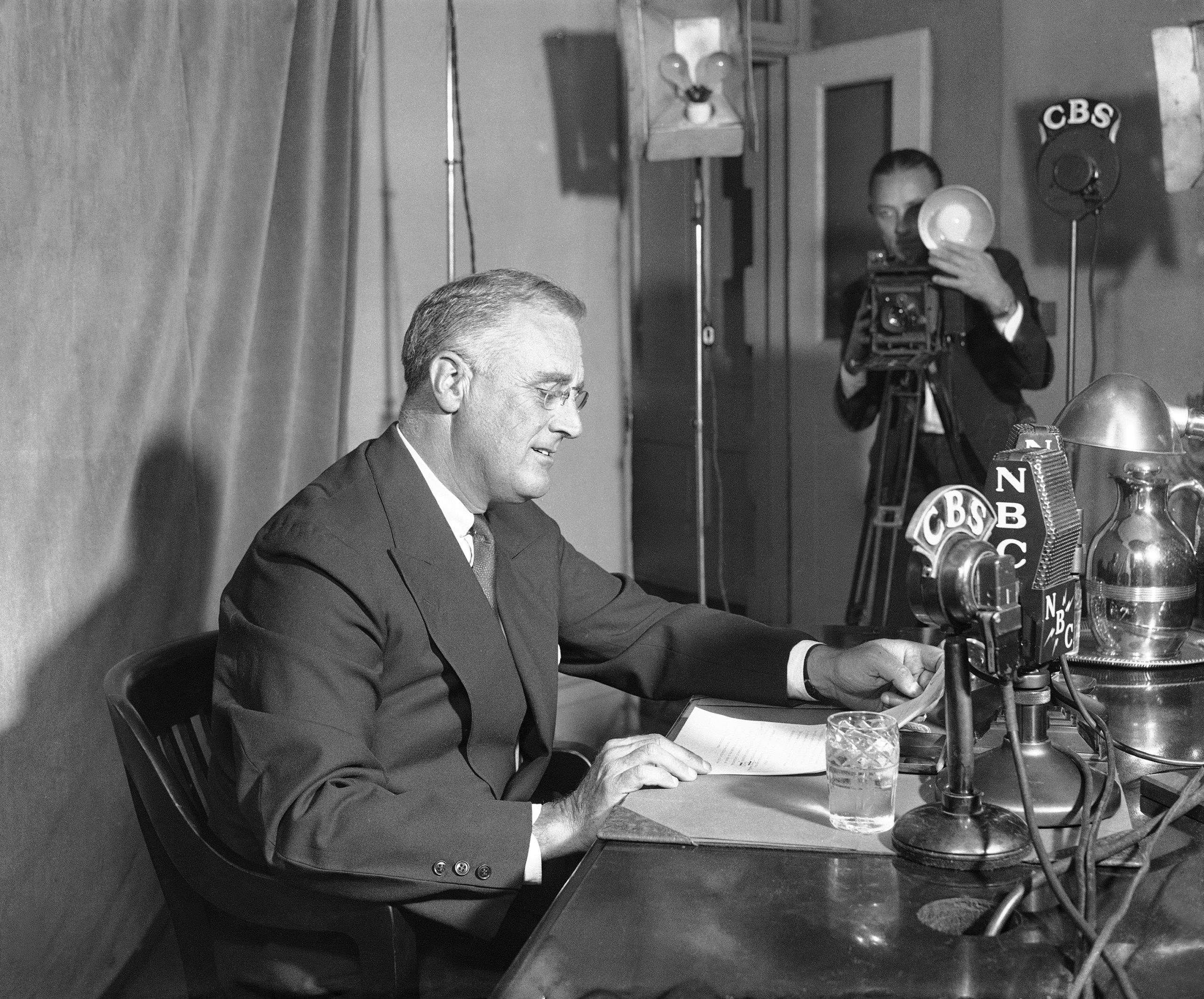
The demographic composition of the National Press Club has undergone a radical inversion since its 1908 inception. What began as a sanctuary strictly for "Active" members of the working press has evolved into an institution financially dependent on the very industries journalists are tasked with covering. In the early 20th century, the club defined eligibility with rigid exclusivity. Membership was restricted to white male newspapermen whose primary income derived from the editorial side of daily publication. This "Active" class held total governance power. They paid modest dues to maintain a space free from the influence of advertisers and political operatives. The bylaws explicitly marginalized non-journalists into "Associate" categories with no voting rights and limited access. This structure ensured that the club remained a guild for reporters rather than a networking hub for lobbyists.
The economic collapse of the traditional Washington press corps between 1980 and 2010 forced a fundamental restructuring of this model. As newspaper revenues plummeted, regional bureaus across the capital shut down at an worrying rate. Pew Research Center data indicates that the number of daily newspaper reporters covering Congress dropped by approximately 50 percent from the mid-1980s to 2008. The Regional Reporters Association, which represents the scribes of local papers stationed in D. C., saw its membership wither from over 200 in the mid-1990s to fewer than 60 by 2015. This contraction created a solvency emergency for the National Press Club. The population of eligible "Active" members capable of paying dues evaporated. The club faced a binary choice. It could downsize its operations or expand its definition of membership to include the booming sector of public relations and corporate communications.
The club chose expansion. By the late 1990s and early 2000s, the "Associate" category, comprising lobbyists, press secretaries, and PR professionals, began to swell. These members were frequently former journalists who had migrated to the private sector for better pay. They retained their social ties to the club represented the interests of corporations and government agencies. The friction between the shrinking class of working reporters and the rising of communicators came to a head in October 2010. The club membership voted to overhaul its constitution. The derogatory "Associate" label was retired in favor of the more professional "Communicator" designation. While the club maintained a cap to ensure Communicators did not exceed 45 percent of the voting Journalist membership, this metric masked the deepening financial reliance on the non-press sector.
The in membership dues reveals the true power within the institution. In 2024, a standard "Journalist" member paid annual dues of $608. A "Communicator" paid $864. A member in the "News Source" category, a euphemism for high-level lobbyists and industry representatives, paid $996. The club subsidizes the presence of working journalists by charging a premium to the professionals seeking access to them. The "News Source" category is particularly illustrative of this shift. To qualify, an applicant must demonstrate "regular contacts with members of the press" or duties involving the "dissemination of news." This codified the club's function as a marketplace where access is the primary commodity. The PR industry is to pay nearly double the rate of a reporter for the privilege of proximity.
| Category | Annual Dues | Monthly Rate | Voting Rights |
|---|---|---|---|
| Journalist (Active) | $608 | $50. 67 | Full Voting |
| Communicator | $864 | $72. 00 | Limited (Budget Only) |
| News Source | $996 | $83. 00 | Limited (Budget Only) |
| Building Tenant | $984 | $82. 00 | None |
The raw membership numbers for the 2020s expose the struggle to maintain the club's relevance and solvency. In January 2020, the club reported 2, 939 members. By January 2024, that number had fallen to 2, 544. The post-pandemic recovery has been sluggish, with the club failing to return to the 3, 000-member benchmark it views as necessary for long-term stability. To mitigate this decline, the 2024-2029 Strategic Plan proposed the creation of a new "Facilities Member" category. This 100 individuals who are neither journalists nor communicators simply desire access to the gym and workspaces. This move represents the final stage of the demographic shift. The club is no longer just a guild or even a mixed media hub. It is becoming a co-working space and fitness center that happens to host press conferences.
The definition of "Journalist" has also been stretched to preserve the constitutional requirement of a journalist majority. The "Active" category encompasses freelancers, bloggers, and contributors to non-traditional digital outlets. It also includes a significant number of "Retired" journalists. These members retain full voting rights pay significantly reduced dues ($344 annually for those over 65). This geriatric bloc helps the club satisfy its ratio requirements on paper. Yet it obscures the reality that the number of full-time, salaried reporters covering the federal government, the original core demographic, is a minority within the building. The governance of the club remains in the hands of the press, the operating budget is funded by the people they cover.
This demographic reality creates an environment where the distinction between news and noise is increasingly porous. The "Communicator" members are not passive observers. They serve on committees (though they cannot chair the Board of Governors), sponsor events, and populate the audience at luncheons. The "News Source" members pay a premium specifically to be in the room where news happens. In 2026, the National Press Club stands as a physical manifestation of the modern media ecosystem. It is a place where a shrinking cadre of reporters is encircled by a growing ring of well-funded communications professionals, all housed within a structure that requires the latter to survive. The ratio of journalists to communicators may be managed by bylaws, the ratio of dollars contributed heavily favors the PR industry. The club has survived the death of the newspaper age not by saving journalism, by monetizing the access to its remnants.
The Luncheon Series as a Geopolitical Platform
| Date | Speaker | Geopolitical Significance |
|---|---|---|
| April 20, 1959 | Fidel Castro | Denied communist ties; secured temporary US public sympathy before Soviet pivot. |
| Sept 16, 1959 | Nikita Khrushchev | Soviet Premier visit; forced gender integration of the ballroom; preached "coexistence." |
| Feb 19, 1975 | Margaret Thatcher | Spoke as Opposition Leader four years before becoming PM; established US conservative bona fides. |
| Oct 7, 1994 | Nelson Mandela | Addressed the Club as South Africa's black president, signaling the end of apartheid isolation. |
| Sept 2007 | Mahmoud Ahmadinejad | Addressed the Club via satellite; controversial platforming of an Iranian leader calling for Israel's destruction. |
| Oct 29, 2025 | Sikyong Penpa Tsering | Tibetan Government-in-Exile leader; direct challenge to Chinese sovereignty claims during high tension. |
In the 21st century, the Club's role evolved from a physical soapbox to a digital amplifier for information warfare. The 2007 invitation to Iranian President Mahmoud Ahmadinejad to speak via satellite sparked intense internal revolt and external condemnation. Critics argued the Club was providing a megaphone for hate speech; defenders the Amendment and the need of hearing the enemy. The event proceeded, demonstrating that the Club prioritized its status as a "free speech forum" over diplomatic niceties. This decision reinforced the Club's self-image as a neutral ground, even as it enraged the Bush administration. The selection of speakers is managed by the Speakers Committee, an unelected body of members that wields immense soft power. Their choices signal which movements are rising and which regimes are on the verge of rehabilitation. For instance, the invitation of Yasser Arafat (who spoke elsewhere whose lieutenants frequented the circuit) or the leaders of the Irish Republican Army (Sinn Féin's Gerry Adams) served to normalize groups previously as terrorists by the State Department. By allowing these figures to wear suits and eat rubber chicken in the same room where US Presidents announce candidacies, the Club visually integrates them into the establishment. As we move through the mid-2020s, the Club has aggressively inserted itself into the Sino-American conflict. The scheduling of Sikyong Penpa Tsering, the political leader of the Tibetan Government-in-Exile, for late 2025 was a calculated move. With US-China relations deteriorating, providing the "Headliners" platform to the Tibetan leadership serves as a sharp diplomatic rebuke to Beijing, a move the State Department might support quietly could not execute loudly without triggering a summit cancellation. The Club does the dirty work of diplomatic signaling that the White House cannot. The physical space of the ballroom itself contributes to this weight. The high ceilings, the flags, and the omnipresent C-SPAN cameras create an aura of officialdom. When a warlord stands at that podium, they look like a statesman. This visual laundering is the Club's most valuable export. It transforms insurgents into "partners" and dictators into "reformers," provided they can survive the Q&A. By 2026, the Luncheon Series has hosted every US President since Calvin Coolidge (excluding the sitting president in early 2026 who has yet to accept), alongside monarchs, prime ministers, and titans of industry. Yet, the true power of the series lies not in the famous names, in the timing of the invitations. The Club's decision to host a Ukrainian official during the height of the war, or a Taiwanese representative during a blockade emergency, acts as a barometer for American interventionism. It is a private institution performing a public diplomatic function, unaccountable to the voter indispensable to the state. The "Goldish" microphone is not a piece of audio equipment; it is a scepter of modern authority, granted or withheld by a committee of journalists who decide whose voice warrants the world's attention.
Financial Structure, Revenue Streams, and Corporate Sponsorships

The financial architecture of the National Press Club (NPC) is a complex bifurcation of tax status, real estate equity, and corporate subsidy. While the institution projects an image of journalistic independence, its solvency has historically relied on a symbiotic relationship with the industries its members cover. The Club operates under a dual structure: the National Press Club itself, a 501(c)(6) professional association that permits lobbying and business operations, and the National Press Club Journalism Institute (NPCJI), a 501(c)(3) non-profit organization that functions as the tax-deductible recipient of grants and donations.
The primary engine of the Club's historical wealth, and its near-ruin, was the National Press Building. Completed in 1927 at 14th and F Streets NW, the 14-story structure was the largest private office building in Washington at the time. The Club's founders structured the ownership to ensure the press corps would be landlords rather than tenants, holding a controlling interest that theoretically guaranteed low dues and subsidized operations. This model functioned until the real estate market shifts of the late 20th century exposed the Club to catastrophic liability. In the 1980s, a $100 million renovation project, intended to modernize the facility and integrate it with the "Shops at National Place," spiraled into a financial morass. By 1998, the building partnership faced a $92. 5 million mortgage deadline with the property value assessed far the debt, threatening the Club with foreclosure.
The resolution of this real estate emergency fundamentally altered the Club's financial footing. In 2011, the building was sold to Quadrangle Development Corp. and AEW Core Property Trust for approximately $167. 5 million. This transaction stripped the Club of its ownership load also its equity, converting the "sanctum sanctorum" of American journalism into a tenant. yet, the Club retained a favorable lease arrangement for its 13th and 14th-floor headquarters and secured significant cash reserves. By the end of 2023, the Club reported $18. 5 million in total assets and a debt-free status, a recovery driven by the liquidation of its real estate ambition in exchange for operational liquidity.
Operational revenue is derived primarily from three streams: membership dues, event venue rentals, and broadcast services. The membership structure reveals the institution's reliance on the public relations industry. While "Journalist" members are the face of the Club, "Communicator" members, public relations professionals, lobbyists, and press secretaries, pay higher dues and provide the bulk of the catering and event revenue. The Club functions as a high-end venue for the very corporate and political entities that journalists are tasked with scrutinizing. The Broadcast Operations Center, established in 2006, expanded this commercial capability, offering video production and transmission services to outside clients, further monetizing the Club's location and brand.
The 501(c)(3) Journalism Institute serves as the vehicle for corporate sponsorship, shielding the 501(c)(6) Club from direct conflicts of interest while allowing major corporations to underwrite journalism awards and training programs. The "Fourth Estate Award," the Club's highest honor, has become a focal point for this corporate patronage. In the 2024-2025 pattern, sponsors for the Institute's galas and programs included Axios (Diamond Sponsor), Al Jazeera Media Network, and Bloomberg Philanthropies. Other entities such as the Distilled Spirits Council of the United States have sponsored events, placing industry groups in direct proximity to the recognition of journalistic excellence.
| Sponsor/Partner | Category/Event | Industry Sector |
|---|---|---|
| Axios | Diamond Sponsor (Fourth Estate Gala) | Digital Media / Corporate |
| Al Jazeera Media Network | Gold Sponsor | International Media |
| Bloomberg Philanthropies | Silver Sponsor | Philanthropy / Financial Data |
| Distilled Spirits Council of the U. S. | Spirit Sponsor | Alcohol Industry Lobbying |
| Toyota | Program Supporter | Automotive / Manufacturing |
| News/Media Alliance | Silver Sponsor | Media Trade Association |
The COVID-19 pandemic presented the most serious threat to this financial model since the 1990s foreclosure emergency. With the building closed and the lucrative events business halted, revenue from room rentals and catering evaporated. The Club's leadership executed a "2-for-1" membership drive and used federal relief loans to maintain payroll. Unlike local newsrooms that shuttered during this period, the NPC's accumulated reserves and credit lines allowed it to survive the liquidity crunch. By 2024, the Club's strategic plan declared a return to pre-pandemic business levels, although membership numbers remained approximately 400 the January 2020 peak of 2, 939.
The distinction between the Club's "soft" lobbying and "hard" influence peddling is maintained through its Code of Ethics, which prohibits the Club from engaging in partisan political activity. yet, the 501(c)(6) status legally permits the Club to lobby on problem affecting its own business interests and press freedom. This creates a nuanced where the Club advocates for the Amendment, a moral mission, while simultaneously operating a commercial venue that profits from the proximity to power. The "Communicator" members, who frequently represent the subjects of news coverage, subsidize the facilities used by the working press. This cross-subsidy is the defining feature of the National Press Club's modern financial structure: a temple of the Fourth Estate built on a foundation of corporate rental income.
Governance Structure and Board Election Mechanics
| Year (Term) | President | Affiliation | Election Context |
|---|---|---|---|
| 2026 | Mark Schoeff Jr. | CQ Roll Call | Elected Dec 2025; ascended via Ladder. |
| 2025 | Mike Balsamo | Associated Press | Ran unopposed for President after serving as VP. |
| 2024 | Emily Wilkins | CNBC | Focused on press freedom and Austin Tice campaign. |
| 2023 | Eileen O'Reilly | Axios | Prioritized post-pandemic membership rebuilding. |
| 2022 | Jen Judson | Defense News | Navigated return to in-person events. |
### Constitutional Amendments and Bylaw Warfare The governance structure is not static; it evolves through constitutional amendments that require approval by the membership. These votes are frequently more contentious than officer elections. For instance, the 2010 overhaul required a massive mobilization of the "Active" membership to pass the two-thirds threshold. Other amendments have dealt with the definition of a "journalist" in an era of freelancers and bloggers. The Membership Committee acts as the gatekeeper, interpreting these bylaws to determine who gets the vote (Journalist) and who gets the bill (Communicator). Disputes over categorization, such as whether a think-tank fellow who writes op-eds qualifies as a journalist, are common, reflecting the blurring lines of the modern media ecosystem. The Board also oversees the National Press Club Journalism Institute, a separate 501(c)(3) non-profit. While the Institute has its own Board of Directors, the Club President appoints its members, ensuring that the Club's governance clique retains indirect control over the non-profit's training programs and press freedom advocacy work. This interlocking directorate reinforces the centralization of power within a small cadre of Washington-based reporters who are to commit the half-decade required to climb the ladder.
The Reliable Source and Social Networking Infrastructure

| Era | Venue Name | Key Policy/Event | Economic Function |
|---|---|---|---|
| 1920-1933 | The Taproom | Prohibition Evasion | Illicit revenue; exclusive access for "wet" politicians. |
| 1933 | The Taproom | Liquor License #1 | legal post-Prohibition bar in D. C. |
| 1945 | Members' Lounge | Truman/Bacall Incident | Establishment of "No Photography" privacy rule. |
| 1971 | Men's Grill | Integration Vote | Expansion of revenue base to female members. |
| 2000s-2026 | The Reliable Source | Taco Night (Fridays) | High-volume liquor sales; member retention strategy. |
The financial stability of the National Press Club relies heavily on the Reliable Source and its associated catering operations. Financial reports from 2023 and 2024 show that while membership dues stabilize the fixed costs, the variable revenue from food and beverage sales determines the Club's operating surplus. The bar serves as the counterweight to the declining headcount of traditional newsrooms. As of 2025, the "Journalist" membership category had shrunk relative to the "Communicator" (PR and lobbying) category, a shift reflected in the room's demographics. The Reliable Source, once a room of ink-stained wretches, frequently hosts communications directors pitching stories to the dwindling number of reporters present, closing the loop on the ecosystem the Club was built to house.
Press Freedom Advocacy and the Journalism Institute
| Journalist | Detaining Entity | Duration of Captivity | NPC Intervention Method | Outcome |
|---|---|---|---|---|
| Austin Tice | Syria (Assad Regime) / Unknown | 13+ Years (2012, Present) | Permanent banner, "Night Out" fundraisers, direct White House lobbying. | Status unresolved post-2024 regime collapse; investigation ongoing. |
| Jason Rezaian | Iran | 544 Days (2014, 2016) | Aubuchon Award (2015), petition drives, diplomatic pressure. | Released Jan 2016 in prisoner swap. |
| Emilio Gutiérrez Soto | USA (ICE/Immigration) | 15 Years (2008, 2023) | Legal counsel funding, congressional testimony, asylum sponsorship. | Asylum granted Sept 2023. |
| Evan Gershkovich | Russia | 491 Days (2023, 2024) | 24-hour Read-a-thon, Aubuchon Award (2023), diplomatic briefings. | Released Aug 1, 2024 in prisoner swap. |
| Maria Ressa | Philippines (Legal Harassment) | Ongoing Legal Battles | Aubuchon Award (2018), international coalition building. | Acquitted of tax evasion (2023); Nobel Peace Prize (2021). |
Beyond high-profile hostage cases, the Journalism Institute addressed the "quiet silencing" of American local news. As hedge funds dismantled regional papers from 2010 to 2025, the Institute launched "re-skilling" boot camps. These programs were not designed to teach typing, to train displaced print reporters in data forensics, digital security, and non-profit newsroom management. By 2025, the Institute had trained over 5, 000 journalists, of whom went on to found the hyper-local digital outlets that populate the American news terrain. The Institute also confronted the physical dangers of domestic reporting, issuing trauma kits and ballistic training to reporters covering civil unrest in the United States, a tacit admission that the "war zone" had come home. The financial engine backing this work relies on a mix of corporate philanthropy and member dues, yet the separation of the 501(c)(3) remains important. It allows the Institute to accept grants from foundations like Knight and Ford, which cannot legally fund the Club's lobbying activities. This firewall ensures that while the Club's President may dine with Senators to discuss postal rates (a 501(c)(6) concern), the Institute's Director can simultaneously file amicus briefs suing the Department of Justice for FOIA non-compliance. The Fallen Journalists Memorial, authorized by Congress in 2020 and spearheaded by the Club's advocacy, stands as the physical manifestation of this mission. Located near the National Mall, it honors those killed in the line of duty. For the Club, this was not passive remembrance active messaging: a permanent reminder to the federal government that the safety of the press is a state responsibility. By 2026, the Club had successfully transformed from a "gentleman's grill" into a formidable civil liberties union, proving that in an era of disinformation, the most weapon is a unified, well-funded, and stubborn defense of the truth-tellers.
Lobbying Intersections and Ethical Guidelines

The National Press Club (NPC) operates under a financial paradox that defines its modern existence: it is a sanctuary for the Fourth Estate funded largely by the Fifth Estate. While the Club's charter emphasizes the protection of journalists and the promotion of free press, its balance sheet tells a different story. By 2024, the organization's estimated annual revenue stood at approximately $36. 8 million, with nearly 73% of that income derived from "sales of assets," a category dominated by catering, event hosting, and room rentals. The dues paid by working journalists, ranging from $338 to $716 annually, are insufficient to maintain the 14th-floor prime real estate in downtown Washington. Consequently, the Club relies heavily on "Communicator" members (formerly "Associate" members) and corporate event rentals to subsidize the operations of the journalism class.
This reliance created a caste system within the membership structure that through 2026. "Active" members, defined as working journalists for independent news organizations, hold the exclusive right to vote for the Club President and the majority of the Board of Governors. "Communicator" members, public relations professionals, press secretaries, and lobbyists, pay significantly higher dues, frequently exceeding $864 annually, yet possess limited voting rights. This structure allows the Club to claim it is "run by journalists" while its coffers are filled by the very industries those journalists cover. The physical layout of the Club encourages the mingling of these two groups, transforming the Truman Lounge and the Reliable Source bar into the "neutral ground" where K Street influence peddlers can access the press corps without the friction of official appointment requests.
The most serious ethical intersection occurs in the rental of the Club's event spaces. The NPC distinguishes strictly between "Newsmaker" events, which are selected by the Club's professional staff and Board based on news value, and "private events" which are simply room rentals. To the outside observer, yet, this distinction is frequently invisible. A corporation, foreign government, or advocacy group can rent the Holeman Lounge or the Ballroom, invite a sympathetic Member of Congress to speak, and problem a press release with the dateline "NATIONAL PRESS CLUB." This practice allows entities to borrow the institution's credibility, laundering their message through the venue's prestige. In 2007, investigative reporter Ken Silverstein exposed this method in a sting operation where he successfully posed as a representative for a repressive Turkmen regime, finding lobbying firms eager to book the NPC to whitewash the dictatorship's image under the guise of an academic forum.
The Club's "Code of Ethics" attempts to police this boundary, the financial incentives make enforcement difficult. The rules explicitly state that "speakers at Club events intended to produce news shall not be scheduled in connections with social or entertainment events," and forbid members from receiving payments or gifts from event participants. Yet, the sheer volume of private events, over 2, 000 annually by the mid-2020s, creates a constant stream of corporate messaging within the headquarters of American journalism. Foreign agents registered under FARA frequently use the venue to host "press conferences" that are, in reality, paid propaganda exercises. While the Club management ensures these events do not carry the official "NPC Newsmaker" seal, the visual backdrop of the Club's podium frequently appears identical in subsequent video clips distributed on social media.
| Category | Annual Dues (Approx.) | Voting Rights | Primary Role |
|---|---|---|---|
| Journalist (Active) | $338, $716 | Full Voting | Governance & Legitimacy |
| Communicator | $864+ | Limited (3 Governors) | Revenue & Subsidy |
| Revenue Source | Amount (Est.) | % of Total | Implication |
| Sales of Assets (Events) | ~$26. 9 Million | 73. 2% | Dependence on Corporate Rentals |
| Contributions/Dues | ~$7. 4 Million | 20. 2% | Minority Funding Stream |
The "Jack Abramoff era" of the early 2000s heightened scrutiny on these interactions. While Abramoff operated his own restaurant, Signatures, on Pennsylvania Avenue, the culture of "pay-to-play" access he represented forced the NPC to tighten its guest policies. The Club had to defend against accusations that it was becoming a "pay-to-play" venue where access to the podium could be bought. In response, the Club's Ethics Committee clarified that it does not pay speakers, nor does it accept payment from organizations to place speakers in the official Newsmaker program. This separation is intended to prevent the "astroturfing" of the news pattern, where a funded campaign masquerades as a spontaneous news event.
By 2025 and 2026, the definition of "Journalist" faced new pressure from the "Creator Economy." Influencers and Substack authors, of whom accept direct patronage or absence traditional editorial oversight, began applying for Active membership. The Club's membership committee struggled to apply 20th-century definitions of "editorial independence" to a media terrain where the line between reporting and advocacy is nonexistent. Simultaneously, the Club's reliance on corporate event revenue deepened as traditional newsrooms continued to shrink, reducing the pool of journalists able to pay dues out of pocket. This economic reality ensures that while the National Press Club remains the symbolic heart of Washington journalism, its survival depends on its ability to serve as the premier venue for the industries seeking to influence it.
Digital Transition and Operational Status Post-2020
| Metric | April 2020 | October 2023 | Change |
|---|---|---|---|
| Total Membership | 2, 919 | ~2, 500 | -14. 3% |
| Journalist Members | 1, 477 | 1, 284 | -13. 1% |
| Communicator Members | 820 | 1, 065 | +29. 9% |
| Est. Annual Loss/Revenue | -$3. 5M (Loss) | +$36M (Est. Rev) | Recovery |
By 2025, under the presidency of Mike Balsamo (Associated Press), the Club had returned to a full schedule of in-person events, yet the atmosphere had shifted. The 2024 election pattern brought intense scrutiny to the interaction between the press and political figures. The Club's Journalism Institute, its non-profit affiliate, increasingly focused on safety training and legal defense, launching a "Press Freedom Center" to advocate for journalists detained abroad, such as Austin Tice and Evan Gershkovich. This advocacy work provided a moral anchor for the institution, even as its social function diminished. The year 2026 began with a grim reminder of the industry's economic reality. In February, the *Washington Post* executed a significant round of layoffs, prompting a sharp rebuke from the Club's newly inaugurated 119th President, Mark Schoeff Jr. of *CQ Roll Call*. Schoeff's tenure commenced not with a celebration of a thriving trade, with a defense of its shrinking workforce. His administration prioritized the "value" of membership in an era where digital connectivity made physical clubs seem anachronistic. The Club's response was to double down on professional development, launching "Career Days" to connect displaced reporters with recruiters, frequently from the very "Communicator" firms that bolstered the Club's balance sheet. Technologically, the Club in 2026 bears little resemblance to the cigar-filled rooms of the 20th century. It is a multimedia hub, equipped with fiber-optic lines and robotic cameras, capable of beaming a "Newsmaker" luncheon to a global audience instantly. Yet, this digital efficiency has come at the cost of intimacy. The "off-the-record" culture that once defined the Club has been largely eradicated by the ubiquity of smartphones and the expectation of immediate broadcast. The National Press Club has survived the digital transition and the pandemic, it has emerged as a different entity: a professional association and broadcast facility funded by public relations, fighting to preserve the legacy of a print journalism world that no longer exists.
2026 Membership Metrics and Strategic Outlook
| Category | Count (Est.) | Trend | Strategic Role |
|---|---|---|---|
| Journalist (Active) | 1, 350 | Slow Growth (+4%) | Voting power; brand legitimacy. |
| Communicator (PR) | 1, 050 | Stable / Slight Decline | Revenue generation; event sponsorship. |
| Young Members (<35) | 350 | High Growth (+13%) | Future pipeline; digital transition. |
| Total Membership | ~2, 750 | Recovering | Target: 3, 000 by 2029. |
Financially, the NPC is an anomaly among press clubs globally: it is rich. Following the sale of the Norman Rockwell painting *Norman Rockwell Visits a Country Editor* in 2015 and disciplined fiscal management during the 2020, 2022 lockdowns, the Club entered the 2026 fiscal year debt-free. Reserves stood at approximately $18. 5 million at the close of 2023, providing a buffer against the volatility of the Washington commercial real estate market. This financial insulation allows the Club to operate the "Fourth Estate" restaurant and the "Reliable Source" bar even as foot traffic in downtown D. C. remains 2019 levels. ### The Physical Plant and the Remote Work Threat The strategic outlook for 2026 is dominated by the "flight to quality" in commercial real estate. The National Press Building (529 14th St NW), where the Club occupies the top two floors, faces the same headwinds as other Class B office structures in the District. With D. C. office vacancy rates hovering near 20% in early 2026, the ecosystem that once fed the Club, hundreds of reporters working in the building's lower floors, has evaporated. The bureaus of *The New York Times*, *Bloomberg*, and *The Associated Press* are located elsewhere. To counter this physical isolation, the Club's 2024, 2029 strategy pivoted toward becoming a destination event venue rather than a daily workspace. Revenue from the Broadcast Operations Center and ballroom rentals for corporate and government events far member dues. The Club functions as a high-end conference center with a journalism theme, using the profits to fund the National Press Club Journalism Institute (NPCJI). ### Advocacy and the Journalism Institute The NPCJI, the Club's 501(c)(3) non-profit arm led by Ed Kelley (2025, 2026), reported revenues exceeding $4. 7 million entering the mid-2020s. This funding powers the Club's primary claim to relevance: press freedom advocacy. The Institute acts as the fiscal sponsor for the newly established Press Freedom Center, which coordinates legal and diplomatic campaigns for detained journalists. The cases of Austin Tice (missing in Syria since 2012) and Evan Gershkovich (released in 2024) served as rallying points that unified the membership factions. In 2026, the Institute's focus shifted toward the "disinformation defense" and AI ethics. With the 2026 midterm elections method, the Club positioned itself as a credentialing authority, issuing statements on the use of synthetic media in political reporting. This advocacy work provides the "moral cover" that justifies the presence of corporate sponsors and communicator members. ### Strategic Outlook: The Cathedral of the Trade The existential risk for the National Press Club in 2026 is not bankruptcy, irrelevance. The "smoke-filled room" era is dead; the "digital nomad" era makes a physical headquarters optional. The leadership's strategy is to transform the Club into a "Cathedral of Journalism", a symbolic site where the profession celebrates its rituals (the Fourth Estate Award, the Kalb Report) and defends its tenets, even if the daily practice of journalism happens on Slack and Zoom. Success depends on the "Young Member" demographic. The 13% growth in this category (2024, 2025) suggests that digital-native journalists still crave physical community. yet, retaining them requires modernizing the facilities and lowering the barrier to entry. The Club's survival method is clear: use the wealth generated by corporate events and PR members to maintain a for the Amendment, ensuring that even if the newspapers die, the Press Club remains.