
Founding and Early Operations in Chinatown 1969, 1980
The Pine Street Inn opened its doors in October 1969, not as a pristine charitable venture, as a desperate response to a humanitarian emergency unfolding in the gutters of downtown Boston. The original location at 8 Pine Street stood in the heart of Chinatown, an area rapidly transforming into the city's notorious "Combat Zone." The building itself was a relic, previously operating as the Rufus Dawes Hotel, a flophouse that had served the city's indigent population since the early 20th century. By the time Paul Sullivan and a coalition of "Boston Urban Priests" assumed control, the structure was a firetrap, reeking of stale alcohol and unwashed bodies, yet it offered the only alternative to freezing death for hundreds of men.
Paul Sullivan, the shelter's executive director, instituted a radical departure from the punitive "skid row" missions of the era. He rejected the terms "inmate" or "transient," insisting that every man who walked through the doors be referred to as a "guest." This semantic shift represented a core operational philosophy: the suspension of judgment. Unlike other institutions that demanded sobriety or religious conversion in exchange for a bed, Pine Street Inn adopted a "low-threshold" admission policy. If a man could walk in, he had a bed. This policy frequently resulted in a chaotic environment, as the shelter became the primary drain for the city's severe alcoholism emergency.
The operational reality of the 1970s was brutal. The shelter provided "a hot and a cot", a simple meal and a bed, to approximately 200 men nightly. The demographic profile in these early years was monolithic: overwhelmingly white, older males, suffering from late-stage alcoholism. These men were the legacy of the post-war industrial decline, displaced workers who had drifted into chronic homelessness. The shelter operated on a shoestring budget, relying heavily on volunteers to prepare meals and manage the intake process. Ralph Hughes, who began as a volunteer and later became a fixture of the organization, described an atmosphere of controlled anarchy, where staff managed medical emergencies and violent outbursts with minimal resources.
The external environment exerted immense pressure on the facility. In 1974, the Boston Redevelopment Authority officially the area surrounding Washington Street as the "Combat Zone," concentrating the city's adult entertainment businesses into a containment district. This zoning decision surrounded the shelter with a dense grid of strip clubs, peep shows, and prostitution rings. The friction between the shelter's population and the predatory economy of the Combat Zone was constant. Guests leaving the shelter were frequently victimized by pushers or arrested during police sweeps aimed at "cleaning up" the vice district.
The of the neighborhood shifted violently in November 1976 following the murder of Harvard football player Andrew Puopolo during an altercation in the Combat Zone. The subsequent crackdown by the Boston Police Department and the city administration squeezed the homeless population further. While the city sought to sanitize the district for business interests, the Pine Street Inn found itself an unwanted anomaly in a neighborhood slated for redevelopment. The building at 8 Pine Street, already decaying, could no longer support the intake numbers, which swelled as the state began deinstitutionalizing mental health patients. This policy shift introduced a new, younger, and more volatile demographic to the shelter: men suffering from untreated schizophrenia and bipolar disorder, rather than just alcoholism.
The winter of 1978 proved to be the breaking point. The historic Blizzard of '78 paralyzed Boston, trapping the city under feet of snow and forcing the shelter to operate 24 hours a day for the time. The overcrowding at 8 Pine Street became dangerous. Men slept in corridors, on stairs, and in every available inch of floor space. The fire risks inherent in the old wood-frame structure terrified the administration. It became clear that the Chinatown location was a ticking time bomb. Sullivan and the board recognized that survival required a new facility, one that could withstand the increasing demand and the changing profile of Boston's homeless.
The search for a new location led to the acquisition of the former Boston Fire Department Headquarters at 444 Harrison Avenue in the South End. This building, a of yellow brick and granite, carried its own significant history. Designed by city architect Edmund March Wheelwright and completed in 1894, the structure was modeled after the Palazzo Pubblico in Siena, Italy. Its defining feature, a 156-foot tower originally used to hang and dry canvas fire hoses, dominated the skyline. For nearly a century, this building had served as the nerve center for the city's fire protection services before falling into disuse.
Securing the Fire Headquarters was a complex political maneuver. The South End in 1980 was on the precipice of gentrification, and introducing a massive homeless shelter was met with skepticism. Yet, the sheer of the building offered a solution to the overcrowding at Pine Street. The facility included a massive drill hall that could be converted into a dormitory, industrial kitchen capacity, and administrative offices. The move in 1980 marked the end of the "flophouse" era and the beginning of the modern social service agency model. The transition was logistical and symbolic; the organization retained the name "Pine Street Inn" even with leaving Pine Street, preserving its lineage while occupying a structure built to withstand disasters.
| Metric | 8 Pine Street (1969-1980) | 444 Harrison Ave (1980 Onward) |
|---|---|---|
| Building Type | Converted Flophouse (Rufus Dawes) | Municipal (Fire HQ, 1894) |
| Nightly Capacity | ~200 Men | Expanded to 350+ (initially) |
| Primary Demographic | Older White Males (Alcoholism) | Mixed Age, Deinstitutionalized (Mental Health) |
| Neighborhood Context | Combat Zone (Vice District) | South End (Industrial/Early Gentrification) |
| Admission Policy | "Hot and a Cot" (Survival) | Introduction of Case Management/Triage |
The relocation to Harrison Avenue allowed for the segregation of services and the introduction of a women's unit, acknowledging the growing number of homeless women on Boston's streets, a demographic virtually invisible in the 1969 census. The 1980 move also coincided with the deepening of the affordable housing emergency in Boston. As single-room occupancy (SRO) hotels in the South End and Chinatown were converted into luxury condominiums, the exit ramps from homelessness disappeared. Pine Street Inn ceased to be a temporary waystation for transient laborers and became a permanent residence for a population with nowhere else to go. The 1894 firehouse, built to protect the city from flames, protected the city's human wreckage from the cold.
Relocation to the Former Fire Department Headquarters
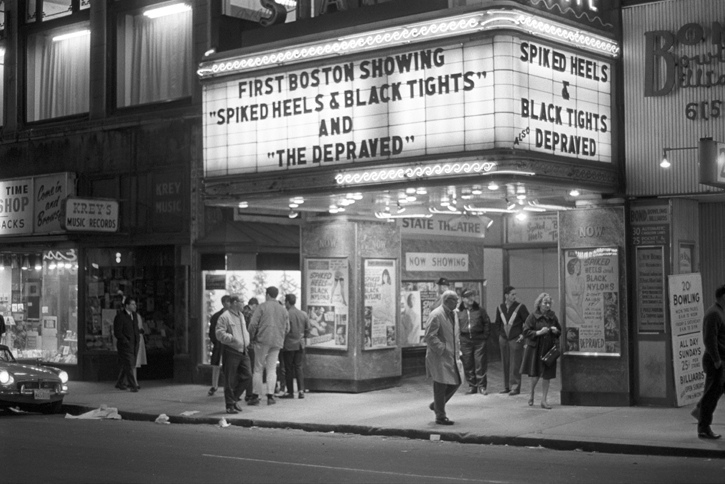
In 1980, Pine Street Inn abandoned its decaying premises at 8 Pine Street in Chinatown. Executive Director Paul Sullivan orchestrated the relocation to 444 Harrison Avenue in the South End. The organization required a larger facility to address the rising homeless population in Boston. The selected site previously served as the headquarters for the Boston Fire Department. This move transitioned the agency from a temporary refuge into a permanent institution.
Edmund March Wheelwright designed the Harrison Avenue complex. The city completed construction on the yellow brick structure in 1895. Wheelwright modeled the architecture after the Palazzo Vecchio in Florence and the Torre del Mangia in Siena. A distinctive tower rises 156 feet above the street. Firefighters originally used this hollow shaft to hang and dry canvas hoses. The building stands as a protected landmark within the South End district.
The architectural firm Childs Bertman Tsekaris and Casendina managed the 1980 renovation. Crews converted the municipal into a functional shelter for hundreds of guests. The expanded square footage allowed Pine Street Inn to offer beds to homeless women for the time. This facility remains the primary base of operations for the organization in 2026.
The Paul Sullivan Era and Shelter Management
| Metric | 1969 (Chinatown) | 1980 (Harrison Ave Move) | 1995 (Post-Sullivan Era) | 2026 (Modern Era) |
|---|---|---|---|---|
| Nightly Capacity | ~200 Men | 350+ Men & Women | 700+ Shelter Beds | 585 Shelter Beds / 1, 200+ Housing Units |
| Primary Demographic | Older Alcoholic Men | Deinstitutionalized Mentally Ill | Crack Epidemic / HIV+ | Chronically Homeless / Migrant Families |
| Key Facility | 8 Pine Street | 444 Harrison Ave (Fire HQ) | Harrison Ave + Satellites | Decentralized Housing Network |
| Management Model | emergency Triage | Institutional Shelter | Social Service Agency | Housing & Workforce Development |
| Annual Budget | <$50, 000 (Est.) | ~$2. 5 Million | ~$12 Million | ~$70 Million+ |
The legacy of the Sullivan era lies in the definition of the "guest." By refusing to pathologize the people seeking his help, Sullivan created a low-barrier entry point that saved thousands of lives. The transition to the Harrison Avenue " " in 1980 provided the physical capacity to handle the crises of the Reagan years, it also cemented the shelter as a permanent feature of Boston's urban terrain. The "hot and a cot" model saved lives, yet it also inadvertently created a warehouse for the poor, a dilemma that subsequent directors like Lyndia Downie would spend decades trying to through permanent housing initiatives.
Adoption of the Housing First Model
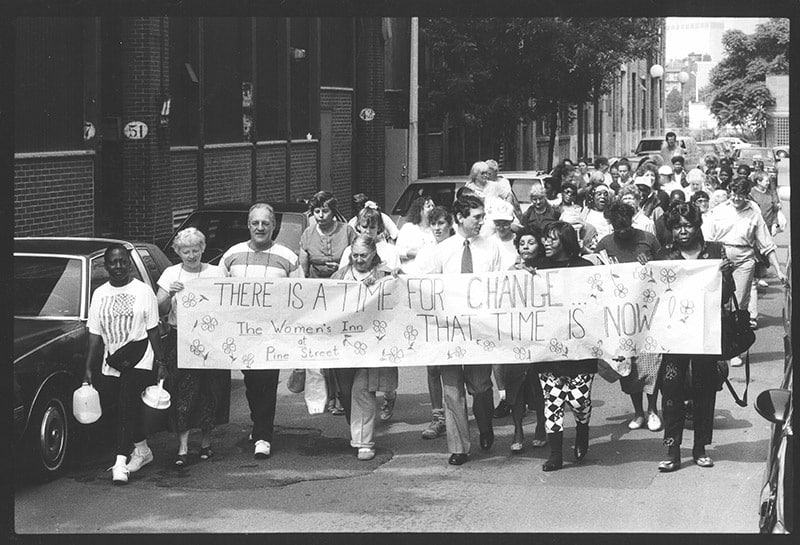
By the late 1990s, the Pine Street Inn had inadvertently replicated the very institution it sought to replace: the 18th-century almshouse. even with the removal of the punitive "work test" of the Victorian era, the shelter functioned as a warehouse for the indigent, managing homelessness rather than solving it. The "three hots and a cot" model, while keeping men and women from freezing to death on Boston's streets, created a static underclass of permanent shelter residents. Internal audits at the turn of the millennium revealed a disturbing metric: the shelter system was not a revolving door, a cul-de-sac. A small fraction of the population was consuming the vast majority of the resources, trapped in a pattern of emergency room visits, detoxification stints, and nights on a cot.
The catalyst for structural change arrived in 2004, when Pine Street Inn leadership, under Executive Director Lyndia Downie, commissioned a deep statistical analysis of their guest population. The data exposed a clear reality that dismantled the prevailing logic of emergency aid. The audit found that approximately 4. 4% of the shelter's guests, the so-called "long-term stayers", were consuming nearly 50% of the available bed nights. These individuals were not down on their luck; they were chronically homeless, suffering from untreated psychosis, severe addiction, and complex medical frailty. The shelter environment, chaotic and crowded, exacerbated their conditions. For this demographic, the "staircase" model of housing, which demanded sobriety and psychiatric stability before a person could earn a key to an apartment, was an barrier. They would never be "ready" for housing while living in a shelter, yet they could not leave the shelter until they were ready.
In a move that alienated traditional donors who preferred the tangible optics of soup kitchens, Pine Street Inn executed a hard pivot toward "Housing." This philosophy, pioneered by Dr. Sam Tsemberis in New York aggressively adapted by Downie in Boston, inverted the staircase model. It posited that housing is a fundamental physiological need, not a reward for good behavior. The strategy held that a chronically homeless alcoholic is safer, cheaper to treat, and more likely to stabilize in a subsidized apartment than in a shelter bunk. Consequently, the organization made the controversial decision to freeze the number of shelter beds and redirect all new capital toward Permanent Supportive Housing (PSH).
The transition required a massive reallocation of real estate and capital. Pine Street began acquiring lodging houses, renovating dilapidated properties, and partnering with developers to build dedicated units. The operational shift is visible in the organization's bed-count metrics over a two-decade span, showing the deliberate of emergency shelter capacity in favor of permanent units.
| Year | Emergency Shelter Beds | Permanent Housing Units | Strategic Phase |
|---|---|---|---|
| 2003 | 715 | 280 | Warehousing Era |
| 2009 | 691 | 513 | Early Adoption |
| 2015 | 650 | 850 | Acceleration |
| 2024 | 585 | 1, 000+ | Consolidation |
| 2026 | 550 (est.) | 1, 200+ | Post-Pandemic Expansion |
The economic argument for this shift proved as potent as the humanitarian one. Internal data and external studies consistently showed that a chronically homeless person on the street costs the public sector between $40, 000 and $60, 000 annually in ambulance rides, police interventions, and emergency room visits. By contrast, providing that same person with permanent supportive housing, including the cost of a case manager, averaged approximately $25, 000 to $30, 000 per year. The Housing model did not just save lives; it stopped the financial of public funds caused by the "frequent flyer" population.
Implementation faced serious blocks. NIMBY (Not In My Backyard) opposition in neighborhoods like Jamaica Plain and Dorchester frequently stalled projects. Residents feared that housing formerly homeless individuals would import crime and drug use. Pine Street countered these narratives with retention data. By 2024, the organization reported a housing retention rate of approximately 96% after one year. Tenants who had spent decades on the street were not burning down their apartments; they were paying rent, cooking meals, and engaging with on-site case managers. The stability of a locked door and a private lease proved to be the strongest antipsychotic and anti-anxiety intervention available.
The culmination of this strategy manifested in 2025 with the opening of "The Lyndia" at 3368 Washington Street in Jamaica Plain. Named after the long-serving executive director, this development represented the largest permanent supportive housing project in New England at the time of its completion. The facility provided 140 units specifically for individuals moving out of homelessness, integrated with 62 affordable units for low-income families. This mixed-income method prevented the creation of a ghettoized "homeless building," integrating formerly unhoused residents into a broader community structure. The building featured 24-hour security, on-site clinical staff, and case management offices, acknowledging that the key to retention was not just the roof, the support services underneath it.
By March 2026, the model faced new tests from the post-pandemic economic climate. The surge in eviction rates following the expiration of COVID-19 protections created a new wave of homelessness that differed from the chronic population of the early 2000s. In response, Pine Street expanded its portfolio further, partnering with The Community Builders to convert a Comfort Inn in Dorchester into permanent housing for seniors. This project, opening in early 2026, targeted the rapidly aging homeless population, men and women who had aged prematurely due to the rigors of street life. The conversion of a commercial hotel into permanent apartments symbolized the final victory of the Housing doctrine: the repurposing of transient spaces into permanent homes.
iCater and Workforce Training Enterprises
The aroma of roasting turkey and industrial-strength sanitizer that permeates the lower levels of 444 Harrison Avenue signals a departure from the traditional charity model. Here, the Pine Street Inn operates iCater, a social enterprise that functions less like a soup kitchen and more like a mid-sized logistics firm. By 2026, this operation had evolved into a multi-million dollar revenue generator, producing approximately 19, 000 meals per week. The program represents a calculated shift from the passive "warehousing" of the homeless to an active, market-driven attempt to reintegrate them into the labor force. It is a model built on the "double bottom line": financial viability and social impact.
To understand the significance of iCater, one must examine the history of labor requirements for Boston's indigent population. In the late 19th century, the concept of the "worthy poor" dictated public policy. The Wayfarers' Lodge on Hawkins Street, opened by the city in 1879, operated on a strict "work test" basis. Men seeking a bed were required to saw one-eighth of a cord of wood in exchange for a meal and a plank to sleep on. This wood was then sold by the city to recoup costs. The labor was punitive, designed to deter "tramps" and "vagrants" from seeking aid unless absolutely desperate. It offered no skill acquisition, only physical exertion as a moral tax for survival.
The contrast between the Hawkins Street woodyard and the iCater kitchen illustrates the trajectory of homeless services over 150 years. Where the woodyard demanded calorie expenditure for immediate shelter, iCater demands cognitive engagement for long-term stability. The program, originally launched in 2000 under the name "Abundant Table" before rebranding to iCater in 2011, rejects the punitive model. Instead, it treats the trainee as an undeveloped asset. The curriculum is rigorous, covering culinary arts, food safety, and kitchen logistics. Trainees do not chop vegetables; they earn ServSafe certification, a non-negotiable credential in the modern food service industry.
The economics of iCater distinguish it from standard vocational training. It is a business. The enterprise holds contracts to provide congregate meals for other shelters, halfway houses, and non-profits across Greater Boston. By 2024, iCater and its sister programs generated between $2 million and $3 million in annual revenue, offsetting a portion of the Inn's $97 million operating budget. This revenue stream insulates the program from the volatility of state grants and donor fatigue. The kitchen produces over 3, 000 meals daily, feeding Pine Street's own guests while simultaneously fulfilling external catering contracts for corporate events and board meetings. The trainees are the labor force that makes this output possible, gaining real-world pressure-cooker experience that a classroom cannot simulate.
| Era | Institution | Task | Objective | Outcome for Participant |
|---|---|---|---|---|
| 1879, 1920s | Wayfarers' Lodge | Sawing wood / Splitting stone | Deterrence & Cost Recovery | One night's shelter; no skills. |
| 1930s, 1960s | Municipal Shelters | Custodial / Maintenance | Facility Upkeep | Temporary shelter; sporadic wages. |
| 2000, 2010 | Abundant Table | Bulk Food Prep | Shelter Meal Provision | Basic kitchen experience. |
| 2011, 2026 | iCater / Workforce Dev | Culinary Arts / Catering | Marketable Skills & Revenue | ServSafe Cert; job placement. |
The Workforce Development program extends beyond the kitchen. While iCater is the flagship, Pine Street also operates a Housekeeping and Maintenance training track. This sector the hospitality industry, training individuals in the precise, standardized cleaning required by major hotels. By 2025, the combined enrollment in these workforce programs hovered around 130 to 165 individuals annually. The graduation rate is a serious metric, the retention rate, graduates who remain employed six months or a year later, is the true test. Pine Street maintains a dedicated team of employment specialists who act as brokers between graduates and corporate partners like Marriott, Whole Foods, and Legal Sea Foods.
yet, the route from shelter to paycheck is with friction. The trainees frequently carry heavy baggage: criminal records (CORI), gaps in employment history spanning decades, and active recovery from substance use disorders. The "soft skills" training, conflict resolution, punctuality, taking direction, is frequently more difficult to master than the knife skills. A 2025 internal review noted that while technical proficiency could be achieved in weeks, the behavioral adjustments required for the 9-to-5 world frequently took months or years. The program's structure acknowledges this by integrating case management directly into the training period, attempting to solve housing and health problems simultaneously with employment training.
The COVID-19 pandemic of 2020-2022 served as a stress test for the iCater model. With corporate offices closed and events cancelled, the high-margin catering revenue evaporated overnight. The kitchen pivoted entirely to emergency feeding, churning out thousands of boxed meals for the homeless population that had been dispersed to satellite locations and hotels to maintain social distance. This period underscored the fragility of the social enterprise model when tethered to the commercial economy. Yet, by 2026, the catering arm had recovered, adapting to a new market reality where hybrid work reduced the demand for daily corporate lunches increased the demand for high-quality, periodic event catering.
Critics of the social enterprise model that it prepares people for low-wage industries that perpetuate poverty. Food service and housekeeping are notoriously underpaid sectors. Pine Street executives counter this by framing these jobs as the rung on a ladder that was previously missing entirely. The goal is not to create career dishwashers, to establish a documented work history that allows a person to rent an apartment. In a city where the median rent exceeded $3, 000 in 2024, a minimum wage job is insufficient for survival without the subsidized housing components that Pine Street also manages. The integration of workforce training with the "Housing " strategy is the only method that prevents graduates from cycling back into the shelter system.
The physical environment of the training program reflects its professional ambitions. The kitchen at Harrison Avenue is a sprawling, stainless-steel complex that rivals the back-of-house operations of Boston's largest hotels. Visiting chefs from the city's top restaurants frequently conduct workshops, bridging the gap between the shelter and the culinary elite. These interactions serve a dual purpose: they demystify the industry for the trainees and destigmatize the homeless workforce for the employers. When a head chef from a Seaport restaurant sees a Pine Street trainee execute a perfect julienne, the abstract "homeless problem" becomes a tangible hiring opportunity.
By the mid-2020s, the program had also begun to address the digital divide. Kitchens and hotels increasingly rely on inventory management software and digital scheduling platforms. Consequently, digital literacy became a mandatory component of the curriculum. A trainee who cannot navigate a touchscreen point-of-sale system is unemployable in 2026. This continuous updating of the syllabus reflects the organization's recognition that the labor market is a moving target. The "work test" of the 19th century was static; the workforce development of the 21st century must be.
, iCater and the workforce initiatives represent the Pine Street Inn's refusal to accept the permanent dependency of its guests. While the shelter provides a safety net, the training programs attempt to weave a rope ladder. The climb is steep, and not everyone makes it to the top. Recidivism remains a stubborn reality; graduates relapse and return to the guest bunks. Yet, for the hundreds who secure and hold employment each year, the program validates the thesis that with the right tools, the pattern of homelessness can be broken, not just managed.
Street Outreach and Emergency Night Services

The history of Boston's night services for the indigent reveals a clear evolution from punitive exclusion to active, life-saving intervention. In the 18th century, the city operated under "Warning Out" laws, a legal method used between 1700 and the early 1800s to expel non-residents who might become a financial load. Town officials would physically remove strangers from city limits before they could claim residency or aid. By 1879, the city established the Wayfarers' Lodge on Hawkins Street, which formalized the "work test." To secure a bed and a meal, a man had to saw one-eighth of a cord of wood. This transactional charity well into the 20th century, treating homelessness as a moral failing requiring labor to redeem.
Pine Street Inn dismantled this philosophy upon opening in 1969. Executive Director Paul Sullivan introduced the concept of the "guest," a radical linguistic and operational shift that removed the requirement for prayer, payment, or labor in exchange for shelter. The Inn operated on a behavior-based model rather than a sobriety-based one, accepting men who were intoxicated provided they did not pose a danger to others. This "low-threshold" entry point remains the of the Inn's emergency night services, though the operational has expanded significantly from the original 200 cots in Chinatown to the current 585 emergency beds spread across four locations, including the primary facility on Harrison Avenue.
The modern era of street outreach began in 1986, triggered by a specific tragedy. After a homeless man froze to death just two blocks from the shelter, Pine Street Inn launched its outreach van. The objective changed from waiting for guests to arrive to actively seeking them out in the city's alleys, parks, and doorways. As of 2026, these vans operate 365 nights a year, departing at 9: 00 PM and patrolling until 5: 00 AM. The teams cover every neighborhood in Boston, from the Financial District to Hyde Park, serving as the primary nocturnal lifeline for the "unsheltered" population, those who refuse to enter the shelter system due to mental illness, trauma, or addiction.
The mechanics of the outreach vans prioritize survival and trust-building over immediate results. Teams distribute hot soup, sandwiches, blankets, and warm clothing, yet these items serve primarily as tools to initiate contact. The outreach philosophy relies on "nurturing persistence," frequently requiring dozens or hundreds of interactions before an individual accepts an offer of housing. Data from the 2024-2025 operational year indicates the vans contact upwards of 100 distinct individuals nightly. In 2024 alone, this persistent method resulted in 95 individuals moving directly from the street into permanent housing, bypassing the emergency shelter system entirely.
Inside the Harrison Avenue headquarters, Emergency Night Services function as a high-volume triage center. The intake process, once a chaotic rush for a limited number of beds, uses a coordinated entry system linked to citywide databases. Guests undergo assessment not just for immediate bed placement for housing eligibility. The shift to a "Housing " model in the 2010s altered the shelter's purpose; it is no longer a permanent warehouse for the poor a temporary staging ground. Even with this focus, demand frequently capacity. During extreme winter weather events, the Inn activates overflow, placing mats in lobbies and cafeterias to ensure no one is turned away to freeze.
The rise of the opioid emergency, followed by the proliferation of fentanyl and xylazine, fundamentally changed the nature of night services. In the 1970s and 80s, the primary health concern was alcoholism. By the 2020s, outreach teams and shelter staff became frontline medical responders. Narcan (naloxone) became standard equipment for all van crews. Boston Public Health Commission data from early 2024 showed a 33% decrease in opioid-related overdose deaths, a statistic attributed in part to the saturation of harm reduction services provided by Pine Street outreach workers who frequently reverse multiple overdoses in a single shift. The vans serve as mobile field units, bridging the gap between the street and medical detox programs.
By January 2026, the efficacy of these combined efforts appeared in the city's annual homeless census. The data showed a 4. 3% in total decline in homelessness from the previous year, with the unsheltered "street count" dropping to just 2. 4% of the total homeless population, one of the lowest rates among major U. S. cities. This metric validates the strategy of combining aggressive night outreach with rapid housing placement. The "Inn" is no longer just a building with beds; it is a decentralized logistical network that tracks, engages, and houses the city's most residents before they disappear into the night.
| Feature | Wayfarers' Lodge (1879) | Pine Street Inn (2026) |
|---|---|---|
| Entry Requirement | Cut 1/8 cord of wood | Behavior-based (No labor required) |
| Target Population | "Tramps" and "Vagrants" | Guests / Unsheltered Individuals |
| Outreach Method | None (Police referral only) | Mobile Vans (9 PM, 5 AM nightly) |
| Primary Health Risk | Malnutrition / Exposure | Opioid Overdose / Xylazine / Mental Health |
| Outcome Goal | Temporary lodging | Permanent Supportive Housing |
Permanent Supportive Housing Real Estate Portfolio
The operational reality of Pine Street Inn has shifted aggressively from emergency triage to large- real estate development. By 2026, the organization functions not as a shelter operator as a significant landlord and property developer in Greater Boston. This transition reflects a strategic adherence to the "Housing " model. The data shows that warehousing individuals in congregate shelters fails to resolve chronic homelessness. Consequently, Pine Street Inn has amassed a portfolio of over 1, 100 permanent supportive housing units. This real estate footprint spans from converted industrial warehouses in Jamaica Plain to historic YWCA buildings in Back Bay.
The most substantial addition to this portfolio is "The Lyndia" at 3368 Washington Street in Jamaica Plain. Opened in March 2025, this development represents the largest permanent supportive housing project in New England. The site itself holds a history that mirrors the economic evolution of Boston. In the 1700s and 1800s, Washington Street served as the primary artery connecting the peninsular town of Boston to the mainland of Roxbury. It was a route for commerce and transit long before the electric streetcars of the late 19th century residential density. By the late 20th century, the specific parcel at 3368 Washington Street had become an industrial warehouse. Pine Street Inn purchased this warehouse in 1997 to use for operational logistics and office space. For decades, the site remained a utilitarian asset in a low-density industrial corridor.
The 2025 redevelopment of 3368 Washington Street marks a radical maximization of land value for social utility. In partnership with The Community Builders (TCB), Pine Street Inn demolished the single-story warehouse to construct a five-story residential complex. The building contains 202 total units. Pine Street designates 140 of these units as permanent supportive housing for formerly homeless individuals. The remaining 62 units serve as affordable housing for low-income families. This mixed-income structure allows the project to use Low-Income Housing Tax Credits (LIHTC) and other state subsidies. The facility includes 24-hour security, on-site case management, and community spaces designed to stability. The retention rate for tenants in such units hovers near 96 percent. This metric proves that stability is achievable when the variable of shelter is removed from the equation.
Another major asset in the portfolio is the property at 140 Clarendon Street in Back Bay. This site offers a distinct historical narrative. The building was constructed between 1927 and 1929 to house the YWCA. It stood on land that was part of the massive Back Bay landfill project of the mid-19th century. For nearly a hundred years, the structure served women seeking safe lodging in the city. In 2024, Pine Street Inn, in collaboration with Beacon Communities, completed the adaptive reuse of this historic property. The project created 210 affordable apartments. Pine Street Inn controls 111 of these units for supportive housing. This acquisition placed formerly homeless individuals in one of Boston's most affluent neighborhoods. It challenged the "Not In My Backyard" (NIMBY) resistance that frequently forces social services to the periphery of the city.
The organization continues to expand into 2026 with the conversion of the Comfort Inn at 900 Morrissey Boulevard in Dorchester. This project a specific demographic: aging homeless adults. The site sits on a corridor defined by mid-20th-century automotive infrastructure. Morrissey Boulevard was designed for the car age. It is being reimagined for residential density. The hotel-to-housing conversion creates 99 studio apartments. Each unit features a kitchenette and private bathroom. This design eliminates the congregate living conditions that contribute to the spread of infectious diseases in shelters. The project acknowledges a grim demographic reality. The homeless population is aging. Geriatric care for the indigent is becoming a primary operational challenge for Pine Street Inn.
The portfolio also includes scattered-site housing acquired during the 1980s and 1990s. These early acquisitions marked the initial steps away from the shelter-only model. In 1984, Pine Street opened a residence in Brookline for 26 tenants. This was a controversial move at the time. It placed homeless individuals in a wealthy suburb rather than the urban core. Other properties include the Sister Virginia Mulhern House in Jamaica Plain and residences on Upton Street in the South End. These smaller buildings integrate direct into existing row-house neighborhoods. They avoid the institutional stigma associated with large shelters. The strategy here is decentralization. By scattering units across the city, Pine Street Inn prevents the formation of ghettos of poverty.
| Property Name / Address | Neighborhood | Unit Count (PSH) | Partner / Developer | Status / Notes |
|---|---|---|---|---|
| The Lyndia (3368 Washington St) | Jamaica Plain | 140 | The Community Builders | Opened 2025. Largest PSH in New England. |
| 140 Clarendon Street | Back Bay | 111 | Beacon Communities | Opened 2024. Historic YWCA adaptive reuse. |
| 900 Morrissey Boulevard | Dorchester | 99 | The Community Builders | Opening 2026. Hotel-to-housing conversion. |
| Hamilton Street | Dorchester | 52 | Internal / TCB | Senior housing focus. |
| Upton Street Residences | South End | ~20 | Internal | Early scattered site acquisition (2011). |
| Brookline House | Brookline | 26 | Internal | housing location (1984). |
The financial mechanics of this portfolio rely on a complex stack of funding sources. Pine Street Inn rarely acts as the sole developer. Instead, it partners with entities like The Community Builders or Beacon Communities. These partners handle the construction and tax credit syndication. Pine Street Inn provides the social services and tenant selection. Funding comes from the Massachusetts Department of Housing and Community Development (DHCD), the City of Boston, and federal vouchers. The "Housing " model that this expense is lower than the cost of emergency services. A chronically homeless individual on the street consumes significant public resources through emergency room visits, police interventions, and jail time. Placing that individual in a unit at 3368 Washington Street stabilizes those costs.
The trajectory from 1969 to 2026 shows a clear evolution. The organization began by managing a single firetrap on Pine Street in Chinatown. It manages a decentralized estate of over a thousand units. The real estate strategy is the intervention. The buildings themselves are the tools used to the pattern of homelessness. The acquisition of the Washington Street warehouse in 1997 was a speculative real estate move that paid off decades later. The conversion of the Comfort Inn on Morrissey Boulevard demonstrates an ability to adapt to market conditions where commercial hospitality assets are distressed. This agility allows Pine Street Inn to secure inventory in a housing market that is otherwise hostile to low-income residents.
Future expansion plans indicate a continued reliance on this partnership model. The organization has signaled that it not return to expanding emergency shelter capacity. The goal is to cap shelter beds and increase housing units. Every new development at locations like Washington Street or Morrissey Boulevard reduces the pressure on the emergency shelter system. The data confirms that 96 percent of tenants remain housed after one year. This success rate drives the acquisition strategy. The solution to homelessness in Boston is not more mats on a floor. It is more keys to doors.
Guest Demographics and the Aging Population Surge

The demographic trajectory of Boston's homeless population forms a grim historical arc, bending from the "aged and infirm" of the colonial era back to a geriatric emergency in 2026. When the Town of Boston erected its Almshouse on Beacon Street in 1686, and later the workhouse in 1735, the records of the Overseers of the Poor show a population dominated by the elderly, the disabled, and widows unable to survive the harsh economic winters of the 18th century. Between 1758 and 1800, over 7, 200 admissions were recorded, with the facility serving as a terminal station for those too frail to work. For nearly two centuries, public relief in Boston was synonymous with care for the dying aged. Yet by the time Pine Street Inn opened its doors in 1969, that demographic profile had inverted completely, only to return with vengeance in the present day.
In October 1969, the guest list at Pine Street Inn was homogenous. The shelter served approximately 200 men nightly, 95 percent of whom were white, and the vast majority were World War II veterans struggling with alcoholism. These men were mobile, frequently transient, and while their health was poor, they were not "elderly" by modern definitions; they were middle-aged laborers broken by addiction. The average age hovered in the late 40s. Paul Sullivan's early journals document a population that society dismissed as "skid row bums," a term he aggressively fought to erase. The medical needs were acute singular: liver failure, exposure, and malnutrition. There were few wheelchairs, no oxygen tanks, and no dementia wards.
The seismic shift occurred in the 1980s and 1990s, driven by the dual forces of deinstitutionalization and the crack cocaine epidemic. The closure of state mental hospitals flushed thousands of patients onto the streets without adequate community support. Pine Street Inn saw the average age drop as younger, mentally ill individuals, and increasingly, women, sought refuge. The shelter, designed for older alcoholic men, had to pivot rapidly to address psychosis, schizophrenia, and a younger, more volatile demographic. Yet, this youth wave was temporary. As these individuals remained on the street or cycled through temporary housing, they began to age. The "chronic" homeless population, those living on the streets for years at a time, began to grow gray.
By 2015, the trend lines crossed a dangerous threshold. The "Baby Boomer" cohort, born between 1946 and 1964, began entering their senior years while unhoused. In 2026, this phenomenon is described by researchers as the "Grey Tsunami," though the metaphor fails to capture the slow, grinding nature of the emergency. Data from the 2024 Boston Homeless Census revealed a 10. 6 percent increase in the total homeless population, rising to 5, 756 individuals. Within this surge, the fastest-growing segment is adults over the age of 55. Unlike the 1969 cohort, these guests are not just suffering from addiction; they are battling the complex, failures of the human body.
Medical professionals at the Boston Health Care for the Homeless Program (BHCHP), which works closely with Pine Street, use the term "tri-morbidity" to describe the condition of the modern guest: the simultaneous presence of physical illness, mental illness, and substance use disorder. yet, for the aging population, a fourth factor is "premature geriatric frailty." a homeless individual aged 50 possesses the physiological age of a housed person aged 75. Decades of sleeping on concrete, poor nutrition, and toxic stress accelerate the aging process. In 2026, Pine Street Inn staff frequently manage guests with early-onset dementia, incontinence, and mobility problem that require nursing-home levels of care, yet these individuals sleep in congregate dormitories designed for able-bodied men.
The mortality data paints a clear picture of this accelerated decline. While the average life expectancy in Massachusetts exceeds 80 years, the average age of death for a homeless individual in Boston hovers between 51 and 53. The is lethal. In the 1700s, 25 percent of Almshouse entrants died on the premises. Today, even with world-class hospitals blocks away, the death rate remains unacceptably high. The causes have shifted from the infectious diseases of the 18th century to chronic conditions like heart disease and cancer, exacerbated by the inability to access consistent treatment while living in a shelter.
| Era | Primary Demographic | Dominant Health Condition | Avg. Mortality Age |
|---|---|---|---|
| 1750, 1800 | Elderly, Widows, Disabled | Infirmity, Infectious Disease | Unknown (High institutional death rate) |
| 1969, 1975 | White Males (WWII Vets) | Alcoholism, Liver Disease | 40s, 50s |
| 1985, 1995 | Younger Males/Females (Mixed Race) | Mental Illness, Crack/Heroin | 30s, 40s (HIV spike) |
| 2020, 2026 | Aging Boomers (55+), Diverse | Tri-morbidity, Dementia, Heart Disease | 53 Years |
The economic drivers of elderly homelessness in 2026 differ sharply from the past. In 1969, homelessness was frequently a result of personal rupture, addiction or family breakdown. Today, it is a mathematical inevitability for seniors on fixed incomes. The "economic elderly" are a rising subgroup: individuals who worked their entire lives, paid rent, and never experienced homelessness until their rent exceeded their Social Security checks. A 2024 report by Boston Indicators noted that while Boston has a strong shelter system, the rent load has forced long-term residents out of their homes. These guests arrive at Pine Street Inn not with addiction histories, with eviction notices and rolling suitcases, bewildered by their descent into poverty.
Pine Street Inn has been forced to re-engineer its entire operational model to accommodate this demographic. The "cot and a hot meal" philosophy of 1969 is obsolete. In 2026, the organization is finalizing a hotel-to-housing conversion in Dorchester specifically for individuals aged 62 and older. This project allows tenants to "age in place" with on-site geriatric support, a recognition that the shelter system can no longer function as a de facto nursing home. The initiative mirrors the 1700s Almshouse in function, caring for the aged poor, aims to provide dignity through private tenancy rather than institutional warehousing.
The racial composition has also transformed. The 95 percent white demographic of 1969 has given way to a population that disproportionately represents Black and Latino residents, reflecting widespread inequities in housing and wealth accumulation that compound over a lifetime. By the time these individuals reach senior status, the safety net has failed them repeatedly. The guests of 2026 are the survivors of decades of policy failures, carrying the physical scars of a life on the margins. As Pine Street Inn looks toward the future, the challenge is no longer just ending homelessness, managing end-of-life care for a population that society has discarded.
Funding Sources and State Contract Reliance
The financial architecture of the Pine Street Inn has mutated from its 1969 origins as a volunteer-driven refuge into a complex, government-dependent apparatus that functions less like a charity and more like a vendor for the Commonwealth of Massachusetts. By the fiscal year ending June 30, 2024, the organization reported total revenues exceeding $100 million, a figure that show its evolution into a massive non-profit industrial entity. The most serious data point in this financial is the organization's heavy reliance on public money: approximately 55 to 58 percent of its operating budget is derived from government contracts, primarily from the state's Executive Office of Housing and Livable Communities (EOHLC), formerly known as the Department of Housing and Community Development (DHCD), and federal reimbursements.
This reliance on state coffers marks a shift from the localized poor relief models of the 18th and 19th centuries. In the 1700s, Massachusetts towns managed indigence through "overseers of the poor" and local almshouses, funded strictly by municipal taxes and governed by the principle of local responsibility. Today, that localized accountability has been replaced by a centralized, bureaucratic funding stream that tethers the survival of Pine Street Inn to the political whims of Beacon Hill. The organization operates as a quasi-state agency, administering public policy on homelessness in exchange for contract payments. This relationship creates a precarious; in 2025, shelter leaders publicly warned that level-funding in the state budget, specifically line item 7004-0102, threatened their ability to manage the surging demand, which saw over 400 individuals competing for 330 beds at the Men's Inn on a single night.
The mechanics of this funding reveal a system heavily weighted toward "performance" and "outcomes," a terminology imported from the corporate sector. A prime example is the "Pay for Success" (PFS) initiative launched in 2014-2015, a financial instrument that monetized the housing of the chronically homeless. Under this social impact bond model, private investors, including Santander Bank, the United Way, and the Corporation for Supportive Housing, fronted $3. 5 million in capital to fund permanent supportive housing for 800 individuals. The state agreed to repay these investors, with interest, only if specific metrics regarding housing retention were met. This arrangement turned the act of sheltering human beings into a speculative investment vehicle, where "success" payments of up to $6 million were contingent on data points verified by third-party evaluators. While touted as innovation, the PFS model exemplifies the financialization of social services, where the primary objective shifts from immediate humanitarian relief to long-term cost containment for the state Medicaid budget.
Beyond operational contracts, Pine Street Inn has aggressively pursued capital accumulation to fund its transition from shelter operator to real estate developer. The organization's balance sheet is fortified by massive private philanthropy, most notably a record-breaking $15 million gift from the Yawkey Foundation in 2021. This capital injection was not used for blankets or soup, to seed a multi-year strategy to construct permanent supportive housing, such as the 202-unit development at 3368 Washington Street in Jamaica Plain and the conversion of the Comfort Inn in Dorchester. These projects require complex "capital stacks" involving Low-Income Housing Tax Credits (LIHTC), city vouchers, and state subsidies, further embedding the organization into the financial and regulatory fabric of the housing market.
The leadership structure reflects this corporate complexity. Executive compensation at Pine Street Inn mirrors that of mid-sized corporations rather than ascetic charitable orders. In fiscal year 2024, President and Executive Director Lyndia Downie received compensation exceeding $312, 000, with other top executives also drawing six-figure salaries. This executive pay is defended as necessary to manage an organization with over 800 employees and $200 million in assets, yet it stands in clear contrast to the destitute population the institution serves. The professionalization of the non-profit sector has created a managerial class whose livelihoods are secured by the very persistence of the problem they are tasked to solve.
| Metric | Data Point |
|---|---|
| Total Revenue | ~$100. 2 Million |
| Government Funding Share | ~55%, 58% |
| Private Contributions & Grants | ~23% |
| Total Assets | ~$206 Million |
| Executive Director Compensation | ~$312, 860 |
| Housing Units Owned/Operated | 1, 100+ (Goal: 1, 000+ permanent units) |
| State Budget Line Item | 7004-0102 (Homeless Individuals) |
The in state funding priorities further complicates Pine Street's financial position. Massachusetts operates under a "right-to-shelter" law (Chapter 450 of the Acts of 1983), this legal mandate applies strictly to families and pregnant women, not individual adults. Consequently, the family shelter system commands a guaranteed, open-ended funding stream, costing the state over $1 billion due to the migrant emergency, while providers for individuals, like Pine Street, must scrap for fixed appropriations. This two-tiered system forces Pine Street to rely heavily on its private fundraising machine to the gap between stagnant state contracts and the rising costs of operation, creating a perpetual pattern of financial anxiety even with the organization's massive.
, the funding model of Pine Street Inn exposes the limitations of the modern non-profit industrial complex. By becoming the state's primary vendor for homelessness services, the organization has absorbed the government's load, allowing the Commonwealth to outsource a severe social emergency to a private entity. This arrangement shields the state from direct operational failure while ensuring that the non-profit remains on a short leash, dependent on contract renewals and subject to the policy whims of the administration in power. The transition from the alms-houses of the 1700s to the multi-million dollar contracts of 2026 represents not just a change in funding, a fundamental restructuring of how society values, and pays for, the care of its most citizens.
Public Health Responses to Tuberculosis and COVID-19

The architectural history of Boston's poor relief is inextricably bound to the history of infectious disease. From the moment the Town of Boston erected its Almshouse on Beacon Street in 1662, the aggregation of destitute citizens created high-density vectors for contagion. Throughout the 1700s and 1800s, facilities such as the Leverett Street Almshouse and the quarantine stations on Rainsford Island functioned less as hospitals and more as containment zones for smallpox, cholera, and typhus. The logic of the era dictated that the poor be removed from public view. This concentration of bodies in unventilated spaces guaranteed that when a pathogen entered the system, it would spread with catastrophic efficiency. This historical precedent set the stage for the challenges Pine Street Inn would face three centuries later. When the shelter occupied the former Rufus Dawes Hotel in 1969, it inherited not just a building a public health liability inherent to congregate living.
The modern era of disease management at Pine Street Inn began in earnest during the early 1980s. While the shelter system struggled with overcrowding, a resurgence of tuberculosis (TB) alarmed public health officials. By 1984, Boston witnessed a disturbing spike in TB cases among the homeless population. Data from the Centers for Disease Control and Prevention identified 26 confirmed cases between February 1984 and March 1985 alone. The incidence rate among the homeless skyrocketed to 316. 7 per 100, 000 people. This figure stood in clear contrast to the general Boston population rate of just 19. 0 per 100, 000. The situation was aggravated by the emergence of multidrug-resistant. These variants did not respond to standard isoniazid and streptomycin treatments. The transient nature of the shelter guests made the standard six-to-nine-month medication regimen nearly impossible to enforce.
Pine Street Inn became the epicenter of a radical public health intervention in response to this TB emergency. Dr. Jim O'Connell and the newly formed Boston Health Care for the Homeless Program (BHCHP) recognized that punitive isolation would fail. They instead integrated medical care directly into the shelter environment. Nurses like Barbara McInnis established trust with guests who were otherwise suspicious of medical authority. This method led to the creation of a specialized 25-bed shelter area at the Lemuel Shattuck Hospital and later the Barbara McInnis House. These facilities allowed homeless patients to receive Directly Observed Therapy (DOT) in a supportive setting. The strategy worked. By the late 1990s, the TB rates among Boston's homeless had plummeted. This victory established a model of clinical care that would prove important decades later.
The infrastructure built to combat tuberculosis faced its stress test in early 2020. The arrival of SARS-CoV-2 presented a threat that was faster and more elusive than TB. In March 2020, as the pandemic paralyzed the globe, Pine Street Inn executives and BHCHP leaders made a decision that would alter national health policy. They suspected that symptom-based screening was failing to catch cases. In April 2020, they coordinated a universal testing initiative at the shelter. This was one of the large- PCR testing sweeps in a congregate setting in the United States. The operation involved swabbing 408 guests over a two-day period. The results were shocking to the medical community.
The data revealed that 147 guests tested positive for COVID-19. This represented a positivity rate of 36 percent. The most worrying metric was not the infection count the symptom presentation. Of the 147 positive individuals, virtually none showed classic symptoms like fever or cough at the time of testing. This finding shattered the prevailing assumption that temperature checks could secure a facility. The Pine Street Inn cluster provided the definitive clinical evidence that asymptomatic transmission was a primary driver of the virus in high-density environments. The Centers for Disease Control and Prevention used this specific dataset to revise its guidelines for homeless shelters nationwide. The agency shifted its recommendation from symptom screening to universal testing and depopulation.
| Era | Pathogen | Key Metric | Public Health Response |
|---|---|---|---|
| 1984-1985 | Tuberculosis (TB) | 316. 7 cases per 100, 000 (Homeless) vs 19. 0 (General) | Directly Observed Therapy (DOT), Integration of BHCHP clinics. |
| April 2020 | COVID-19 | 36% Positivity Rate (147/408 tested); ~100% Asymptomatic | Universal PCR testing, Depopulation to hotels/dorms. |
| 2021-2022 | COVID-19 (Delta/Omicron) | >80% Vaccination Rate among guests (est.) | On-site vaccine clinics, conversion of hotels to permanent housing. |
Following the April 2020, Pine Street Inn executed a massive logistical pivot. The organization recognized that the dormitory-style sleeping arrangements, with beds spaced only inches apart, were biologically untenable. Management moved to depopulate the main headquarters on Harrison Avenue. They leased entire hotels and utilized dormitories at Suffolk University to house guests in individual rooms. This strategy served two purposes. It halted the immediate spread of the virus and provided guests with a level of privacy and dignity they had never experienced in the shelter system. The infection rates in these non-congregate settings dropped precipitously. This experiment in hotel-based housing proved that physical environment is a determinant of health outcomes.
The operational from 2021 through 2026 reflected the permanent scars of the pandemic. The shelter did not simply return to its pre-2020. The installation of plexiglass blocks and upgraded HVAC systems with MERV-13 filtration became standard. Vaccination campaigns became a core component of the intake process. By 2023, Pine Street Inn had achieved vaccination rates among its guests that frequently exceeded the averages of general populations in the United States. The organization also accelerated its strategic shift from temporary shelter to permanent supportive housing. The rationale was no longer just social epidemiological. Housing was correctly identified as the only quarantine against future pandemics.
In 2025, Pine Street Inn opened "The Lyndia" in Jamaica Plain. This facility represented the culmination of lessons learned from the TB and COVID-19 eras. It was designed not as a warehouse for the poor as a stabilization platform with integrated health services. By 2026, the organization's collaboration with The Community Builders to convert a hotel in Dorchester into permanent housing further solidified this direction. The data from 1984 and 2020 demonstrated that congregate shelters are relics of a dangerous past. The public health consensus holds that the only way to prevent the outbreak among the homeless is to eliminate homelessness itself. The trajectory from the 1700s almshouse to the 2026 supportive housing unit charts a slow necessary evolution in the understanding of human biology and social responsibility.
South End Gentrification and Neighborhood Relations
The operational challenges for Pine Street Inn were compounded by the "Mass and Cass" emergency, which exploded in severity between 2019 and 2024. Although the epicenter of the emergency was located at the intersection of Melnea Cass Boulevard and Massachusetts Avenue, the spillover effects inundated the South End's southern flank. The shelter's perimeter became a frontline in the city's opioid epidemic, with the "containment zone" strategy collapsing. By 2023, the streets surrounding 444 Harrison were frequently impassable due to encampments and needle debris, blurring the lines between the shelter's clients and the broader unsheltered population drawn to the area's illicit drug market.
| Metric | 1980 (Shelter Move-In) | 2024 (Current Era) |
|---|---|---|
| Avg. Home Price | ~$40, 000 (unadjusted) | $1. 4 Million |
| Harrison Ave Context | Industrial / Light Mfg | Luxury Residential / Retail |
| Shelter Capacity | ~350 Emergency Beds | ~680+ (inc. overflow/housing) |
| Primary Neighborhood Complaint | Blight / Property Value | Needles / Public Safety |
The forced Pine Street Inn to accelerate its strategic pivot from shelter to housing, not as a therapeutic model, as a survival method for its relations with the city. The density of the Harrison Avenue facility had become a political liability. In response, the organization aggressively pursued development projects outside the immediate blast zone of the South End, such as "The Lyndia" in Jamaica Plain (opened 2025) and the conversion of the Comfort Inn in Dorchester (slated for 2026). These projects were explicitly designed to decompress the Harrison Avenue headquarters, moving stable individuals out of the congregate setting and reducing the foot traffic that fueled neighborhood ire. Even with these efforts, the tension remains a defining feature of the South End's civic life in 2026. The Eight Streets Neighborhood Association and other local groups maintain a rigorous vigilance over the shelter's operations, frequently opposing any expansion of services that might increase the local headcount. The "Good Neighbor" meetings, once quarterly formalities, have evolved into high- negotiations where metrics on needle cleanup and police details are scrutinized by residents whose property taxes are among the highest in the Commonwealth. The shelter, once an island, is a under siege, not by the poverty it serves, by the wealth that surrounds it.
2020, 2026 Housing Development Projects
By 2020, the operational philosophy of the Pine Street Inn had shifted aggressively from emergency containment to permanent asset acquisition. The COVID-19 pandemic acted as an accelerant for this strategy, forcing the de-densification of congregate shelters and proving the viability of non-congregate living models. While the organization spent decades managing the overflow of Boston's streets, the period between 2020 and 2026 marked its full transition into a major property developer and landlord. The "Inn" was no longer just a shelter; it was a housing corporation with a portfolio rivaling mid-sized commercial developers.
The pandemic necessitated the immediate leasing of hotels, such as the Best Western Roundhouse in the South End, to separate guests and curb viral transmission. This temporary measure provided a proof of concept for the "Housing " model on a larger. Administrators observed that stabilization occurred faster when individuals had locking doors and private bathrooms rather than a cot in a room with 400 others. Consequently, the organization pivoted capital toward acquiring and constructing permanent supportive housing (PSH) rather than expanding shelter capacity.
The flagship of this era is "The Lyndia" at 3368 Washington Street in Jamaica Plain. Named after long-serving Executive Director Lyndia Downie, this project represents the largest supportive housing development in New England. The route to its March 2025 opening was neither smooth nor cheap. A lawsuit filed by a local commercial landlord in 2020 delayed construction, citing zoning and parking concerns, a common proxy for NIMBY (Not In My Backyard) opposition. The delay inflated costs by nearly 10 percent. even with these blocks, the project moved forward through a partnership with The Community Builders (TCB). The five-story complex provides 202 units: 140 for formerly homeless individuals with on-site support staff, and 62 income-restricted units for families.
Simultaneously, Pine Street Inn executed a high-profile expansion into one of Boston's most exclusive neighborhoods. The redevelopment of the YWCA building at 140 Clarendon Street in Back Bay challenged the unspoken segregation of homeless services, which had historically been pushed into the South End or Roxbury. Partnering with Beacon Communities and the Mount Vernon Company, the project converted the historic property into 210 apartments. Completed in 2024, the building reserved 111 units for homeless individuals, placing them in the heart of the city's cultural district. This project required a complex capital stack, including Low Income Housing Tax Credits (LIHTC) and state subsidies, demonstrating the heavy financial lifting required to retrofit historic structures for social missions.
In Dorchester, the organization targeted the 900 Morrissey Boulevard site, formerly a Comfort Inn. Unlike the ground-up construction in Jamaica Plain, this project used the hotel-to-housing conversion model piloted during the pandemic. Scheduled for full occupancy in 2026, this development adds 99 units of supportive housing. The conversion process is faster and frequently less expensive per door than new construction, allowing for a more rapid response to the chronic housing absence. These three major projects alone added over 350 dedicated supportive housing units to the city's inventory in less than three years.
| Project Location | Neighborhood | Total Units | Homeless Set-Aside | Status (Mar 2026) | Primary Partner |
|---|---|---|---|---|---|
| 140 Clarendon Street | Back Bay | 210 | 111 | Occupied (2024) | Beacon Communities |
| 3368 Washington St ("The Lyndia") | Jamaica Plain | 202 | 140 | Occupied (2025) | The Community Builders |
| 900 Morrissey Blvd | Dorchester | 99 | 99 | Opening 2026 | The Community Builders |
| Scattered Sites | Various | ~50 | 50 | Ongoing | Private Landlords |
The economics of these developments rely on the premise that housing is cheaper than homelessness. Internal data from 2024 indicated that a night in a shelter, combined with the frequent emergency room visits and interactions with law enforcement common among the chronically homeless, cost the public significantly more than the subsidy required to maintain a supportive housing unit. The retention rate serves as the primary metric of success; by early 2026, Pine Street reported that 96 percent of tenants placed in their permanent housing remained housed after one year. This stability reduces the "churn" of individuals cycling between the street, the shelter, and the hospital.
Even with this aggressive building campaign, the demand continues to outpace supply. The unsheltered population in Greater Boston remains a serious problem, exacerbated by rising rents and the influx of new arrivals to the state. While the organization controls over 1, 200 housing units, more than double its shelter bed count, the waiting list for these units is long. The "Inn" has split into two distinct entities: a emergency management center dealing with the immediate trauma of the street, and a real estate developer attempting to build the exit strategy. The completion of the Washington Street and Morrissey Boulevard projects in the 2025-2026 window marks the most significant physical expansion in the organization's history, cementing the shift from a charity that provides a bed for the night to a corporation that provides a key for life.