
Pacific Garden Mission Roots and 1891 Establishment
The following table details the foundational metrics and lineage of the rescue mission movement leading to the URM's establishment:
| Institution | Founding Year | Location | Key Founder(s) | Primary Demographic |
|---|---|---|---|---|
| Water Street Mission | 1872 | New York, NY | Jerry McAuley | River thieves, sailors, urban destitute |
| Pacific Garden Mission | 1877 | Chicago, IL | Col. George & Sarah Clarke | Rail transients, stockyard workers |
| Pacific Gospel Union (URM) | 1891 | Los Angeles, CA | Lyman Stewart | "Hobo" laborers, oil/citrus workers |
The Pacific Gospel Union appointed George A. Hilton as its superintendent. Hilton was tasked with operationalizing Stewart's vision. The early months were characterized by tent meetings, a common feature of revivalism, applied here as a triage center for the destitute. The mission's initial physical footprint was fluid, moving between tents and rented halls, its ideological footprint was permanent. It established the "Skid Row" in Los Angeles long before the term was officially applied to the area east of Main Street. The mission acted as a magnet, drawing the transient population to a centralized point where aid was available, thereby inadvertently helping to define the geographical boundaries of the future containment zone. Stewart's financial backing ensured the mission survived its decade, a period where similar charitable endeavors failed. His wealth allowed the Pacific Gospel Union to weather the severe economic depression of the mid-1890s, which saw unemployment skyrocket and the "tramp" become a national panic. The mission's records from this era show a relentless focus on conversion statistics alongside meal counts. For Stewart, the bread was the bait, the sermon was the hook. This philosophy, codified in the 1891 charter, remains the governing directive of the organization through 2026, even as the methods of delivery have evolved from horse-drawn wagons to high-tech mega-shelters. The demographics of the 1891 clientele differed significantly from the modern homeless population. Records indicate the early guests were almost exclusively white, male, and itinerant. They were the casualties of industrial capitalism's expansion into the West, men who built the tracks and drilled the wells were discarded when the work dried up or injury struck. Alcoholism was the primary pathology in mission logs, viewed by the staff not as a disease as a moral failing requiring spiritual regeneration. By the turn of the century, the Pacific Gospel Union had outgrown its wagon-based origins. The sheer volume of need in Los Angeles required a permanent facility. This drive for a physical against sin would lead to the acquisition of the mission's major properties, cementing its role as the anchor tenant of Los Angeles poverty. The transition from the Pacific Gospel Union to the Union Rescue Mission involved more than a name change; it marked the institutionalization of Stewart's private philanthropy into a civic need. The 1891 establishment was not the opening of a charity; it was the importation of a specific, Chicago-born industrial method for managing the human of urban growth.
Depression-Era Relief and Transition to Social Services

The Wall Street Crash of October 1929 did not alter the economic trajectory of Los Angeles; it fundamentally broke the existing method of poverty relief. Three years prior to the collapse, in 1926, the Union Rescue Mission had been forced to relocate from its original North Main Street location to make way for the new City Hall, a monument to civic optimism. The Mission settled at 226 South Main Street, a site that would become the epicenter of Los Angeles misery for the six decades. This relocation placed the institution at ground zero just as the Great Depression began to the American working class. The timing was absolute: the Mission opened its doors at the new address just before the demand for its services exploded beyond any historical precedent.
By 1931, the demographic profile of the "skid row" transient had shifted violently. The clientele was no longer limited to the aging alcoholics or "bindle stiffs" of the late 19th century. The Mission faced a deluge of the "new poor", displaced families, Dust Bowl refugees, and able-bodied men rendered obsolete by the economic standstill. While Los Angeles Police Chief James Davis deployed the "Bum Blockade" in 1936, an unconstitutional attempt to station officers at state borders to turn back poor migrants, those who slipped through the net inevitably found their way to South Main Street. The Mission became the de facto overflow valve for a city government that was actively hostile to the indigent.
The operational on 226 South Main Street was immediate and severe. Historical records indicate that during the height of the Depression, the Union Rescue Mission provided approximately 42 percent of all free meals served by private charities in Los Angeles. This statistic reveals the inadequacy of municipal relief efforts at the time; a single religious institution was shouldering nearly half the load of feeding the city's destitute. The "soup line" became a permanent fixture of the district, a winding column of humanity that physically demarcated the boundaries of Skid Row. Inside, the "soup and salvation" methodology remained rigid: men were frequently required to attend religious services, frequently referred to as taking a "nose dive" at the altar, before receiving a meal ticket. This transactional evangelism was a hallmark of the era, born from a 19th-century theology that viewed poverty as a moral failing rather than a widespread collapse.
The onset of World War II in the 1940s forced another radical pivot in the Mission's operations. The flow of Dust Bowl migrants was replaced by a surge of servicemen passing through Los Angeles, of whom found themselves adrift in the city's vice districts. In August 1942, the Mission expanded by purchasing the northern half of the Swanfeldt Building at 220 South Main Street to establish the Victory Service Club. This facility was distinct from the main shelter; it was designed specifically to intercept soldiers and sailors before they succumbed to the bars and brothels lining Main Street. Under the direction of Reverend Robert Bolin Hubert Mitchell and later Don Spencer McCrossan, the Victory Service Club operated 24 hours a day, eventually serving over three million servicemen. This marked a significant deviation from the "rescue" model; it was preventative social work disguised as hospitality, acknowledging that the environment of Skid Row was itself a contagion.
| Era | Primary Demographic | Key Operational Focus | Dominant External Pressure |
|---|---|---|---|
| 1929, 1933 | Unemployed Laborers, "New Poor" | Mass Feeding (Soup Kitchens) | widespread Economic Collapse |
| 1934, 1939 | Dust Bowl Migrants, Families | Emergency Shelter, Clothing | Hostile Police Tactics (Bum Blockade) |
| 1940, 1945 | Servicemen, Transient Youth | Victory Service Club (Recreation/Dormitory) | Wartime Mobilization & Vice Control |
The post-war period of the late 1940s and early 1950s solidified the transition from pure evangelism to rudimentary social services. The returning veterans did not all reintegrate successfully; returned to Main Street with psychological scars that the Mission's staff were ill-equipped to treat with prayer alone. The realization that addiction and homelessness were medical and psychological conditions, not just spiritual deficits, began to seep into the institutional philosophy. This era saw the embryonic stages of professionalization, where the need of medical clinics, dental services, and addiction recovery programs began to overshadow the simple provision of a cot and a sermon. The Mission was no longer just a chapel with a soup pot; it was becoming a complex social service agency, filling the vacuum left by a welfare state that had not yet fully matured.
This evolution mirrored a broader historical arc dating back to the 1700s, where the care of the poor shifted from the almshouse to the asylum, and to the fragmented safety net of the 20th century. By the time the 1950s arrived, the Union Rescue Mission had entrenched itself as the anchor of Skid Row, a neighborhood that city planners had as a containment zone for the undesirable. The "Mansion on Main Street" stood as a testament to the failure of the broader economy to absorb its most citizens, a reality that would only darken as the century progressed toward the homelessness emergency of 2026.
Urban Blight and the Consolidation of Skid Row 1950, 1980
The post-war economic boom that lifted the American middle class into the suburbs bypassed the Union Rescue Mission entirely. While Los Angeles sprawled outward, the city's core began to rot from within, transforming the demographics of poverty in ways that would fundamentally alter the Mission's operational reality. In the 1950s, the typical client at 226 South Main Street was an aging white male alcoholic, a remnant of the Depression-era transient laborer. By 1980, this profile had, replaced by a younger, more volatile population defined by hard narcotics, severe mental illness, and the trauma of the Vietnam War. This shift was not accidental; it was the engineered result of specific urban planning decisions that Skid Row as a containment zone for the region's unwanted citizens.
The major catalyst for this transformation was the destruction of Bunker Hill. In 1955, the Community Redevelopment Agency (CRA) initiated a massive urban renewal project to clear the Victorian mansions that had been subdivided into low-rent rooming houses. These structures, while dilapidated, provided housing for approximately 9, 000 low-income residents. The city's solution was the bulldozer. As the CRA leveled the hill to make way for the Music Center and corporate skyscrapers, the displaced poor were flushed south into the bottoms along Main, Los Angeles, and San Pedro Streets. The Union Rescue Mission, anchored at 226 South Main Street since 1926, absorbed the shockwave of this displacement. The "Mansion on Main Street," as it was known, ceased to be a temporary stopover for wayward workers and became a permanent drain for a displaced population with nowhere else to go.
The pressure on the Mission intensified in 1967 with the passage of the Lanterman-Petris-Short (LPS) Act, signed by Governor Ronald Reagan. While the legislation aimed to end the abuse of involuntary commitment in state psychiatric hospitals, it failed to fund the community-based care intended to replace it. The result was immediate and catastrophic for Skid Row. Thousands of patients were discharged directly onto the streets of downtown Los Angeles, frequently with nothing more than a bus ticket and a prescription they could not refill. The Union Rescue Mission, staffed by clergy and volunteers rather than psychiatrists, found itself functioning as an unlicensed mental health ward. The "gospel wagon" method of the 1890s was wholly insufficient for men suffering from untreated schizophrenia and psychosis, yet the Mission remained the only open door after 5: 00 PM.
By the early 1970s, the demographic shift was compounded by the return of Vietnam veterans, of whom gravitated to Skid Row. Unlike the older "wino" population, these younger men were frequently addicted to heroin and later, precursors to crack cocaine. The atmosphere inside the Mission's chapel and dormitories grew more dangerous. The "three hots and a cot" model, providing food and shelter in exchange for attendance at a sermon, began to under the weight of a population dealing with active psychosis and poly-substance abuse. The neon "JESUS SAVES" sign, a beacon since the 1940s, illuminated a street scene dominated by predatory drug markets rather than simple vagrancy.
The city's response to this growing emergency was not to disperse the poverty, to quarantine it. In 1972, the "Silver Book" plan proposed razing Skid Row entirely, much like Bunker Hill. This idea was rejected, not out of compassion, because other neighborhoods refused to accept the displaced residents. In 1976, the city adopted the "Blue Book" plan, officially known as the Downtown Community Plan. This document codified the policy of "containment." It explicitly stated that social services and low-income housing should be concentrated within the boundaries of Skid Row to protect the financial interests of the adjacent Central Business District. The policy created a "buffer zone" and deputized the Union Rescue Mission and its peers as the wardens of a human warehouse.
Under the containment policy, the Los Angeles Police Department enforced a strict perimeter. Officers would cite or arrest homeless individuals found outside the Skid Row boundaries, driving them back toward the missions on Main and San Pedro Streets. This trapped the Union Rescue Mission in a feedback loop of misery. The city relied on the Mission to house the people it refused to help, while simultaneously enacting policies that ensured the population on the Mission's doorstep would never decrease. The "Blue Book" era solidified Skid Row's reputation not just as a bad neighborhood, as a deliberate sacrifice zone where the normal rules of civic obligation did not apply.
The physical plant at 226 South Main Street under the relentless demand. The facility, designed for a different era of poverty, could not support the volume of need generated by the containment policy. Crowding became a serious health hazard, with tuberculosis rates in the zip code climbing to levels seen in developing nations. The Mission's leadership faced an impossible choice: turn people away to maintain order, or pack them in to prevent death by exposure. They chose the latter, filling the chapel pews with sleeping men when the dormitories reached capacity. This era defined the modern identity of the Union Rescue Mission, moving it from a quaint religious charity to a serious, if overwhelmed, infrastructure of last resort in a city that had decided to segregate its poor by zip code.
| Year | Policy / Event | Impact on Union Rescue Mission |
|---|---|---|
| 1955, 1965 | Bunker Hill Redevelopment | Displacement of ~9, 000 residents; influx of elderly poor to Main St. |
| 1967 | Lanterman-Petris-Short Act | Deinstitutionalization floods Skid Row with untreated mentally ill. |
| 1972 | "Silver Book" Plan Proposed | Threatened to demolish Skid Row; defeated by absence of relocation options. |
| 1976 | "Blue Book" Plan Adopted | Official "Containment Policy" concentrates all services/homeless in Skid Row. |
1994 Capital Campaign and San Pedro Street Facility Construction

| Feature | Details |
|---|---|
| Location | 545 South San Pedro Street, Los Angeles |
| Total Project Cost | $29 Million |
| Public Funding (CRA) | $6. 5 Million (Relocation Payment) |
| Architect | Nadel Partnership (Nadel Architects) |
| Square Footage | 225, 000 sq. ft. |
| Bed Capacity | Approx. 1, 000 (Men, Women, Children) |
| Key Amenities | Gymnasium, Medical Clinic, Learning Center, 400-Seat Chapel |
Executive Leadership and Political Advocacy 2005, 2024
The arrival of Reverend Andy Bales in 2005 marked a distinct shift in the Union Rescue Mission's operational and political posture. Unlike previous administrators who focused primarily on internal shelter management, Bales positioned the URM as a combative political entity, frequently clashing with Los Angeles City Hall and the Los Angeles Homeless Services Authority (LAHSA). His tenure coincided with the entrenchment of the "Housing " doctrine, a federal and local policy shift that prioritized permanent supportive housing over temporary shelters. Bales publicly attacked this method, arguing that while permanent housing was the ideal goal, the slow pace of construction left thousands to die on the streets in the interim. He demanded an immediate, "FEMA-like" triage response, a stance that frequently the URM from the broader coalition of service providers who relied on city contracts tied to the Housing model.
This ideological became acute following the passage of Proposition HHH in 2016, a $1. 2 billion bond measure intended to build 10, 000 units of supportive housing. By 2019, city audits revealed that the average cost per unit had swelled to over $531, 000, with projects exceeding $700, 000, and construction timelines stretching years. Bales used these metrics to validate his criticism, pointing to the URM's deployment of Sprung structures, heavy-duty, semi-permanent tensioned membrane buildings, as a superior immediate solution. In 2019, the URM installed a Sprung structure in its parking lot to house single women, a demographic increasingly to the violence of Skid Row. The structure, erected in weeks rather than years, cost a fraction of the HHH units, serving as a physical rebuke to the city's bureaucratic sluggishness.
The political advocacy of the URM during this period was inseparable from the physical deterioration of Skid Row itself, a reality Bales embodied personally. In 2014, while conducting water distribution walks through the encampments, Bales contracted a cocktail of E. coli, staph, and strep bacteria that entered through a blister on his foot. The infection, characteristic of the unsanitary conditions on the street, destroyed the bone and tissue, leading to the amputation of his right lower leg in 2016. In 2021, the cumulative and subsequent infections necessitated the amputation of his left lower leg. These injuries became a grim focal point in the URM's media narrative; the organization used its CEO's amputations to illustrate the biological risks facing the unhoused population, arguing that if a well-resourced executive could lose his limbs to the street's bacteria, the risk to those sleeping on the pavement was catastrophic.
Even with these personal and political battles, the URM executed a significant strategic decentralization under Bales. Recognizing that Skid Row had become a containment zone that trapped families in a pattern of trauma, the mission broke ground on the Angeles House in Willowbrook, South Los Angeles. Opened in 2022, this 74, 000-square-foot facility represented a departure from the warehouse-style sheltering of the downtown headquarters. The $38 million project, funded largely through private donations and New Markets Tax Credits rather than restrictive government grants, provided apartment-style living for 86 families. This move signaled the URM's intent to regionalize its services, intercepting homelessness in the communities where it originated rather than waiting for individuals to drift into the downtown epicenter.
The COVID-19 pandemic further the URM's resources and validated its triage- philosophy. When the virus struck in 2020, the congregate living arrangements of the main San Pedro Street facility posed a severe transmission risk. The mission refused to close its doors, instead implementing rigorous testing and isolation. Bales and his team criticized the county's slow rollout of "Project Roomkey," arguing that the commandeering of hotels was insufficient and too bureaucratic to help the most desperate cases on Skid Row. The URM's independent medical clinic, run in partnership with Pepperdine University and UCLA Health, became a serious node in the pandemic response, administering vaccines and treating infections when county resources were overwhelmed.
Financially, the URM saw substantial growth during this twenty-year window, driven by an aggressive fundraising strategy that leveraged the high visibility of the homelessness emergency. In 2005, the organization operated on a budget that struggled to meet the rising demand. By the fiscal year ending June 2024, the URM reported total revenue of approximately $58. 2 million, with total assets reaching $94. 2 million. This financial independence allowed the mission to city ordinances and policy mandates it deemed harmful, such as restrictions on day services or capacity limits. The organization maintained a policy of refusing government funds that required the removal of religious programming, preserving its autonomy necessitating a relentless of private philanthropy.
In October 2023, Andy Bales retired, ending a nearly two-decade administration that had fundamentally altered the mission's identity. His departure marked the end of an era defined by high-volume media engagement and confrontational advocacy. Mark Hood assumed the role of Chief Executive Officer, inheriting an organization that had successfully expanded its physical footprint faced an operating environment where the homeless population in Los Angeles had grown to over 75, 000. The transition signaled a chance shift in tactical style, yet the structural commitments made during the Bales era, specifically the maintenance of the massive downtown facility and the new satellite operations, ensured that the URM would remain a central, if controversial, player in the region's humanitarian infrastructure.
| Metric | Status Circa 2005 | Status Circa 2024 |
|---|---|---|
| CEO Leadership | Rev. Andy Bales (Incoming) | Mark Hood (CEO), Andy Bales (Retired) |
| Annual Revenue | ~$28 Million (Est.) | $58. 2 Million |
| Primary Facility Strategy | Centralized (Skid Row HQ) | Decentralized (Skid Row, Sylmar, Willowbrook) |
| Housing Philosophy | Emergency Shelter / Recovery | "Triage " + Transitional Housing (Angeles House) |
| Key Infrastructure Added | Hope Gardens (Acquired 2006) | Angeles House (2022), Sprung Structures (2019) |
| Political Stance | Service Provider | Policy Critic / Litigant / Advocate |
The legacy of this period is defined by the tension between the URM's religious mandate and the secular bureaucracy of Los Angeles County. While the city pursued long-term real estate development as the primary solution to homelessness, the URM under Bales acted as a field hospital, prioritizing immediate survival. This schism frequently placed the mission at odds with the "Housing " consensus, yet the undeniable rise in street deaths and the visible failure of Proposition HHH to deliver timely units lent credence to the URM's arguments. As the organization moved into 2024, it stood as a well-funded, multi-site institution that had built a parallel social safety net, operating outside the constraints of the state's faltering public health systems.
Hope Gardens Family Center Acquisition and Zoning Disputes
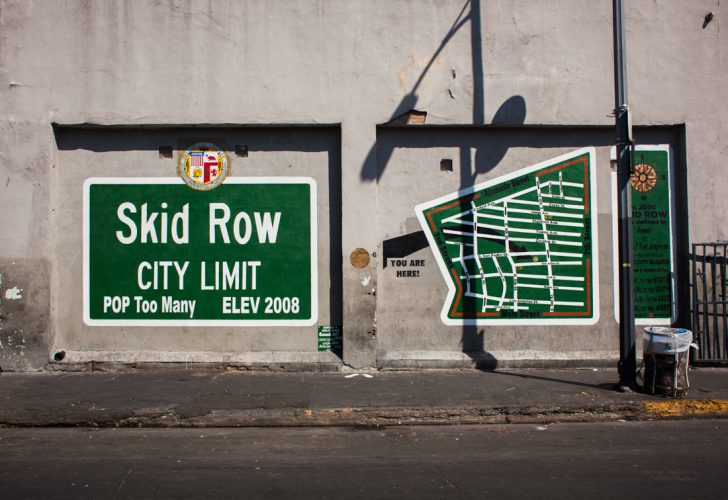
The acquisition of the Hope Gardens Family Center marked a definitive strategic pivot for the Union Rescue Mission (URM), moving its operations from the containment zone of Skid Row into the contentious arena of suburban land use. In late 2005, URM purchased a 71-acre property located at 12249 Lopez Canyon Road in the foothills of the San Gabriel Mountains, near Sylmar and the unincorporated community of Kagel Canyon. The site, formerly known as the Sequoia Lodge, had operated as a retirement community and sanitarium, a function that URM executives believed made it turnkey for housing populations. The purchase price was $7. 5 million, a capital outlay that signaled the Mission's intent to physically separate women, children, and elderly residents from the predatory environment of downtown Los Angeles.
This geographic relocation immediately triggered a fierce zoning and land-use battle that exposed the deep fractures between homeless service providers and peripheral communities. Residents of Kagel Canyon, organized under the banner of the Kagel Canyon Civic Association (KCCA) and the Kagel Canyon Preservation Committee, mobilized against the project. Their opposition was rooted in the "Not In My Backyard" (NIMBY) phenomenon, yet it was articulated through specific procedural and safety concerns. The property sat within a high-severity fire zone, accessed by narrow, winding roads that residents argued were insufficient for emergency evacuations or heavy bus traffic. Beyond infrastructure, the opposition voiced fears that the facility would import "Skid Row elements", specifically crime, drugs, and abusive partners of the women seeking shelter, into a quiet, semi-rural enclave.
The conflict escalated throughout 2006, turning a routine Conditional Use Permit (CUP) application into a political referendum on the decentralization of homeless services. Los Angeles County Supervisor Mike Antonovich, whose district included the canyon, faced intense pressure from his constituents to block the facility. Opponents, led by figures such as Marlene Rader and Randy Drew, packed public hearings. They argued that while the Mission's goals were noble, the location was dangerous and inappropriate. One vocal opponent, quoted in local media, described the chance influx of visitors and estranged partners as a "carousel of crime."
URM President Andy Bales countered these narratives with data regarding the conditions on Skid Row. He emphasized that the downtown facility was surrounded by approximately 400 registered sex offenders, making it an untenable environment for children. Bales positioned Hope Gardens not as a shelter, as a transitional living center with strict security, including a ban on walk-in services and a requirement that all residents be transported by shuttle. The Mission also leveraged the threat of federal litigation. The Religious Land Use and Institutionalized Persons Act (RLUIPA) of 2000 prohibits zoning laws that substantially load the religious exercise of churches and other institutions. While URM did not file a formal lawsuit, the legal framework of RLUIPA loomed over the proceedings, suggesting that a denial based on community animus could result in a costly federal civil rights case against the County.
The standoff concluded in May 2007, when the Los Angeles County Regional Planning Commission voted to grant the Conditional Use Permit. The approval came with conditions: a cap on the number of residents (initially set around 225), mandatory security measures, and restrictions on vehicle trips. The opposition group had a window to appeal the decision to the full Board of Supervisors, in a surprise development, allowed the deadline to pass in June 2007 without filing. This silence ended the legal blockade. Hope Gardens opened its doors later that month, initially housing elderly women in the Sequoia Lodge building before expanding to admit mothers and children.
The operational reality of Hope Gardens required a massive logistical undertaking. Unlike the downtown mission, which relied on walk-in traffic and centralized city services, the Sylmar facility functioned as an island. URM had to provide all food, medical care, and transportation. The facility's isolation, originally a point of contention, became its primary therapeutic asset. The 71-acre campus offered safe outdoor space for children who had previously been confined to indoors areas in the downtown shelter to avoid street violence. The demographic mix was strictly controlled: single women with children and single elderly women. No men were permitted to reside on the campus, a policy designed to alleviate the safety concerns of the neighboring community.
Financial stability proved to be the major hurdle. The 2008 financial emergency devastated charitable giving across the sector, and by May 2010, Hope Gardens faced an existential threat. URM announced a $2. 8 million shortfall and warned that the facility might close by June 30 of that year. The chance closure threatened to send dozens of families back to Skid Row. A frantic fundraising campaign, driven by media coverage of the chance displacement, succeeded in bridging the gap. This near-death experience forced URM to recalibrate its funding models, seeking more consistent public contracts and grants to supplement private donations.
By 2026, Hope Gardens had integrated into the regional homeless services infrastructure, though it remained a distinct entity operating outside the primary "Housing " model that dominated California policy in the 2010s and 2020s. The facility continued to emphasize transitional living combined with religious instruction and recovery programs, rather than immediate placement in independent apartments. The site also underwent physical upgrades to meet evolving fire codes, a persistent need given the increasing frequency of wildfires in the San Gabriel foothills. The "Sequoia Lodge" remained a sanctuary for elderly women, a demographic that saw a statistical surge in homelessness between 2015 and 2025 due to rising housing costs and fixed incomes.
| Date | Event | Details |
|---|---|---|
| Late 2005 | Property Purchase | URM acquires 71-acre former retirement home in Sylmar for $7. 5 million. |
| May 2006 | Opposition Mobilizes | Kagel Canyon Civic Association lobbies County Supervisors to block the project. |
| 2006-2007 | Permit Battle | Hearings focus on fire safety, traffic, and "Skid Row elements." URM cites RLUIPA protections. |
| May 2007 | Approval | LA County Regional Planning Commission grants Conditional Use Permit (CUP). |
| June 2007 | Opening | Opposition deadline passes without appeal. residents arrive (elderly women). |
| May 2010 | Financial emergency | URM faces $2. 8M shortfall; threatens to close Hope Gardens. Funds raised to avert closure. |
| 2022 | Expansion Context | Angeles House opens (separate facility), Hope Gardens remains primary decentralized site. |
| 2026 | Current Status | Operational capacity ~225. Focus on women, children, and seniors. |
The acquisition of Hope Gardens demonstrated that the solution to urban homelessness required land, and acquiring that land necessitated political combat. The transition from a centralized, warehouse-style shelter to a decentralized, campus-based model allowed URM to serve specific demographics that were poorly served by the general population shelters. The zoning dispute in Kagel Canyon served as a case study for future projects, showing that while community opposition is inevitable, it can be overcome through a combination of legal use, strict operational covenants, and the sheer moral weight of the emergency.
Fiscal Audits and Rejection of Government Contracts
| Metric | URM Sprung Structure (2019) | City of LA "A Home" / HHH |
|---|---|---|
| Construction Time | ~3-4 Months | 2-4 Years (Avg) |
| Cost Per Bed | ~$25, 000, $40, 000 | $500, 000, $800, 000+ |
| Funding Source | 100% Private | Taxpayer Bonds (Public Debt) |
Bales frequently these figures to highlight the of the government's method. The Sprung structure, funded entirely by private donors, bypassed the bureaucratic zoning and prevailing wage requirements that inflated city projects. This agility allowed URM to expand capacity during the COVID-19 pandemic while city agencies struggled to deploy funds. yet, the refusal of government aid also meant URM faced serious liquidity risks during economic downturns. During the 2008 financial emergency and the 2020 pandemic onset, the Mission could not rely on the automatic stabilization of state contracts. Instead, it relied on aggressive private fundraising and the liquidation of non-essential assets. To maintain donor trust without government oversight, URM submits to voluntary third-party audits. The organization is accredited by the Evangelical Council for Financial Accountability (ECFA), which requires strict adherence to seven standards of responsible stewardship, including board governance and financial transparency. Their IRS Form 990s are publicly available and show a consistent pattern: high program service ratios ( above 75-80%) and a reliance on a broad base of small donors rather than a few massive grants. There have been rare exceptions to the "zero government money" rule, though they are technical rather than operational. In 2020 and 2021, like religious non-profits, URM navigated the complexities of pandemic relief. While they steadfastly refused contracts that would dictate program rules, financial records indicate the acceptance of one-time disaster relief funds, such as the Employee Retention Credit (ERC), which were viewed as tax refunds rather than restrictive grants. This distinction is important to their internal logic: they accept restitution for disaster-imposed costs, they not sign a contract that gives the state a seat on their board or a voice in their chapel. As of 2026, under the leadership of CEO Mark Hood, the policy remains absolute. The Mission continues to turn away millions in chance LAHSA funding. This rejection bars URM from the Coordinated Entry System (CES), the master list used by the county to match homeless individuals with housing. Consequently, URM operates a parallel system, admitting people directly from the street, a "low barrier" to entry (anyone can walk in) a "high barrier" to stay (sobriety required for program advancement). This bifurcation creates a friction point with the city: URM relieves the immediate pressure on the streets, yet its graduates frequently struggle to qualify for permanent supportive housing vouchers that are reserved for the "chronically homeless" who fit the government's specific, non-sobriety-based criteria. The fiscal strategy of Union Rescue Mission is a high- gamble on the generosity of the private sector. It assumes that there is a sufficient number of donors who distrust the government's efficacy enough to fund a private alternative. The data from the last decade suggests this assumption is correct; revenue has grown alongside the homelessness emergency, allowing URM to open the Angeles House in Willowbrook, a facility for families built largely with private capital, demonstrating that their separatist financial model can even in a high-cost urban environment.
Angeles House Satellite and South LA Expansion
The operational geography of the Union Rescue Mission underwent a radical fracture in 2018. For over a century, the institution had functioned as a centralized on Skid Row, drawing the destitute into the dense, chaotic of downtown Los Angeles. By the late 2010s, internal data and external reality forced a reversal of this centripetal model. The Mission's leadership, specifically CEO Andy Bales, recognized that Skid Row had become a toxic environment for children, yet the number of homeless families was surging. The 545 San Pedro Street facility, even with its size, was structurally and environmentally unsuited for the long-term stabilization of traumatized minors. The solution was decentralization: moving the resources to the emergency origin points rather than demanding the emergency come to the center.
This strategic pivot materialized as Angeles House, a 74, 866-square-foot facility located at 13200 Avalon Boulevard in the Willowbrook neighborhood of South Los Angeles. The site selection was deliberate. South Los Angeles had long served as a primary feeder zone for Skid Row, with economic displacement in the area driving residents north into the downtown encampments. By planting a massive satellite facility in Willowbrook, URM attempted to intercept families before they fell into the Skid Row well. The facility, which broke ground in March 2020 and opened fully in 2022, represented a capital shift as much as a geographic one. The project required a $55 million capital campaign, financed through a complex stack of private donations and New Markets Tax Credits, deliberately bypassing government funding streams that would have mandated a "Housing " model incompatible with URM's faith-based, sober-living requirements.
The architectural programming of Angeles House rejected the 19th-century almshouse model of congregate barracks that still dominated much of the shelter system. The facility was designed with 86 private units, capable of housing 374 individuals. Crucially, these units allowed fathers to stay with their families, a demographic frequently barred from women-and-children shelters, leading to family separation at the shelter door. Historical records from the 1700s and 1800s show that poverty relief method almost universally shattered the family unit; the workhouse system separated men from women and children from parents. Angeles House was engineered to preserve the nuclear family unit as a stabilization method, a methodology supported by 21st-century sociological data indicating better outcomes for children who remain with both parents.
| Metric | Data Point |
|---|---|
| Location | 13200 Avalon Blvd, Los Angeles (Willowbrook) |
| Total Square Footage | 74, 866 sq. ft. |
| Capacity | 86 Family Units / ~370 Beds |
| Target Demographic | Intact families, single fathers with children, single mothers |
| Capital Cost | ~$55 Million (Project & Campaign) |
| Key Features | On-site charter school, medical/dental clinic, private bathrooms |
The urgency of this expansion was validated by the demographic shifts observed between 2023 and 2026. While in total homelessness in Los Angeles County showed a slight statistical decline of 4% in 2025, family homelessness the trend, rising by 5. 8% in the same period. Angeles House operated at capacity from its inception. The facility provided not just shelter a " housing" model, integrating an on-site charter school, a medical clinic, and legal aid. This method mirrored the settlement houses of the Progressive Era was scaled for the modern homelessness industrial complex. The operational costs were substantial; URM's total expenses climbed to over $50 million annually by 2024, with the Angeles House satellite accounting for of that overhead.
The completion of Angeles House also marked the final major offensive of Andy Bales' tenure. Bales, who retired in October 2023 after two decades of leadership, had pushed the project forward even as his own health, resulting in the amputation of his legs due to flesh-eating bacteria contracted on the streets he served. His departure signaled a transition from aggressive expansion to operational sustainment. The "hub and spoke" model he architected, with Skid Row as the intake hub and facilities like Angeles House and Hope Gardens as the restorative spokes, became the standard operating procedure for the Mission. By 2026, the South LA satellite was no longer an experiment a serious infrastructure node, absorbing the shock of the housing affordability emergency that continued to displace working-class families in the Alameda Corridor.
The financial independence of the Angeles House project allowed URM to maintain high-barrier entry requirements, specifically regarding sobriety, which stood in sharp contrast to the low-barrier county shelters surrounding it. Critics argued this limited the facility's reach, yet URM data from 2024 indicated that their model yielded higher long-term success rates for families than the revolving door of state-funded emergency shelters. The facility's existence highlighted a bifurcated response to homelessness in the 2020s: a state-run system focused on harm reduction and housing placement, and a private, faith-based parallel system focused on rehabilitation and behavior modification. Angeles House served as the physical embodiment of the latter, a privately funded citadel in the middle of South Los Angeles.
Infectious Disease Protocols and 2020, 2022 Outbreaks
The biological reality of Skid Row has always functioned as a separate ecosystem from the rest of Los Angeles. While the city proper battles seasonal flu or manages sanitation through municipal services, the fifty-block containment zone surrounding the Union Rescue Mission (URM) operates as a reservoir for medieval pathologies. The mission's history is punctuated not just by economic depressions, by waves of contagion that thrive in high-density, low-sanitation environments. This biological threat profile shifted drastically between 2016 and 2022, transforming the institution from a shelter into a de facto infectious disease ward.
Long before the SARS-CoV-2 virus arrived, the mission's leadership faced physical disfigurement from the street's bacterial load. In 2016, CEO Andy Bales underwent the amputation of his right lower leg. The cause was not a modern lifestyle disease a blister infected by E. coli, staph, and strep bacteria, a "flesh-eating" cocktail contracted while walking the pavement of Skid Row to distribute water. This event served as a grim biological baseline: the streets outside the mission were so toxic that casual contact could result in the loss of limbs. By 2018, the situation further when Los Angeles County public health officials declared the area a "Typhus Zone." Flea-borne typhus, a disease associated with the trenches of World War I, had returned to the encampments, driven by a rat population that thrived on uncollected refuse. The mission had to fortify its intake procedures against ectoparasites years before it had to worry about aerosolized viruses.
When the COVID-19 pandemic reached Los Angeles in March 2020, URM faced an impossible architectural problem. Its primary facility, designed to maximize bed count, relied on dormitory-style sleeping arrangements that placed hundreds of men in shared air. While the rest of California retreated into isolation, the mission's population had no home to retreat to. Bales and his staff made the decision to remain open, a choice that carried immediate lethal risks. The "miracle" of the early weeks, where the mission avoided cases, collapsed in April 2020. Gerald Shiroma, a former resident who had graduated from the recovery program to become a staff driver, contracted the virus and died. His death marked the breach of the mission's perimeter, signaling that the "safe harbor" was active territory for the pathogen.
The operational response required a total reimagining of the shelter's physical footprint. The mission could no longer stack residents in bunk beds just inches apart. To solve the density equation, URM erected a massive "Sprung" structure, a high-tech, tensioned fabric building, in its parking lot. Dubbed "Angels of the Gap," this facility allowed for spacing that was impossible within the main brick-and-mortar building. It served as a triage and isolation unit, a necessary lung that allowed the main building to breathe. This pivot was expensive and logistically violent, requiring the displacement of services to prioritize biological survival over rehabilitation.
The winter of 2020, 2021 brought the "Monster Genius" surge, a term Bales used to describe the virus's ability to find gaps in their defense. The statistics from this period reveal the severity of the outbreak within the congregate living facility.
| Period | Event Description | Impact Metrics |
|---|---|---|
| April 2020 | Initial Breach | 56 confirmed cases; 1 staff death (Gerald Shiroma). |
| Dec 2020 , Jan 2021 | Winter Surge | 170+ positive cases among residents/staff; 3 additional deaths. |
| Feb 2021 | Post-Surge Stabilization | Isolation wing established on 3rd floor; 95 residents quarantined. |
During the December surge, the mission's third floor was converted into a "Red Zone" isolation ward. Staff donned full PPE to deliver meals to 95 quarantined men, running a hospital wing without hospital resources. The sheer volume of infection overwhelmed the county's ability to provide isolation housing, forcing URM to manage positive cases on-site. This period also saw the further physical deterioration of Andy Bales, who underwent a second amputation (his left leg) in 2021. While the second surgery was attributed to the wear and tear of compensating for his prosthetic, the narrative continuity remained: the mission's leader gave his physical body to the work, mirroring the physical degradation of the population he served.
Vaccination efforts in 2021 and 2022 encountered a unique set of friction points. The Skid Row population harbors deep institutional distrust, making the rollout of the mRNA vaccines difficult. The mission became a site for education and coercion, linking shelter access to health mandates where possible, though the transient nature of the guests made strict enforcement difficult. By the time the Omicron variant swept through in early 2022, the mission had transitioned from emergency response to widespread management. The high case counts of Omicron resulted in fewer deaths than the Delta wave, the operational disruption remained constant. Staff absence due to infection forced the remaining team to work dangerous overtime hours to keep the kitchen and security systems running.
By 2023 and continuing into 2026, the established during the pandemic permanently altered the mission's architecture. The era of "warehousing" the homeless, packing bodies into rooms to maximize count, ended. New air filtration systems, permanent hand-washing stations, and a reduction in bed density became the new code. The "Sprung" structure proved that flexible, semi-permanent housing could function better than rigid dormitories during a biological emergency. The mission's medical clinic, once a place for treating foot wounds and dispensing aspirin, evolved into a primary care node capable of rapid infectious disease testing. The lesson of 2020 was clear: in the dense ecology of Skid Row, a shelter that cannot control infection is not a refuge, a trap.
Litigation Regarding Encampment Sweeps and Civil Rights
2025, 2026 Demographic Data and Rehabilitation Statistics
By early 2026, the Union Rescue Mission (URM) operated within a shifting environment for Los Angeles homelessness, characterized by a 4% countywide decline in the unhoused population recorded in the 2025 Greater Los Angeles Homeless Count. Even with this reduction to approximately 72, 308 individuals, the demand for URM's services remained intense, particularly for shelter and family support. The 2025 data reveals a distinct rise in the sheltered population by 8. 5% across the county, a trend mirrored in URM's facilities where capacity frequently hit maximum levels. The mission's main facility on San Pedro Street continued to average over 750 guests nightly, while the Angeles House family center, designed to house 86 families, operated near its 374-bed capacity, serving a demographic heavily skewed toward single mothers and children who comprise a growing segment of the region's homeless emergency.
Rehabilitation statistics for the 2025, 2026 period show a strategic pivot toward long-term stabilization over emergency warehousing. In March 2025, URM celebrated the graduation of a cohort from the Damascus Road to Recovery Program at the Hope Gardens Family Center, a facility specifically serving women and children in Sylmar. This program, alongside the men's Christian Life Discipleship Program, requires a 12-month commitment involving 2, 000 hours of biblical study, work therapy, and counseling. Data from the 2025 fiscal period indicates that families with children accessed permanent housing at significantly higher rates, nearly 50%, compared to just 14% of individual adults. To address the immediate needs of those not yet in recovery programs, URM introduced secure sleeping pods in early 2025, aiming to provide privacy and dignity that traditional dormitory setups frequently fail to offer.
Financial disclosures from late 2025 examine the resources required to sustain these massive operations. In September 2025, the mission secured a $3 million grant from The Ahmanson Foundation, directed toward infrastructure upgrades and dorm reconfigurations necessary to meet evolving safety standards. This funding supplemented a revenue stream that reached $58. 2 million in 2024, with expenses tracking closely at $50. 2 million. Under the leadership of CEO Mark Hood, the organization allocated these funds to maintain its three primary campuses, the downtown headquarters, Hope Gardens, and Angeles House, while expanding case management services. The 2025 operational data confirms that while street-level homelessness saw a slight statistical dip, the complexity of cases entering URM's care, particularly involving mental health and substance abuse, necessitated a higher staff-to-guest ratio and extended duration of stay for successful rehabilitation.
Ideological Conflict with Housing First Models
The ideological collision between the Union Rescue Mission (URM) and the secular "Housing " policy doctrine represents one of the most significant schisms in the history of American social welfare. This conflict is not administrative; it is a fundamental clash between two distinct anthropologies, one rooted in the 18th-century Great Awakening's insistence on internal regeneration, and the other in 21st-century sociological theories of harm reduction. While the surrounding municipal apparatus shifted toward a model that prioritizes unconditional housing placement, URM maintained a lineage stretching back to the 1800s, insisting that recovery from addiction and spiritual transformation must accompany shelter. This refusal to decouple housing from behavioral modification forced the Mission into a solitary, frequently antagonistic position against the Los Angeles political establishment for nearly two decades.
The sharpened in the early 2000s with the ascendancy of the Housing model, pioneered by psychologist Sam Tsemberis. This method posits that housing is a human right and that psychiatric or substance abuse treatment should be voluntary, not a condition of tenancy. Federal policy followed this academic shift. By 2016, the Department of Housing and Urban Development (HUD) and the Los Angeles Homeless Services Authority (LAHSA) radically altered their funding criteria (NOFA), stripping financial support from transitional housing programs that required sobriety. Data from this period show a massive reallocation of resources: between 2015 and 2019, Los Angeles County lost over 1, 000 transitional housing beds as providers chased federal dollars tied to the new "low-barrier" mandates. URM, under the leadership of CEO Reverend Andy Bales, refused to align. Consequently, the Mission forfeited millions in chance government grants, choosing to rely almost exclusively on private philanthropy to maintain its "high-barrier" recovery programs.
The practical consequences of this ideological war played out in construction metrics. In 2016, Los Angeles voters approved Measure HHH, a $1. 2 billion bond intended to build 10, 000 units of permanent supportive housing. The bureaucratic execution of this mandate became a symbol of municipal paralysis. City Controller audits revealed that by 2022, the median cost per unit had ballooned to over $531, 000, with projects exceeding $800, 000 per door. Timelines for completion stretched to three or five years. In direct contrast, URM bypassed the city's sluggish development pipeline by erecting "Sprung structures", tensioned membrane buildings, to provide immediate shelter. The Mission's "Angeles House" and subsequent navigation centers were built at a fraction of the cost and time of HHH projects. This in capital efficiency highlighted the friction between the state's regulated, expensive permanence and the Mission's agile, emergency-focused immediacy.
| Metric | Measure HHH Projects (City Avg) | URM Sprung Structures / Angeles House |
|---|---|---|
| Cost Per Unit/Bed | $531, 000, $837, 000 (Unit) | ~$25, 000, $100, 000 (Bed/Unit) |
| Time to Occupancy | 3, 6 Years | 4, 12 Months |
| Funding Source | Public Taxpayer Bonds | Private Donation / NMTC |
| Prerequisites | None (Housing ) | Sobriety / Program Participation |
The conflict reached a legal apex in the early 2020s through the intervention of Federal Judge David O. Carter. Presiding over the LA Alliance for Human Rights lawsuit, Carter frequently aligned himself with Bales, touring Skid Row and condemning the city's inaction. Carter's injunctions, which demanded the immediate housing of women and children, validated URM's argument that leaving people on the streets while waiting for "perfect" permanent housing was a humanitarian failure. Bales, who served as CEO from 2005 to late 2023, embodied the physical toll of this philosophy. He continued to walk the streets of Skid Row even after contracting flesh-eating bacteria, likely from the unsanitary pavement, which eventually necessitated the amputation of his lower legs. His physical sacrifice served as a grim rebuke to the remote, spreadsheet-driven management style of county administrators.
By 2026, the policy terrain began to shift once again, vindicating the Mission's stubborn endurance. Following the political realignments of the mid-2020s, federal guidelines for the 2025/2026 fiscal pattern introduced caps on Permanent Supportive Housing funding, pivoting resources back toward the very transitional and treatment-focused models URM had preserved. The "Housing " orthodoxy, having failed to reduce the aggregate count of unhoused individuals even with billions in expenditure, faced a widespread rollback. The Union Rescue Mission, having weathered the years of defunding and ridicule, stood as the surviving of the "recovery" model. Its history from 1891 to 2026 demonstrates that while sociopolitical theories regarding poverty fluctuate with election pattern, the demand for a method of spiritual and physical redemption remains a constant in the American urban experience.